

What is a miniature fuse:
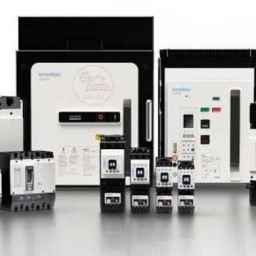
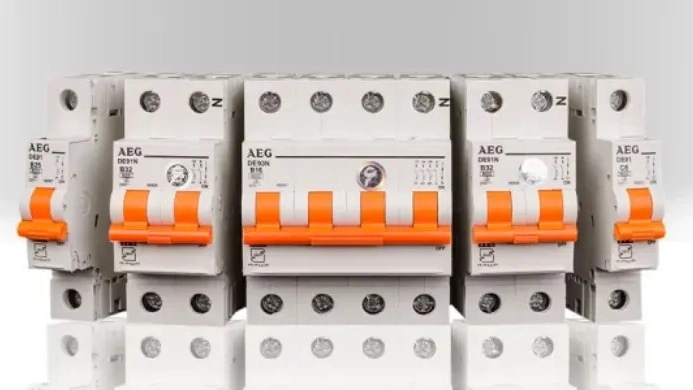
Miniature fuse or Miniature Circuit Breaker, abbreviated as MCB, protects household and industrial electrical equipment against short circuit and overload (unauthorized current passing).
In simple terms, it can be said that a fuse is a protective device that is used in electrical equipment and circuits to cut off the circuit when more current than expected passes through the device so that other equipment is not damaged.
The miniature fuse uses two mechanisms for its operation: bimetallic operation for overload protection and magnetic operation for short circuit protection.
In other words, detection of excess current is the responsibility of a metal No. 5) which is heated more than the nominal current due to the passage of a long-term current and due to bending causes the action of the miniature fuse contact and cuts off the circuit.
Other miniature fuse elements are as follows:
1) Actuator piker: for trip and reset
2) Actuator Device mechanism
3) Main contact: flow of current
4) Terminal Block
5) Bimetallic steel strip
6) Tripping calibration screw
7) Solenoid coil
8) Arc extinguisher
In terms of application, miniature fuses are divided into types B lighting, C motor, D transformer, K power, and very sensitive Z:
Miniature Fuse Type B Lighting:
Miniature Fuse Type C Motor:
Type C miniature keys are mostly used in industry. These switches cut the circuit in overload current between 5 and 10 times the rated current in a certain time, and their cutting time is longer than type B. This key is also known as a slow-acting miniature fuse.
Transformer Type D miniature fuse:
Type D miniature keys are used for special industrial purposes (such as X-Ray generators or transformers). These switches cut the circuit in overload current between 10 and 20 times the rated current in a certain time and their cutting time is longer than all types.
Miniature Fuse Type K Power:
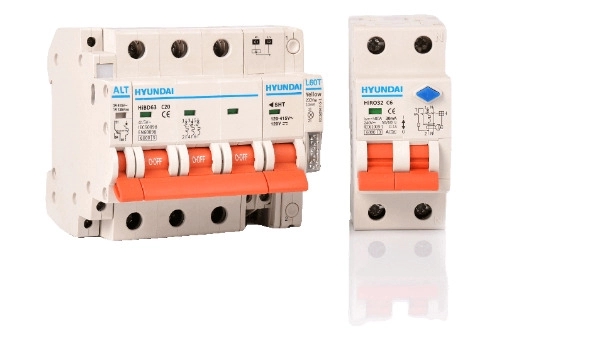
K type miniature switches are used for protection in power circuits, transformers and motors. In this type of miniature switch, the current limit for disconnection in case of overload is lower than other switches, and when overload occurs, they disconnect the circuit faster, but in case of short circuit, the disconnection curve of this type of switches is between type D and C.
Highly sensitive miniature fuse: very sensitive:
This type of miniature switch, when the passing current exceeds the rated current in a certain period of time (which is less than all types) according to the cutoff curve, issues the cutoff command. The sensitivity of this type of switches is higher than all other types, both in case of overload and short circuit, and in the event of an error, it disconnects the circuit faster. Therefore, this type of miniature fuse is used in circuits with high sensitivity.