

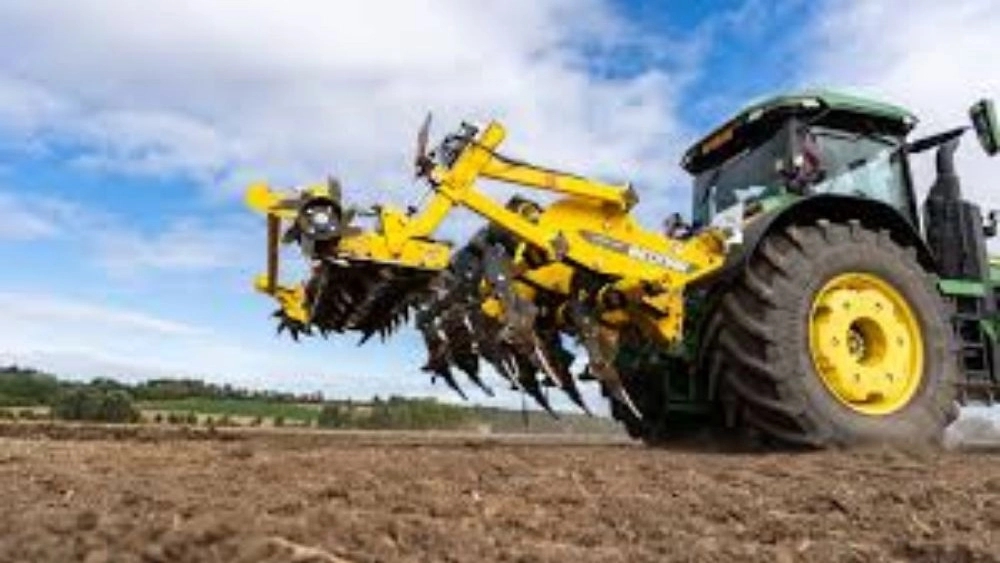


Chisel can be called as one of the most important tillage tools. Chisel is one of the primary tillage tools, which is considered as an alternative to the reversible plow, especially in dry soils and hot and dry areas.
The chisel attached to the back of the tractor breaks the soil but does not overturn it, and a large amount of plant remains is preserved on the soil surface. In general, the chisel disturbs and pulverizes the soil less. Because of this, soil erosion occurs less than plows. This device is divided into two categories: simple chisel and compound chisel. Chisel is simple, without roller or hammer, which only performs the work of chisel plowing. In the compound model, a clod crusher or roller is added to it so that the clods are crushed at the same time as plowing and land preparation is done faster.
Introducing and applying one of the one in agriculture
Pit
Trial and error in the chisel resulted in the conclusion that, in this device and sub-breaker, the minimum tension required occurs when the lifting angle is 20 degrees. If you need to work deep, you should either use a longer base chisel or chisel twice, the second time chiseling vertically or at an angle to the first time to reach the full depth. If the upper part of the curve comes into contact with the soil surface, it means that the working depth is too high for the chisel to work. As the depth and speed of advancement increases, the tension of this device increases. The speed of this increase depends on the type of soil, moisture content, shape of the blade and the angle of penetration into the soil. If the speed increases, the soil is crushed more, but probably because the need for secondary tillage is less, the increase in speed is justified. A weed rod is connected to the base of the row of back branches of this device, which helps the weed to be cut better. And the soil should be crushed more, and the soil should be plowed deeper and the residues should be better covered.
Is one of the better or the pitches?
In the unit of work width and same depth, the tension required for a chisel is maybe half of a plow. Therefore, when it is not intended to completely cover the remains, using a chisel instead of a plow makes it faster and more economical. Chisel is also used to break the hard layer of the bottom soil, which is created due to the continuous use of the plow at the same depth. Iran's soils are mostly dry and with low organic matter, so the use of this device is better and more recommended. Meanwhile, the plow buries plant remains and the soil surface is left unprotected against erosion. As a result, soil erosion is more in the plow. Because these tools break and cut the soil, it is the best option for dry and hard soils. When the soil is too wet, it is simply crushed and opened by the base of the chisel without being cut and disturbed. In fact, when wet soil is tilled with this machine, large clods may form that are difficult or perhaps impossible to break up by the next tiller and create a suitable bed for the seed.
Simple one
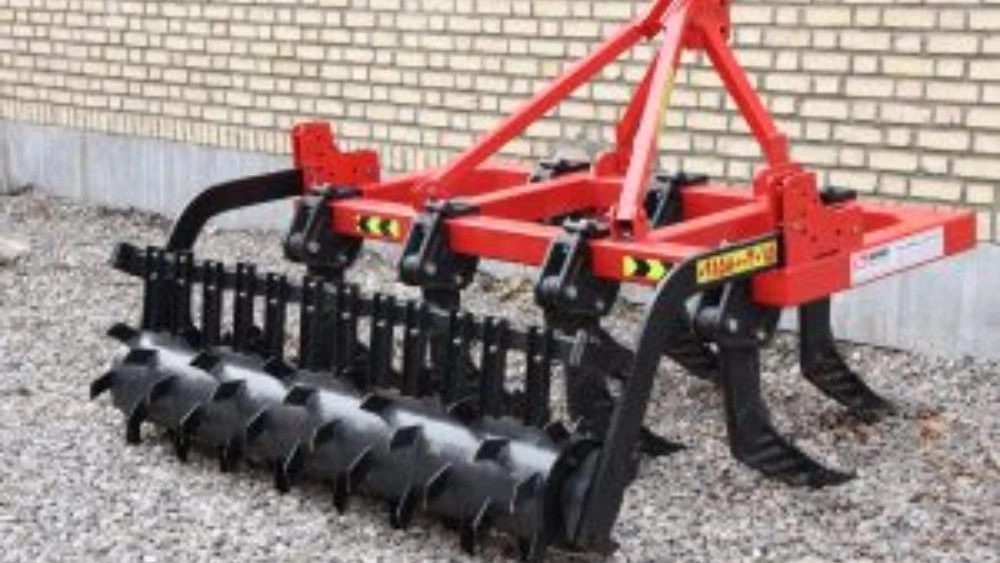
This device is without rollers and consists of chassis, legs and blade or socket. In a simple chisel, each branch contains a stem and a blade. The simple chisel usually has two or three rows of branches, the small rider model has two rows and the large and stretchy rider model has three rows of branches. The branches of different rows are connected to the chassis in a zigzag pattern so that they are not in a row and behind each other, so that no work is done again, and the hay can pass through them without hindrance. The transverse distance of the branches from each other is 30 cm and the height of the chassis from the ground is about 60 to 70 cm. Different blades are used in this device, the most common of which is the pen blade. The basis of the work of this device is to break and crush the soil, not to overturn and turn the soil, as a result, it will have the best performance in dry and hard soils, and the benefits and advantages of the chisel are better defined in dry soil. If the soil moisture is higher than normal, the stems remain in the soil and no crushing and softening of the soil is done. The chisel stem is attached to its own frame with a retaining screw and a cutting pin. , closes. If during tillage operation, the stems hit a hard obstacle, the pin is cut and the stems are guided back around their holding screw in the frame, thus preventing damage to the blade and stem. The common types of this device are 5-branch, 7-branch, 9-branch and 11-branch simple chisels. The classification of these tools is based on the number of their branches, which ends in the difference in the width of the work and the difference in the required power.
Composite
The compound chisel is one of the most common conservation tillage and low tillage tools, which is used in most regions of Iran. The advantages of the compound chisel include ease of work, simple settings, less traffic in the field, reduction of soil compaction, reduction of fuel consumption, reduction of tillage operation time. This device is made of a combination of two devices. 1- Chisel 2- Toothed roller for crushing lumps or packers. The use of the chisel part is to penetrate the soil and break the soil layers and plow the soil, and the roller part has the task of crushing the lumps and smoothing the surface of the earth and soil. This device is also known as chisel peeler, chisel packer, roller chisel and roller chisel.
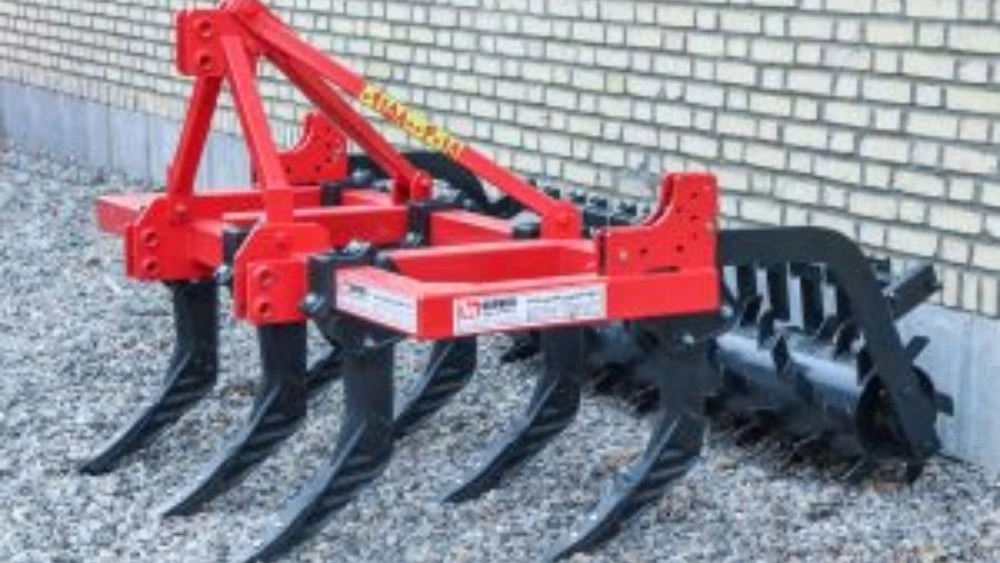
Roller
The roller of the device consists of one or two heavy and solid tubes, whose outer body has fork blades or welded triangular sheets, which is responsible for crushing the lumps created by plowing. There are two bearings on both sides of the roller to replace it. Compound chisels are available with fork, cage and spiked rollers, which can be used according to the type of agricultural soil.
The maximum working depth of the machine is 40 cm, which can be increased or decreased by shortening or lengthening the middle hydraulic connection. The roller arms are connected to the chassis by pins and spiels. In some compound chisels, the range of movement of the roller arms and as a result the height of the roller is adjusted by placing special pins in the holes built for this purpose. In the rest of the models, it is done through the lame adjustment screw. Before starting work, the longitudinal and transverse alignment should be done according to the tools on the tractor. In order to use this device, the distance between the rear wheels of the tractor must be less than the width of the machine so that the wheels of the tractor do not fall on the plowed ground when turning around at the end of the road. In order to ensure the proper distance, if we look at the machine from the back, the side stems in the back row of the machine should be in the center of each of the rear wheels of the tractor. Also, by adjusting the roller arms, the height of the roller should be adjusted in such a way Adjusted so that when the chisel stems are sunk to the desired depth, the rollers of the machine have the full ability to move in the vertical direction and are not pressed to the ground. This means that the rollers should roll easily on the ground and crush the created lumps instead of penetrating into the ground. It is obvious that if there is no proper adjustment, the depreciation of the machine and the tractor will increase, and the fuel consumption will increase, which will also result in power loss. The agricultural capacity of the machine is about 1.1 hectares per hour and the speed It is 4 to 5 km/h in heavy soils and up to 7 km/h in light soils. Common types of these tools in the market are; 5-point, 7-point, 9-point and 11-point compound chisels. These differ in the number of branches or the width of the work.
The benefits of using compound yarns
This machine has the following advantages compared to the plow, the working width of the chisel is one and a half times that of the plow, and the conditions for using 5-pronged chisels in light soils with 4-cylinder tractors (power of 75 horsepower) and 7-pronged chisels In heavy soils, there are 6-cylinder tractors (about 90 horsepower).
Unlike the plow, there is no need to divide the land in order to plow with this device and the operation is done in a shorter period of time.
After plowing with a chisel, no ridges or ridges are left and the bed is relatively flat.
Setting up and starting up reversible plows is not an easy task. If the settings of compound chisels are simple and done quickly.
Due to the fact that the working width of the chisel is much greater than the reversible plows, fuel consumption and operation time are reduced, as a result of which the efficiency of the operation increases.
Depreciation of components and parts (blade, forehead and turning plate) is high in turning plows, but it is minimal in compound chisel.