

Behzi
Leave the gallery
Leave the galleryRaha Gallery designs and manufactures all kinds of decorative panels and luxury resin watches according to your taste and high variety is offered to you, dear customers. Contact number: ***********


Epoxy resin: properties and applications

Reading Time 1 Minutes

Epoxy resin: properties and applications

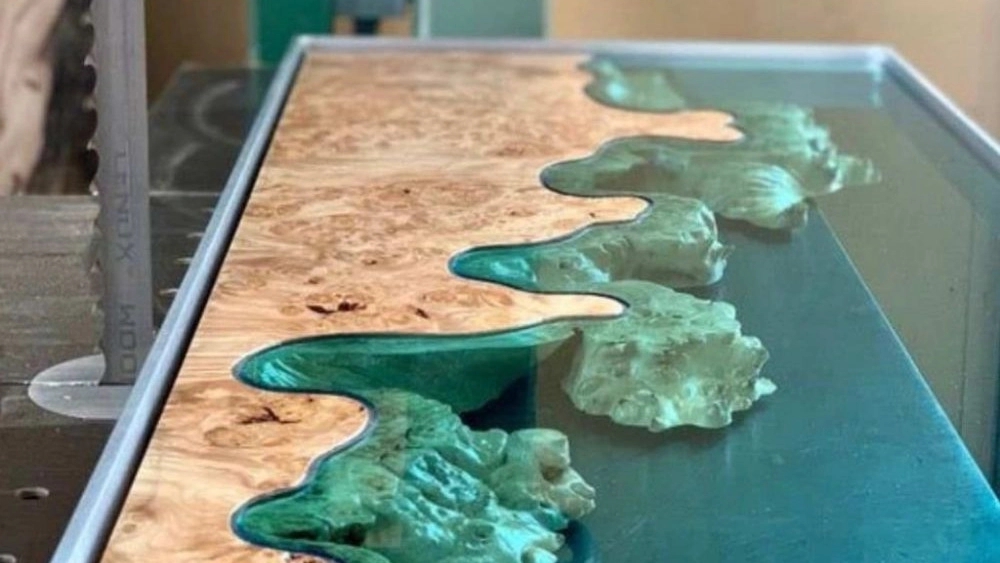
Sahil resin decorative tableau has become one of the most popular decorative items these days, which many Iranian girls and women fall in love with. These paintings with beautiful beach designs made of resin bring home a piece of nature and the sea. When you put these paintings on the wall of your house or room, it is as if you have a beautiful view of the waves of the sea and the beach under your eyes every day, and this feeling is very pleasant. Resin panels, with their brilliance and transparency, really attract people's attention and turn the house into a different and relaxing place.

1. The formation and chemical structure of epoxy resin consists of compounds called epoxy epoxide and amine compounds. These compounds are formed from epoxy (or epoxide) connections to amine compounds. Amine compounds usually have two amine groups that react with epoxy groups to form strong cross-links.

2. Features and benefits
2.1. High strength:


Epoxy resin has high strength and resistance to pressure and tension. This feature makes it suitable for use in construction and production of structural parts.

2.2. Chemical resistance: Epoxy resin is resistant to most chemicals such as acids, bases, solvents and other chemicals. This chemical resistance makes it a suitable option for different chemical environments. 2.3. Flexibility:

Epoxy resin has reasonable flexibility, which means that it can be used to make parts with different curves and various structures.

2.4 . Condensation and glass-making: This type of resin, after combining epoxy compounds, has a suitable viscosity that allows condensation and glass-making.

رزین اپوکسی: ویژگی‌ها و کاربردها

1. Applications

3.1. Construction: Making resistant and stable construction parts. Creating substructures, coatings and adhesives resistant to pressure and water. 3.2. Automotive industry: Production and repair of car parts such as hoods, bumpers, and important engine parts. 3.3. Electronics and electrical: Manufacturing printed circuit boards (PCB) due to insulation and resistance to heat and pressure. 3.4. Art and design: Use in making works of art and decorations with accurate coloring and detailing. 3.5. Repairs and repairs: Repair and repair of broken or damaged objects using epoxy resin as glue and reinforcement. 3.6. Anodizing and resinization: Use in the production of electrochemical anodes and resinization.

Priya Ramzanzadeh

Post Author

1267

common:article

View Page