

1. Stain removal and smoothing
By performing the correct polishing, all the stains and contaminations on the surface will be removed and we will have a smooth and smooth surface. Because by polishing and creating a layer on the surface, we fill all the ups and downs and scratches on the surface.
2. Preventing oxidation
Furthermore, polishing on any surface acts like a coating layer and makes the surface resistant to oxidation and damages caused by exposure to air.
< b>3. Beautification and gloss
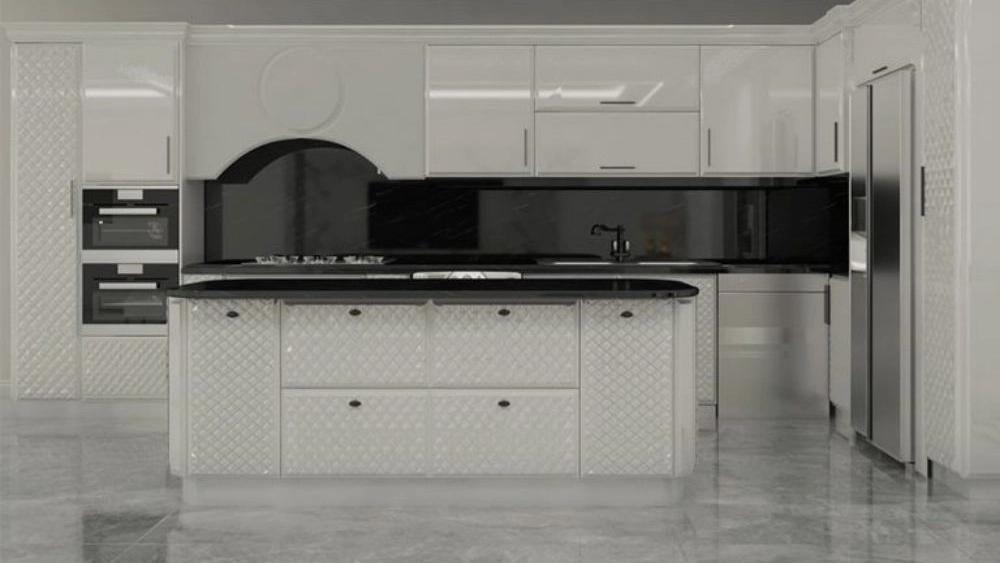
Polish also has a significant effect on the beauty of surfaces in terms of appearance. Because it polishes it and makes it shiny and shiny. 4. Increase strength
Wait! It still is! By performing polishing, the strength of the surface also improves. why Because the thickness of the surfaces prepared by polishing technique is at least 2 to 3 mm more than the other types of surfaces. On the other hand, we know that the thicker the surface, such as a cabinet, the greater its resistance to impact. So it won't dent or bend with the slightest impact, and what's better than that?!
6. Increased impact resistance
And finally, polished surfaces have high impact resistance. Scratches and cracks are not easily created on the polished surface, and if this happens, they can be repaired. These cabinets have good resistance to heat and light and do not lose their shape.
How do polish cabinets make?
But how are the polishing cabinets made and what measures are required to make them? In response to this question, we have summarized the production steps of these cabinets for you in 5 steps:
In the first step, we need a sheet of MDF (raw), which is usually the most common sheet with a thickness of 25 mm. This thickness is important for us and should not be less than this value.
In the next step, we cut the dimensions for the cabinet from the selected wooden sheet in the previous section. Then we tool and engrave the surface of the cut sheets using fully automatic CNC machines.
In the third stage, it is time to paint, which is the most sensitive part, right here. In this hard and precise step, we lubricate the polishing paste with thinner. After that, using special devices called pistols, in an isolated environment, we spray the paint on the entire work surface.
Spraying the paint is repeated in 4 stages, each time after the paint dries. We have to sand the colored surface. Repeating this step of the work will eliminate the bubbles caused by the paint and make the desired surface shiny and uniform. Finally, after spraying the paint 4 times and sanding, the final thickness of the paint will be It reaches 3 mm. So if you reached this amount and the surface was shiny and smooth, congratulations! Job well done.