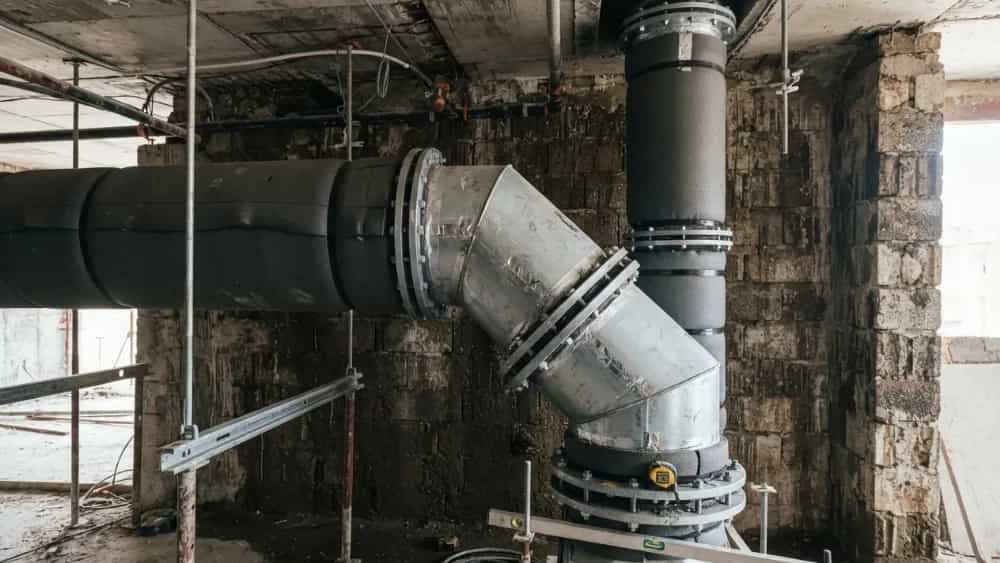

Installation of all types of channel and chimney package in Rasht due to the constant humidity above 80% and the climatic conditions of Gilan, requires the use of galvanized sheets with a thickness of at least 0.6 mm and the implementation of insulated double-wall connections to contain acid condensate. In Rasht construction projects, Mohsen Channelization designs and installs ventilation ducts and industrial and residential chimneys in accordance with the requirements of Section 17 and 19 of the National Building Regulations. Safe containment of toxic combustion gases and uniform distribution of air in Gilan building units can only be achieved by accurate calculation of static pressure drop and the use of airtight flanges.
In the special weather conditions of the northern cities, the ventilation and smoke exhaust systems of the package show a different performance compared to the central plateau of Iran. According to field observations during the inspection of residential projects in Golsar, Manzareh and Mashan Mehr Rasht neighborhoods, more than 65% of package smoke sensor errors are caused by water vapor and condensation inside the pipe towards the burner of the device. When the diameter of the pipe or the slope towards the outside is not observed correctly, the sulfuric and carbonic acid caused by gas combustion in combination with the damp air of Rasht will pierce the low-quality metal wall in less than two years and multiply the risk of silent carbon monoxide gas leakage in the closed space of the apartment.
Hidden dangers and technical requirements of package chimney installation in the humid climate of Gilan
Chimney implementation of fan and fanless packages in Rasht requires accurate separation of material and exit route. In today's fan packages, the executive standard is based on the use of a coaxial double-walled chimney with a size of 60/100. The internal aluminum wall is responsible for the exit of burnt products and the external wall is responsible for providing the oxygen required for the closed chamber.
In the technical workshops of Mohsen, this executive point is always applied that the slope of the double-walled chimney should be between 3 and 5 degrees towards the outside space so that the drops of distilled water do not enter the combustion chamber and the electronic board of the device. For fanless packages or buildings with built-in common chimneys, the use of asbestos cement pipes has been obsolete for years and poses a risk of gassing. In these projects, the installation of single-walled steel or standard galvanized chimneys inside the insulated ducts, together with the vane anti-wind caps, will guarantee the integrated discharge of polluting gases.
Analysis of the difference between the implementation of cooler channel and split duct in Rasht
Air transmission systems including split duct channel, chiller and water cooler are highly exposed to condensation due to the extreme temperature difference between the cool air inside the channel and the cold air outside. If the construction and insulation are not basic, the Kenaf and plaster false ceilings will be destroyed in less than one season and the smell of staleness and mold will spread in the unit.
Advantages and disadvantages of different types of sheets in Rasht canalization
Oil black sheet is not suitable for channeling due to rapid oxidation in northern climate. The best technical option is hot-dip galvanized sheet with zinc coating above 180 grams per square meter from reputable steel brands such as Mobarakeh Foolad or Haft Almas. These sheets have high abrasion and oxidation resistance in the vicinity of air, and if the seams are connected in a Pittsburgh style without gaps, the compressive strength of the channel is guaranteed up to positive pressures of 500 pascal.
In addition to galvanized sheet, polyurethane pre-insulated channels are also popular in luxury residential and villa projects in Rasht. These channels have a very low weight and their double-sided aluminum foil layer creates a strong barrier against the penetration of water vapor; But their vulnerability to mechanical shocks requires double precision during the construction and installation stages.
The importance of layered thermal and moisture insulation
Our team's operational experience in hundreds of commercial and domestic projects in Gilan has proven that traditional glass wool insulation quickly absorbs moisture from the environment, becomes heavy and loses its thermal insulation properties. The sustainable engineering solution is to use closed-cell elastomeric foams with a thickness of at least 13 to 19 mm. This dense structure does not absorb any water, minimizes the thermal and cooling loss of the air flow and prevents the formation of water droplets on the outer body of the channel in the hot and humid seasons of the year.
The principle method of designing and making all kinds of square and round channels
The geometry of the channel has an undeniable effect on the output air flow from each vent and the intensity of the sound of the indoor unit. The choice between the square channel and the round spiral channel depends on the limitations of the height of the false ceiling, the allowable pressure drop and the architectural design of the structure.
Square channels provide the ability to design with a low height and a large width and are considered an ideal solution for the apartment roofs of Rasht, which are mainly faced with a limited roof drop. In these systems, the corners are connected by self-tapping galvanized flanges (TDF or TDC) and steel clips, which reduce air leakage by 95% compared to traditional manual methods.
Round spiral channels with a twisting seam are considered a perfect option for sports halls, production sheds, factories and industrial cafes in the suburbs of Rasht and Lakan Industrial Town due to their smaller side surface and negligible friction. The aerodynamic efficiency of the spiral channel prevents the accumulation of dust and microbial load at sharp angles.
The methods of restraining and installing H and vane caps on gable roofs
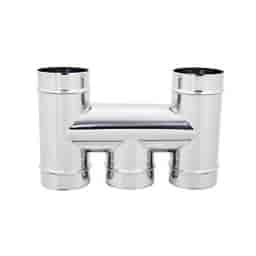
The climate of Gilan and its residential structures are mostly equipped with Aleppo and Safal sloping roofs due to heavy rainfall. Chimney installation on gable roofs faces the challenges of being windproof and sealing isogam or roof sheet. Improved channelization by using reinforced H caps and standard vane caps prevents the effect of the opposite wind flow from entering the chimney.
Standard hoods should be placed at least 70 cm higher than the highest point of the shelter or the roof blade, so that the natural suction of smoke caused by the chimney phenomenon can be properly created. All the seams around the base of the cap are sealed with double-walled galvanized gutter sheets and UV-resistant polyurethane adhesives to prevent any rain leakage to the floors below.
Optimizing the channeling path and its role in reducing energy consumption
Long routes with sharp 90 degree elbows cause a drop in the static pressure of the system and double pressure on the electric motors of the split duct. With a calculated design, the conversions are made with a gentle slope (maximum angle of 30 degrees) and knees with turning vanes, so that the air reaches all rooms with the same flow rate without swirling. This implementation method ensures that the temperature of the outlet from the valves is balanced in all parts of the house and the cost of the electricity bill due to the continuous operation of the compressor is adjusted by 25%.