

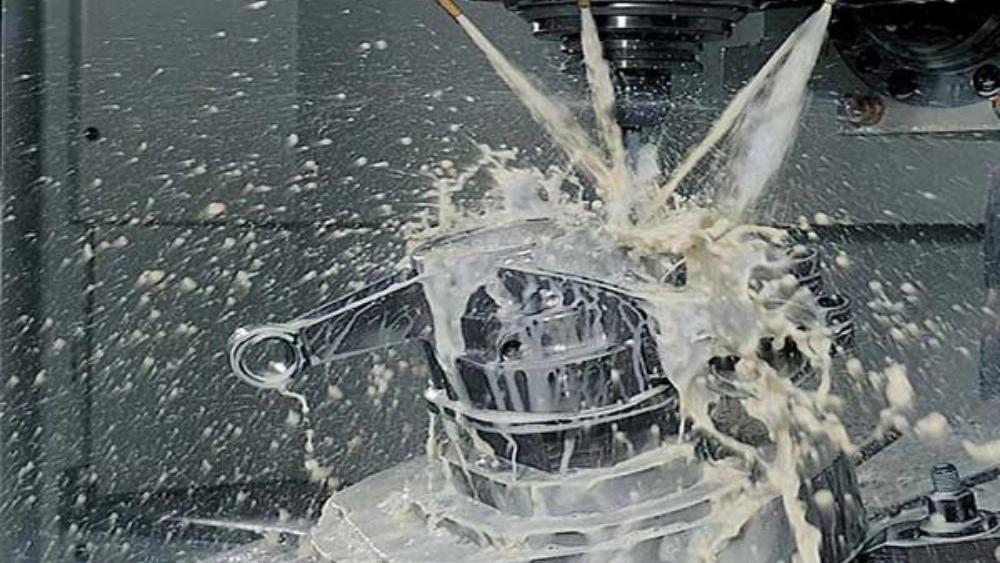
Soapy water is also known as soluble oil and water-soluble oil, and it has many types, including oily soapy water, nano oily soapy water, synthetic soapy water, bio-coolant soapy water, nano soapy water, etc. It has many uses such as industrial soapy water lubricant, metalworking, turning and industrial soapy water. Soapy water oil is an oil that can be mixed with water to form a stable emulsion in the form of a milky solution. The extraordinary stability of the emulsion and protection against corrosion and rust are among the advantages of this product.
What is emulsion?
Basically, oil does not dissolve in water. When oil is added to water, its particles are suspended in the form of tiny droplets. Breaking the oil into very small particles is done by a chemical compound called an emulsifier. A solution of oil in water is called an emulsion.
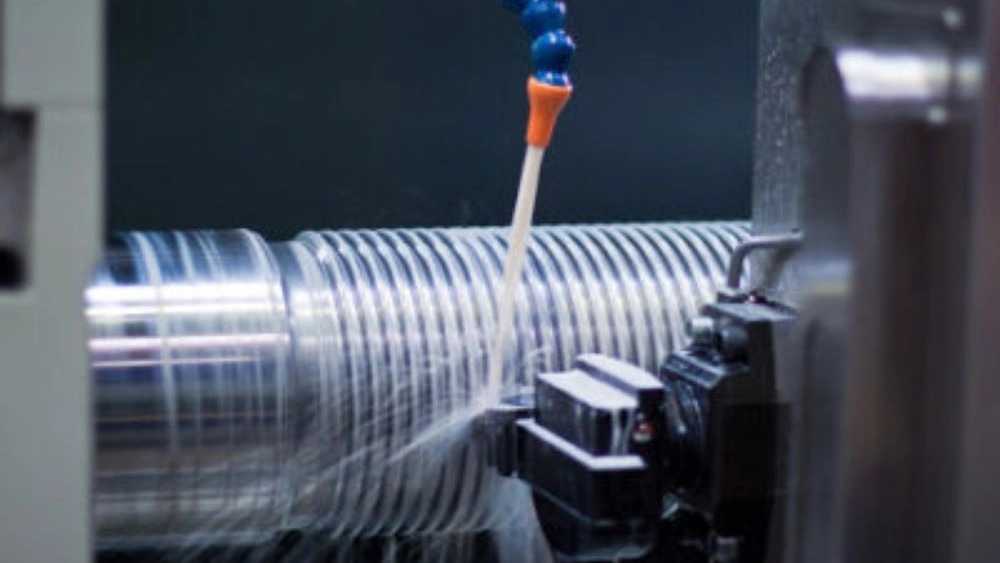
Soap water (soluble oil)
Soap or emulsifying oil is a mixture of a type of base oil and emulsifier with other additives that include antibacterial, anti-corrosive, anti-foam, etc. Soapy water is one of the miscible oils in water that is used as an emulsion. Its other name is soluble oil, which is easily mixed with water in different proportions and forms a milky and homogeneous mixture. With ideal lubrication, soapy water facilitates metalworking operations and prevents heat generation by cooling. This oil has anti-rust and anti-foam properties, which is suitable for all metalworking operations and is used in many metalworking operations that require a mixture of water and oil. If the goal is to further prevent rusting of workpieces and cutting and turning tools, a higher percentage should be allocated to oil in the mixture of water and oil. In fact, they use oil for lubrication and water for cooling. In processes such as machining where lubrication is as important as cooling, a thicker emulsion is used. In general, in processes where cooling is more important, a thinner emulsion is also used. Anionic and nonionic emulsifiers are often used in metalworking lubricants. Cationic emulsifiers are rarely used because metalworking emulsifiers are unstable in alkaline solution (pH = 8-9.5). created can react and prevent the tool and workpiece from sticking.
Application of water water
As a lubricant
By reducing friction, it reduces the heat caused by the process of working on the rollers and the manufactured product.
Soapy oil can By lubricating the surface of the workpiece and the cutting tool, it helps the metal cutting process. By preventing the occurrence of friction at this point, it reduces the amount of heat produced. caused by friction.
In cutting, a lot of heat is produced due to the friction between the parts and the energy spent in shaping the product. Soapy water can only be used in short-term cases and can handle the cooling of parts, but in processes that must be carried out for a long time and deep cuts are made, heat is produced to such an extent that it cannot cool the parts. It should be considered suitable.
As anti-rust
According to the nature of the production process and the type of products produced, as well as the needs of customers, the products should be produced for a period of at least three months. It has the ability to last in moderate weather without rusting be
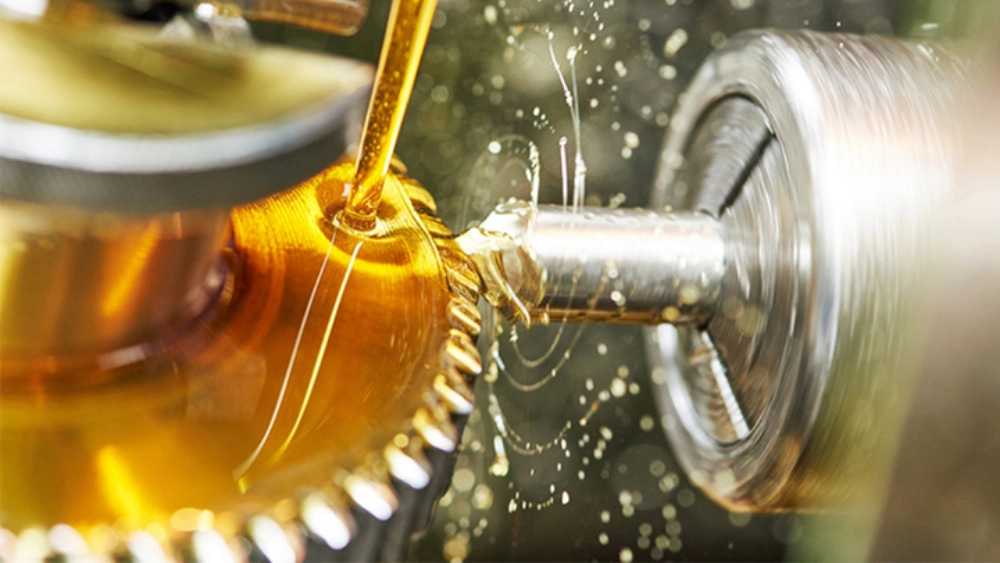
Artificial emulsifying oils
Synthetic oils containing Base oils are not mineral but instead they contain some synthetic chemical compounds. This type is not affected by the growth of bacteria and has a long lifespan as a cooler. They also have the ability to dissolve in hard water.
Soluble artificial oils have very high cleaning properties; This feature is considered as a very good feature. It is considered a problem because the high cleaning of these condensates causes a large amount of pollution to be deposited in the system. Semi-synthetic emulsifying oils. Semi-kinetic lubricants are stable emulsions of water and mineral oils. These compounds were first used in the ****s. CNC machines use the same emulsion compounds that contain small amounts of oil in a large amount of water.