

Weak points of polyethylene tanks
- Tear when objects collide Sharp tip
- deformation due to bearing high pressure
- Inability to install next to a flame or too close to a heat source
Contact
Reservoir Iran Tanker
Reading Time 1 Minutes
Strengths and weaknesses of polyethylene tank
Polyethylene tank has replaced metal and concrete tanks due to its many advantages. Of course, the polyethylene tank, along with its strengths, also has some weaknesses, which are needed to choose and buy correctly in order to be fully informed about the advantages and disadvantages.
Strengths of polyethylene tanks
✅Light weight and easy to move
✅Quick and easy installation
✅Suitable for storing drinking water, food, medicine, Chemicals and acids. Economic compared to other competitors
✅anti-UV feature
Weak points of polyethylene tanks
After we have divided and introduced the water tanks according to the type, now we can also divide them in terms of application.
Drinking water tank
Water tanks are specially produced to store drinking water, so they must have health and quality standards. The standard water tank must be such that it maintains the health and hygiene of the drinking water from the moment it enters the tank until it leaves the tank so that no disease threatens the consumers. As you know, apart from changing the smell and taste of water, the growth of algae and bacteria also causes water to become unsanitary and pathogenic. Therefore, the sanitary tank must prevent the growth of algae and bacteria.
The required features of the drinking water tank include these items:
✅ 3 layers and anti-algae
✅ Antibacterial
✅ Made of food grade polyethylene ( Food Grade (
✅ has the health apple mark and the standard mark
If the water inside the tank is not for drinking and is only used for consumption purposes such as washing or watering the greenery of the agricultural land, it is also possible to use single-layer tanks. Of course, the growth of algae in these tanks happens quickly, which can cause clogging of the tank outlet and decrease the water flow, that's why many consumers prefer to use 3-layer sanitary tanks in this case as well.
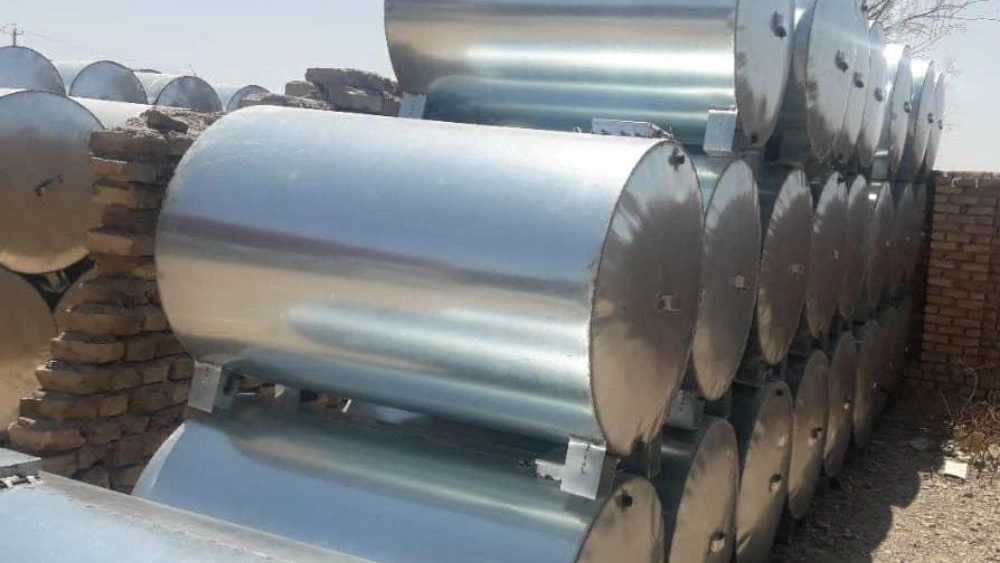
The acid and chemical tank is specifically designed for the safe long-term storage of corrosive substances such as hydrochloric acid. Normal tanks that are used to store water do not have the ability to safely store chemicals and have problems such as leaking or bursting the tank which is a disaster.
Polyethylene is one of the best and resistant due to its anti-corrosive properties. The most important materials for making tanks are acid and chemicals. Also, in the production process, the tank can be customized according to the chemical substance that you intend to store. Master Tank family of Plastonik brand has several products for safe storage of chemicals.
Single-layer tank
As the name suggests, the single-layer tank has only 1 layer and cannot block the penetration of sunlight. For this reason, single-layer tanks are not suitable for health purposes, because algae and bacteria grow when light penetrates into the tank. The advantage of the single-layer tank is that it is possible to observe the liquid level from the outside of the tank, which is effective in some industries and applications.
Three-layer tank
The distinguishing feature of the three-layer tank from the single-layer tank is its ability to prevent sunlight from entering the tank. In the structure of the three-layer tank, there is a black middle layer that prevents light from entering and prevents the growth of algae and bacteria. This is why the three-layer tank is recommended for all kinds of sanitary purposes. One of the top producers of 3-layer, anti-algae and sanitary tanks used to store drinking water is the Plastonic brand. From this page, you can see the complete list of Plastonic products + price.
Four-layer tank
Currently, there are two types of tanks in the four-layer tank market; Three-layer tank + one strong antibacterial layer or three-layer tank + one layer of thermal insulation foam. As you have seen, the 4-layer tank is in any case considered an advanced and optional version of the 3-layer tank!
The four-layer tank with a strong antibacterial layer is often used industrially, as in the food and pharmaceutical industries. store safely for a long time. The preparation of this tank is not recommended for storing drinking water because the standard 3-layer tanks have an antibacterial layer.
The four-layer tank with a temperature insulating foam layer is also used when the tank is in the open and exposed. Very cold or very hot air is installed. This insulating layer reduces the temperature changes of the liquid stored in the tank.
Post Author
1267
common:article
Contents of this post
Types of reservoirs in terms of application
Consumable water tank (washing, irrigation, etc.)
Acid reservoir
Types of plastic tanks in terms of number of layers