


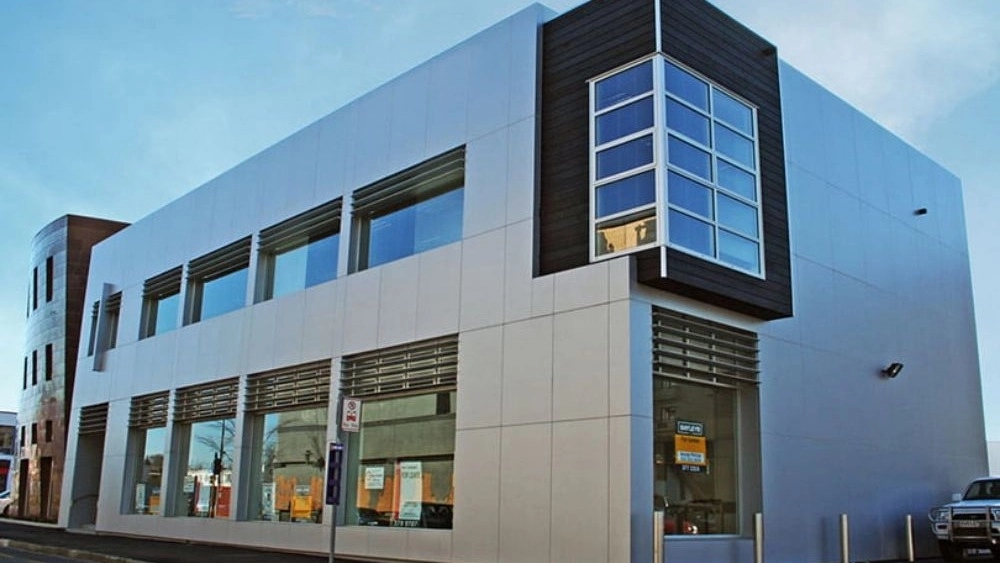
What is a composite view?
The facade of the building is one of the most important elements that can It has a great impact on the external appearance of the building and its beauty and attracts the viewer's attention. With the advancement of architectural technology, the implementation of new and modern facades as the facade of the building has received more and more attention from designers and builders. One of the most famous and popular building facades is the composite facade. Composite facade is mostly used in commercial, office, educational and sometimes residential buildings.
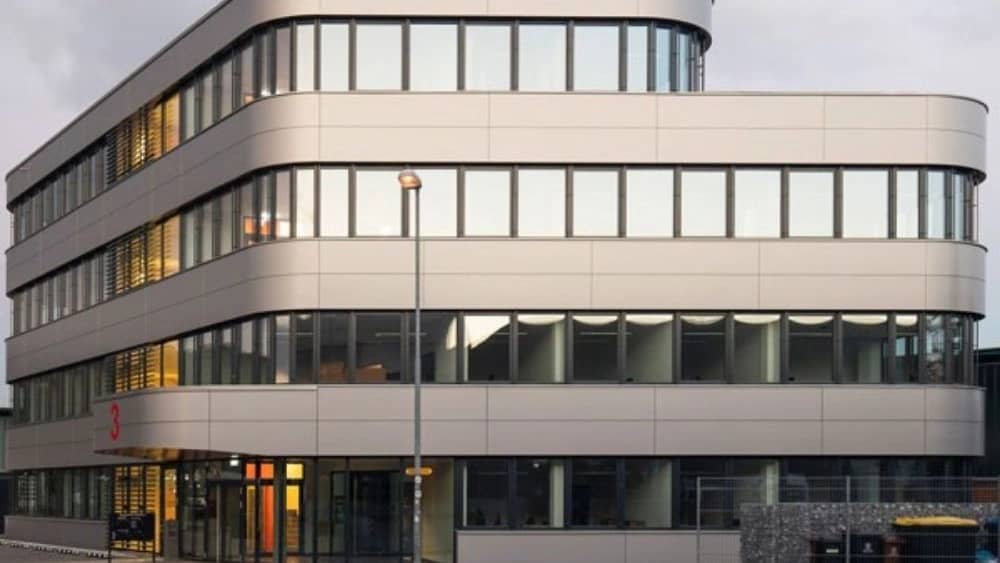
Benefits of composite view
1) Light weight: composite facade sheets have a very low weight of about 5 to 8 kg/m2, which is the lowest possible weight compared to other materials such as glass, cement or stone. According to research, aluminum composite sheets are 90, 85, 75, and 50% lighter than granite stone, cement, glass, and ordinary sheet, respectively.
2) Acoustic and thermal insulation: The middle polyethylene layer in composite sheets causes air to be trapped behind the sheets and can play a useful role as acoustic and thermal insulation.
3) High execution speed: Installation of composite sheets does not require a lot of time, and the execution of the composite facade is done faster than other facades of the building.
4) Variety of colors: Composite sheets are produced in various colors. This feature has opened the hands of designers to design different composite facades. Sheets are colored using advanced systems. These systems can increase the color resistance in unfavorable weather conditions.
5) The low probability of the facade collapsing during an earthquake: composite sheets are not fixed to the facade of the building, and for this reason, they move in place during an earthquake and the possibility of their collapse is minimized. On the other hand, the low weight of the structure reduces the earthquake coefficient.
6) Facade sealing
The composite facade seals the facade and prevents the penetration of rain and snow under the facade. This water is removed by the grooves built into the facade. Also, composite panels are completely resistant to corrosion caused by acid rain and weather factors will not affect the beauty and quality of the facade.
Composite application application
One of the important features of composite panels is that these panels can be used inside and outside the building. Among the uses of this view are in the following places:
Villa and residential building
Interior decoration of companies and public places
Metro, airport, and passenger terminals
Shops and commercial complexes
mosques
Hotels
Body of industrial machinery
Advertising boards
Partitions
false ceilings
hospital
gas station
Composite facade components
Number 1: A layer of protective plastic film on the surface of the aluminum composite sheet, which is peeled off from the sheets after the work is finished.
#2: An epoxy resin primer coat
No. 3: A layer of PVDF to stabilize the color
No. 4 and 8: two layers of aluminum sheets with a thickness of 0.3 to 0.5 mm
Number 5 and 7: two layers of glue
Number 6: A layer of polyethylene material with a thickness of 3 to 5 mm
Number 9: A layer of polyester paint
A variety of building composite facades
In general, aluminum composite sheets, which are also known as composite facades, have a high variety in terms of installation method, installation location, and type of use, and these differences have created different types of composite facades. The differences of composite sheets include the difference in the middle layer of polyethylene, aluminum alloy, the thickness of the aluminum layer in composite sheets, the surface coating of the composite sheet in designs, colors, and types of aluminum composite.
No protective layer
In terms of technology, it is possible to replace the protective coating of the sheets by applying paint on the aluminum layer of the composite sheets. In this case, these sheets are vulnerable to atmospheric, acidic, or alkaline conditions, and there is no guarantee to maintain their quality on the exterior of the building. Therefore, the use of these types of composites is prohibited for the exterior of the building, but they can be used in cases such as interior decoration, in which case they are a suitable and economical choice.
With PVDF protective cover
Aluminum composite sheets can have PVDF protective coating in terms of color performance. This type of coating called polyvinylidene fluoride is a special type of resin.
The presence of polymer layer as well as fluorine element in this resin protects the surface color of the sheet, its durability and stability against adverse weather conditions and ultraviolet rays, acidic and alkaline conditions. This coating will guarantee the quality of facade sheets for at least 20 years.
It should be noted that before applying paint on aluminum, a layer of polyurethane primer is applied on the sheet and then the color that is applied with this resin is applied on the surface of the sheet. In other words, this layer is not applied directly on aluminum. As a result, PVDF sheets have two layers of color.
With Nano-PDF cover
Another type of composite sheet has Nano-PDF coating. This type is also implemented like PVDF resin, with the difference that a third layer is also implemented on PVDF resin, which is different from normal resins in terms of molecular structure.
In other words, the molecular distance is reduced by using nano technology and it will cause the non-absorption of environmental pollution such as dust and oil particles.
On the other hand, the middle strip of aluminum sheets are generally non-flammable, but due to the presence of flammable materials near the facade or the sensitivity of projects, a special middle layer is used for their implementation. Aluminum composite sheets can be divided into two categories in terms of the middle layer. The middle layer of these composites can be made of recycled polyethylene, fireproof B1 and fireproof A2, and the middle layer is often made of aluminum hydroxide or other minerals.
How to implement the building composite facade
Usually, the implementation of the composite view is done in the following three ways:
Rail method or hanging (Hanging)
Fix method
H & L
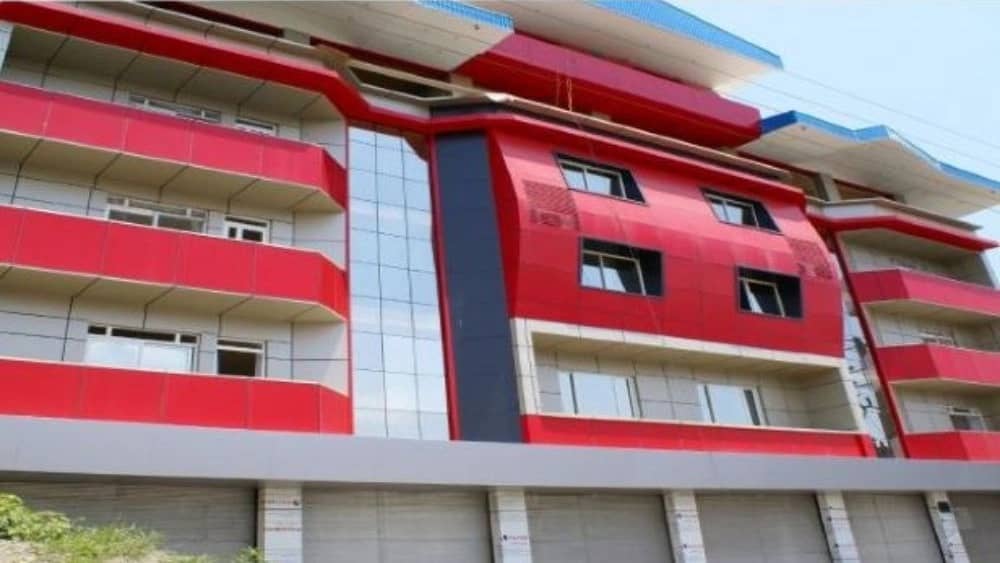
Important Tips on Implementation of Composite View
Before ironwork, the condition of the facade should be mapped and the outermost part of the building should be determined as the base point.
It is necessary to apply cement plaster on the masonry walls before installing the chassis in order to prevent the possible penetration of moisture into the walls and the accumulation of insects.
Before installing the facade, the possible swaying of the foundation cans should be checked with a string and, if any, corrected with gentle blows.
The underlaying work should be done using a can with the right size and with sufficient precision. It is necessary to install all the cans in the horizontal and vertical direction in a vertical, level and string manner so that the whole work is on one plane.
If there is a large distance between the facade and the main wall of the building, it is necessary to use a handle with a suitable size and sufficient restraint to prevent the shape of the substructure from changing.
It is necessary to use dielectric rubber between the iron bracket and the aluminum corner to prevent the formation of electric pile between iron and aluminum and the corrosion of the section and to reduce the amount of dust particles sticking to the facade.
Due to the variety of available colors as well as the properties of composite panels, the appropriate sheet should be selected according to the project conditions.
Composite sheets with nano coating can be used in areas with a high level of pollution. Rainfall on the surface of the sheet with nano coating causes them to be cleaned and there is no need for additional cleaning.
In structures for which there are strict fire requirements, the middle polyethylene layer of type B2 or A1 should be chosen.
In special views, you can use seven colors of sheets. This type of facade changes color with sunlight from different angles and with different intensities.
In the fix method of implementing the composite facade, after completing the installation of the sheets, we must seal them with the help of silicone glue and sealing rubbers. Be careful that the glue and tires are of high quality and resistant to UV rays and different weather conditions. Deformation of the sealing rubbers and their loosening causes water to penetrate to the back of the facade.
According to the structural design guidelines, requirements and performance criteria for the exterior of buildings (Chapter 8 of Regulation No. 714), defects such as warping and twisting, unevenness of angles, waves, scratches, scuffs and discoloration should be checked for all sheets before installation. .
It is necessary to check all the connections of the cans to the facade, as well as the quality of the welds.
It is recommended that after the completion of the foundation and final preparation of the work, the sheets are transferred to the workshop and stored on a flat surface. In general, all the steps of loading, transporting and unloading panels should be done in such a way that there is no damage to them.
The minimum thickness of facade composite sheets is 4 mm and parts with less thickness should not be used.
It is necessary to install the composite sheets in both longitudinal and transverse directions in a parallel way and the extension of their grooves should be in the same direction.
After finishing the operation of the facade, the protective labels should be removed from the facade.

Content support expert - code 05 - extension 229
Post Author
I am a content support expert with code 05 in Behazi. My job is to manage, upload and optimize business content. To contact me, you can call 01391001011 extension 229.
نظرات و تجربیات شما
دیدگاه شما چیست؟
با ثبت امتیاز خود، به ما در تولید محتوای بهتر کمک کنید.