
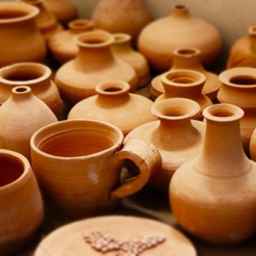



Look around you to see how many pottery and ceramic decorative items are around you. Ceramic and clay dishes have been associated with human culture for more than thousands of years, and the most ancient artifacts discovered in history are related to them. Although the important role of these two in human history is undeniable, there are many differences between ceramic and clay dishes.
Ceramic similarity
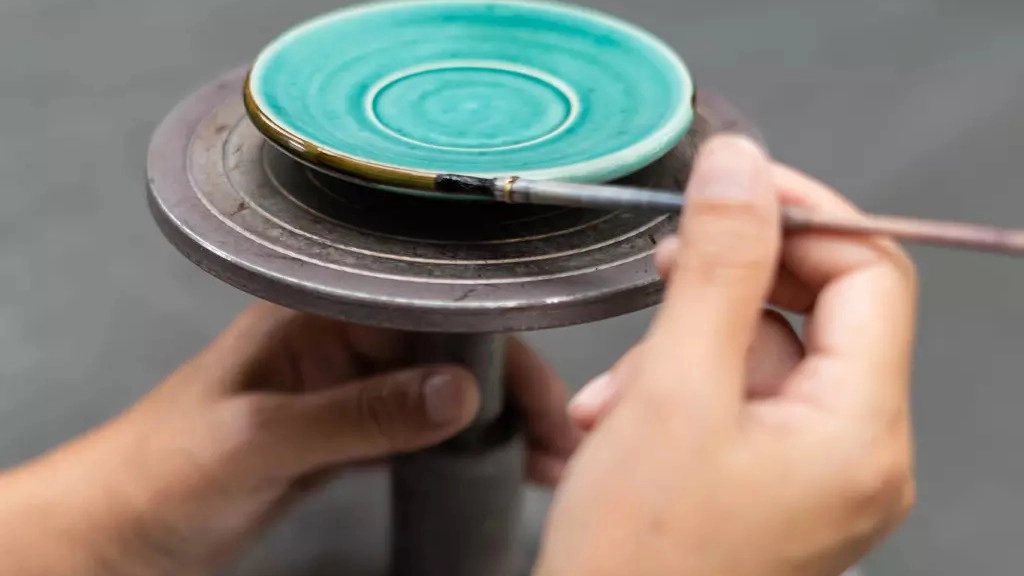
Ceramic and terracotta dishes are similar in appearance and both are made of clay and mud and baked at the right temperature to maintain their shape. Such dishes consist of two parts, the body and the glaze. The body is the main shape of the container, which is made of special mud. Glaze is also a transparent and shiny material that sits on dishes and gives it a new color and surface. Ceramic and clay dishes can be unglazed or with glaze. Dishes that are unglazed are fired once, and those that are glazed or painted with glaze are fired again. Sometimes even in some types of glazing, the dishes may be baked several times with different glazes.
The difference between ceramic containers with earthenware soil
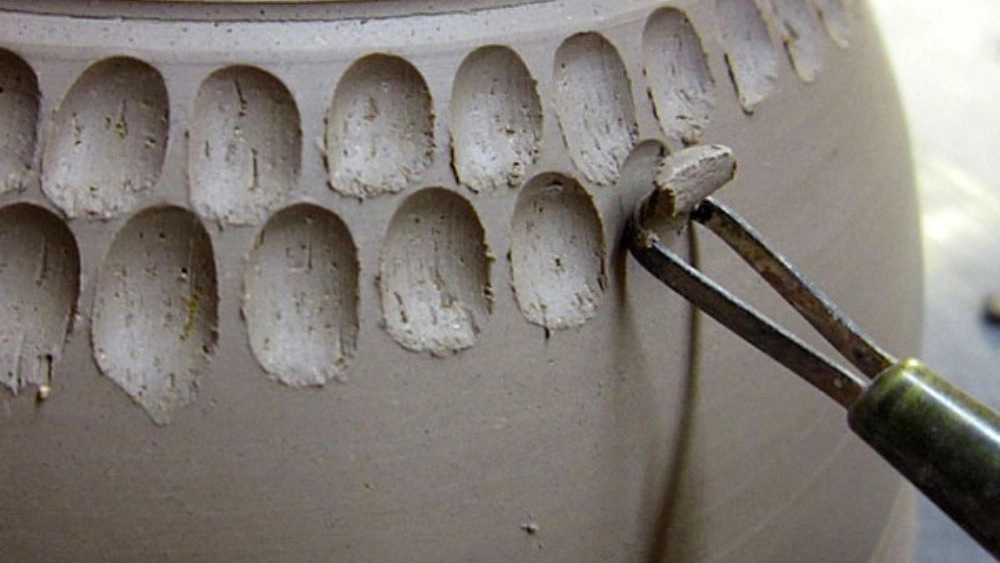
Ceramics are made from materials that permanently deform when heated. Pottery products are made from clay, but ceramic products are made from a combination of clay, some types of special soil and some other materials. Ceramic products are actually a type of ceramics and their main material is clay. Another difference between ceramics and pottery is their shape. Pottery has a pasty state, that's why they shape it by hand or pottery wheel; But ceramics are used in different ways. Ceramics can be made into the desired shape more easily and have a greater variety of forms than pottery. Pottery is obtained from the combination of clay and secondary soils. This material has high adhesion properties and a lower firing degree than ceramics. Ceramic dishes are dishes that are made with primary soils such as a combination of kaolin, quartz, silica, and stoneware, and they are less sticky and require a higher degree of firing, and their glazeability is higher than that of pottery.
The grade of baking in ceramics and
The meaning of pottery and ceramic firing is heating soil molecules, destroying salt molecules, evaporating the water in the soil and removing volatile gases. During the cooking process, the molecules present in the soil will change and these interactions cause the strength of the baked mud. It is ceramic.
One of the oldest methods for firing pottery is heating and firing pottery in a pit, which is still used in some cities of Iran. There are different types of kilns used in the pottery industry, such as traditional kilns, cylindrical kilns, etc., but today, many pottery workshops use lower draft kilns, whose fuel is gas or kerosene. Of course, other furnaces are also used besides lower tension pottery furnaces, such as electric furnaces, gas furnaces, etc.
In electric furnaces, they adjust the cooking time according to the type of pottery. If a dish is to be baked for the first time, the temperature is set to 900 degrees Celsius, and for glazed dishes, the temperature is set to 1000 or 1200. Heating the pottery should be done slowly and increase by 100 degrees every hour; But ceramics are fired without glaze at a temperature of 1250-1200 degrees Celsius. Also, after glazing, they are baked again at a temperature of 1260 to 1100 degrees.
The price difference of ceramic and earthenware
Another difference between ceramic and clay dishes is their price. Various materials are used to make ceramics, while the same type of flower is used in pottery, and this is one of the reasons for the price difference between ceramics and pottery. Another difference is the firing time of the two, pottery is fired at a lower temperature than ceramics. Also, due to its higher glazeability, ceramics are available in the market with different types of glaze. Pottery is formed by hand and a potter's wheel, while ceramics are made by casting with plaster molds. The flexibility and the temperature they tolerate in the furnace are different. Earthenware is made of clay and has a lot of stickiness. Also, they are prepared in a lower baking degree than ceramic dishes; But ceramic dishes are made from a combination of soils with less adhesion and a higher degree of firing and have more glazing.