

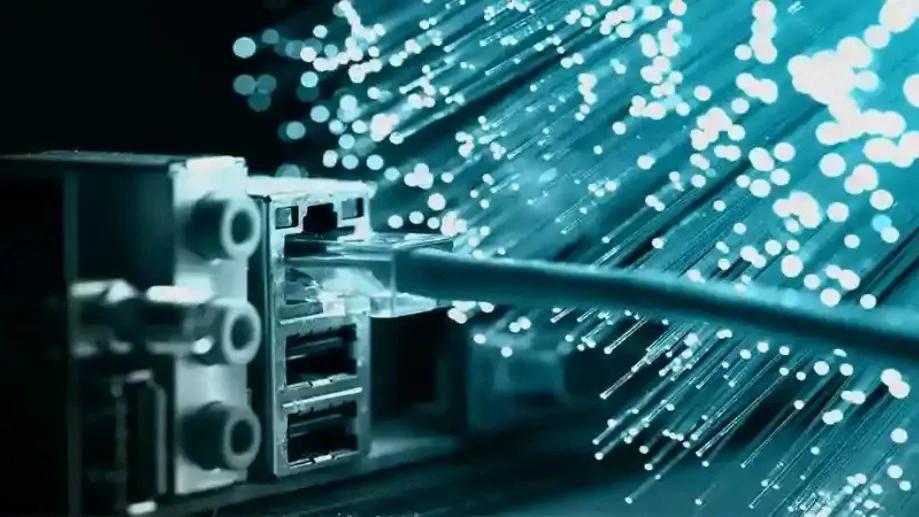
Benefits of optical fiber
Optical fiber has several important advantages over traditional metal wire cabling:
Bandwidth and higher speed
Optical fiber has much more bandwidth than copper cable, allowing it to carry much more data per second. Typical broadband speeds for fiber internet connections start at 100 Mbps and can go up to 10 Gbps. In contrast, the fastest copper wire connection using DSL has a maximum speed of 100 Mbps.
This higher bandwidth enables fiber internet and data connections to operate at very high speeds. Transmission of data-heavy content such as video streaming can happen almost instantaneously over a fiber connection. This speed advantage will only increase over time – researchers are already demonstrating fiber connection speeds of up to 1TB/s in controlled lab settings.
Signal reduction at long intervals
Optical signals transmitted over optical fiber have much less loss than electrical signals over copper wire, even over very long distances. Optical fiber can transmit data over distances of several kilometers without the need for signal amplification equipment.
In contrast, Internet and copper network cables are attenuated over long distances and require repeaters every few hundred meters to restore the signal to full strength. This gives fiber an inherent advantage for backbone networks that need to connect cities and countries.
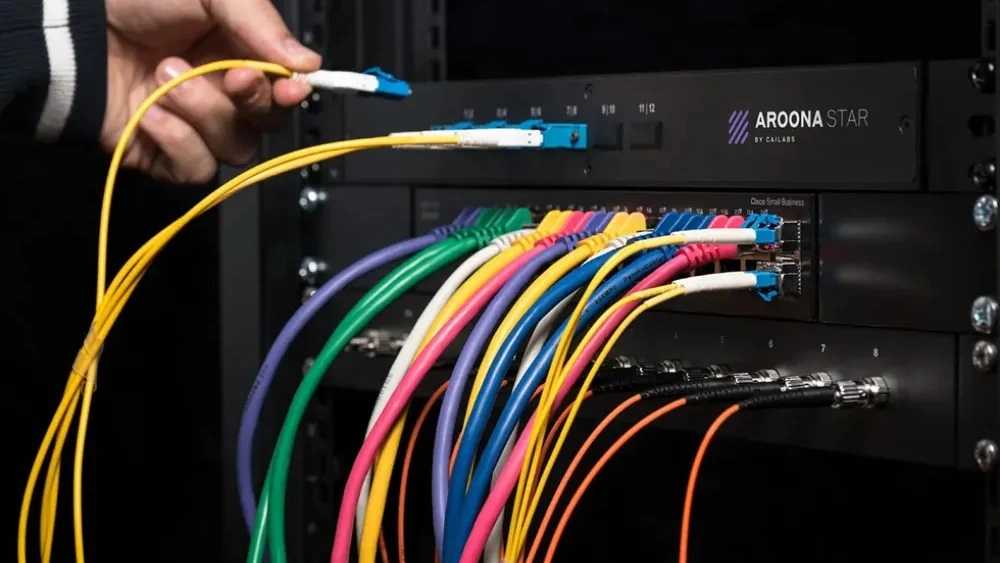
Electromagnetic interference
Optical fiber does not conduct electricity and is immune to electromagnetic interference (EMI). Copper cables are prone to interference with nearby electrical equipment, which can reduce the signal. Fiber glass or plastic filament is dielectric, meaning it does not conduct electricity at all. This makes it ideal for buildings and environments such as hospitals and industrial facilities that use large amounts of electrical equipment.
Easy to install and upgrade
Fiber optic cable is light, flexible and much smaller in diameter than copper cables designed to transmit the same amount of data. This makes installation easy and very little bulky equipment is required. Fiber can also be laid alongside existing copper infrastructure, allowing for incremental upgrades.
Additionally, higher capacities can be added to existing fiber simply by upgrading equipment on both ends. There is no limit to the inherent capacity of the cable itself. This ensures that fiber networks can scale well to meet future needs.
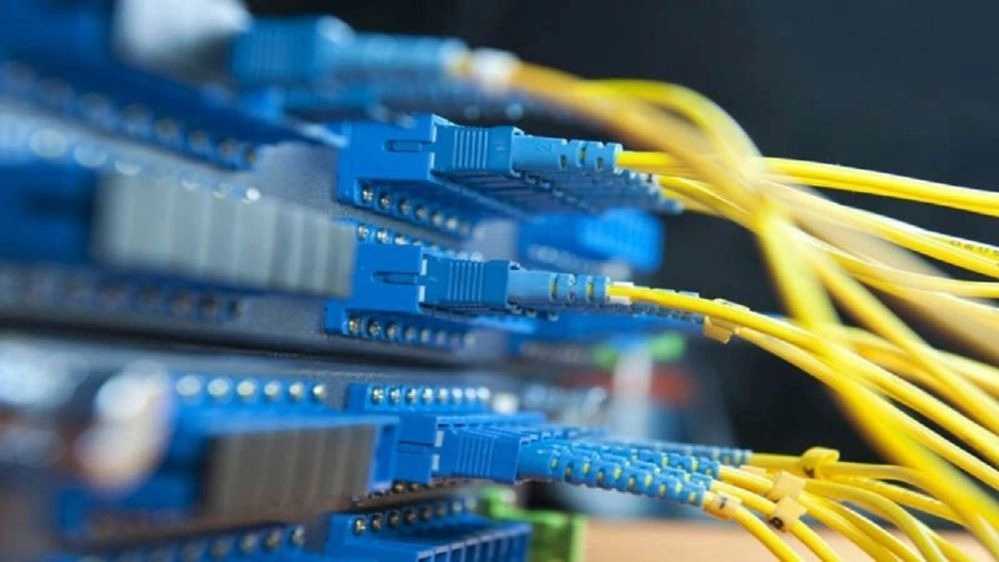
Safe data transfer
Optical signals used in optical fiber cannot be intercepted or monitored without physically compromising the fiber itself. This makes fiber networks very attractive for secure communication applications in government and finance. Optical encryption techniques, which encode signals as different wavelengths of light, provide an additional layer of security that is not possible in copper cable networks.