

In recent years, the use of chemical fertilizers and poisons such as urea in agriculture or the use of various drugs and growth hormones in animal husbandry has increased. One of the main reasons for this issue is the increase in population and the increase in demand for food products because in the mass production of food, traditional agriculture and animal husbandry are no longer responsive. Since the use of these substances in the production of food products can be harmful to humans and the environment in the long term, in the past few years, more people tend to use organic, natural or local products instead of industrial products. . Because these products are healthier.
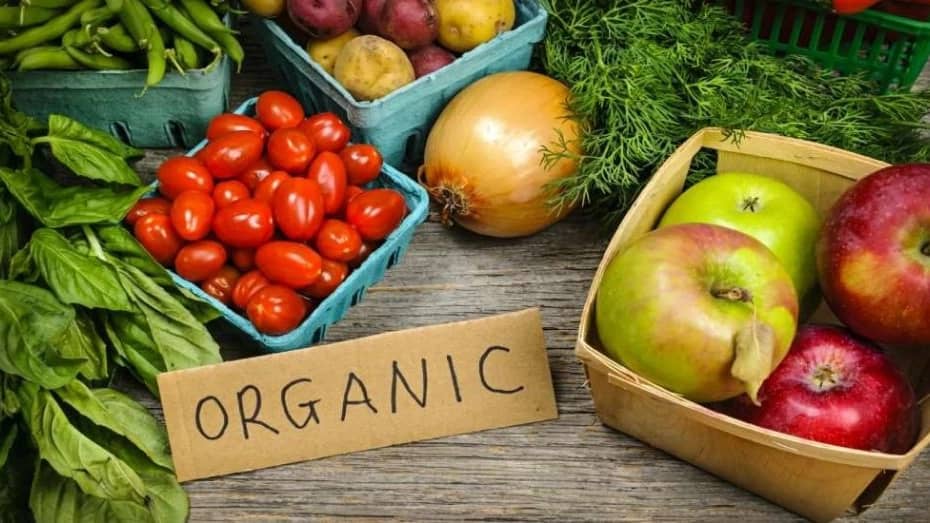
Organic farming products
Fruits, vegetables and other agricultural products are considered organic if no chemical fertilizers or pesticides have been used to harvest the crops in that land for the past three years. For example, organic rice is defined as rice that the farmer has not given any chemical fertilizers or pesticides to his land for 3 years before, and in any of the stages of planting and harvesting rice, there is no chemical fertilizers or pesticides to deal with pests. Do not use. In this situation, very little rice is obtained, and for this reason, the price of this rice can be up to 4 times higher than the price of ordinary rice.
Organic animal products
Livestock and dairy products are organic if the animals from which these products are obtained have their natural life and behavior, can move freely and their living space is not small and limited, for the growth of these animals, they should not No antibiotics or hormones have been injected into them and they must also feed on a feed that is completely organic. In general, the use of any genetically modified compounds in plant products and Livestock, which are grown organically, is prohibited.
How to find out that it is an organic product?
This is not so difficult. Only organic products are certified organic. This certificate is assigned to a product when its organic status is confirmed by the valid institutions of each country. After controlling the organicity of the products according to the standards, these institutions give it an organic certificate. The inspection of organic products is done continuously and once in a while, and if it is determined at any stage that the producers or farmers are acting against the standards, the organic label will not be given to their products.
If a certified product If organic is one of these references, the logo of that reference can be included on the product so that the customer can be sure that the product is organic by viewing it.
Of course, you should know that always having an organic label on a product does not mean that it is really organic, and it is possible that the seller has used a fake organic label on his products, which is punishable. If you intend to buy organic products, you should buy from places where you can be sure that the organic products are controlled by regulatory bodies.
Grading food in terms of being organic or not
100% organic: are products that are completely composed of natural ingredients.
Organic: are products that consist of 95% are natural ingredients.
Produced with organic ingredients: are products that have at least 70% natural ingredients.
Non-organic: Foods that contain Normal in them, less than 70% are not considered organic.
Are organic products different from natural?
Yes, these two definitions are different. Natural in any product may have its own definition; For example, natural honey is called honey that has not been artificially fed by bees in the season of nectar and flowers, or natural tea is called tea that does not have any chemical additives to increase the aroma and color of tea.
< br>In a general definition, it can be said that natural products are products that have been minimally processed on food; So that the ingredients of that product are all natural and also do not contain special additives such as hormones, antibiotics, sweeteners, food colors, preservatives or artificial flavors.
What is local products and how can we identify them?
In the global definition of local products, food and other agricultural products are said to be grown or produced in a specific area and sold after a certain process. In these products, no chemical preservatives are used to increase the preservation of food; Therefore, naturally, the distance between the place and time of production and consumption of these products should not be too long, because the shelf life of these products is usually short and they may spoil quickly.
As for how much this distance can be for the product to be considered local, There is no agreement on the criteria for placing a specific number, but some say that this distance should be less than 400 miles or 644 kilometers.