

Concrete beam is a prefabricated piece made from rebar and concrete and used in building and roof construction. In general, the beam is produced in two types of truss and pre-tensioned. According to the type and amount of load on the roof, the distances of the beams are different. The weight of the blocks and concrete is supported by temporary supports before the strength of the poured concrete is achieved. After obtaining the strength of the poured concrete, the T-shaped concrete beams are stuck together, bear the bending moment resulting from the vertical loads of the roof and transfer it to the main beams. Beams are generally available in two types: concrete and metal chromite.
What is the concrete joist?
Block beam is considered to be one of the most common types of structures for roof construction, in which concrete beams are used. In fact, cement or clay blocks are placed between the beams. Concrete beam is the main part of block beam construction. Considering that the compressive strength of concrete is high, but it does not have good tensile strength, to compensate for this defect, placing concrete next to steel and rebar has been used, and the reason for this is the high tensile strength of steel, which can increase the tensile strength of concrete beams. A concrete beam is composed of a combination of concrete and steel bars, and it is a so-called prefabricated truss, and according to the extent of your construction project and the amount of load on the roof, the dimensions of the beam can be changed, but in general, it can be said that a standard concrete beam has The thickness of the concrete is at least 40 mm and the width is 100 mm.
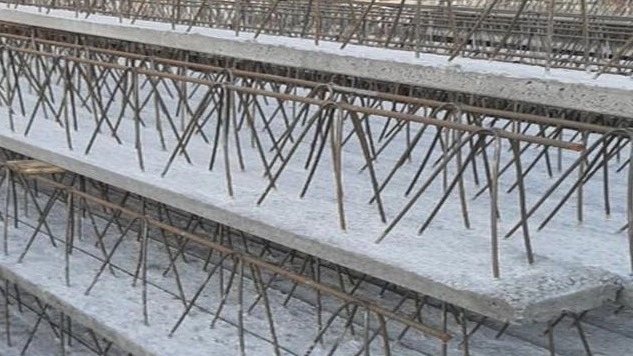
Types of concrete joists
There are two categories of beams: beams with a permanent mold, which are also called shoe-shaped beams, and the second category, which is called beams without a permanent mold. Concrete and metal beams are among the types of beams without permanent molds. Concrete beams are divided into two categories, prestressed beams and truss beams. Concrete beam is one of the traditional beams and consists of two steel reinforcements in the lower wing and one steel reinforcement in the upper wing. Also, some zigzag steel reinforcements are welded to the rest of the reinforcements in the upper and lower wings in single or double mode.
Concrete truss joists
The concrete beam of the truss is a structure that is very resistant to tensile forces and high pressures. The overall structure of the truss concrete beam has a triangular shape. This type of appearance makes it bear tensile and compressive forces and makes the beam gain the necessary strength and stability. Steel trusses and concrete heels are used in the construction of concrete truss beams. The truss includes prefabricated parts of lower, upper and zigzag tensile bars. These rebars are connected and welded to each other in the form of a truss, and the bearing capacity of this type of truss structure is very high. The number of lower tensile bars is considered to be at least 8 and at most 16. This value is for zigzag bars from number 5, 6 or 8. In the trussed concrete beam, the heel part is temporary and after concreting, it is removed from the mold, for this reason it is classified as a permanent moldless beam.
Pre -tensioned concrete
Due to the fact that using only concrete causes it to crack and break, using it alone is not suitable for the roof. By combining rebar and wires with concrete, strong structures are built, so a number of steel wires with a diameter of 5 mm, which have a resistance of about 17,500 to 19,000 kg per square centimeter, are used in the construction of concrete beams. The number of wires varies according to the length of the beam and the pressure it must bear. In the prestressed concrete beam, the steel wires are placed under a certain tension by jacks before concreting the beam. Considering that the prestressed concrete beams are produced in the factory, they have a good standard, and on the other hand, they increase the speed of construction, and the monoliths and cement blocks are easily placed in them. The height of the concrete beam is between 13 and 17 cm, with a width of at least 10 cm in the lower part. Of course, in the structure of the concrete beam, about 4 cm is considered for the placement of monoliths and cement blocks.
Weight of concrete joists
The weight of concrete beam depends on the size and type of beam used. In addition, there are factors for measuring the weight of concrete beams, which are mentioned below.
Mechanical properties of concrete
Geometric characteristics of the section
Mechanical characteristics of steel cables used in concrete beams
The benefits of pre -tensioned concrete joists
Acceleration of the construction process due to the preparation of the product in advance
Less weight compared to clay and chromite beams
Reducing the possibility of tensile cracks
Low price and cost savings
The lack of moisture permeability in it
High resistance and long life
The possibility of implementing a roof with long openings
Reducing the weight of the roof of the building
Reducing the use of steel and thus reducing the force of an earthquake
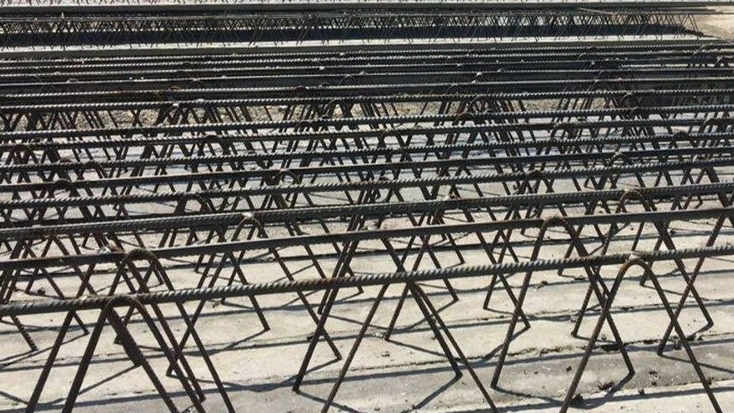
Stages of joists loading
In the first stage, the beams bear the load resulting from their own weight, the block and the covering concrete, which is called the dead load of the building, in addition, the task of bearing the pressure of the loads during the implementation is the responsibility of the concrete beams. In the last stage, which begins after the strength of the poured concrete is established, the temporary supports are removed. The beam itself is responsible for bearing a load equal to the result of the dead and live loads after the building is in use.
Components of truss joists
The main components of truss concrete beams are the following parts:
Tensile reinforcements
Transverse reinforcements
Upper armature
Beam heel concrete
Reinforcement reinforcements
Connection auxiliary armature
Tension reinforcement
In the first stage of beam loading, the lower armature of the truss, as the tensile member of the concrete beam truss, must withstand the tensile force caused by the weight of the beam itself during transportation. In the next stage, it must be able to withstand the tensile force caused by the dead weight of the building in the distance from the axis to the axis of the beams and between two temporary supports. In beam loading, which is the final stage, the lower armature acts as a tensile member (T) shape.
Transverse reinforcement
In the first stage of loading, the transverse reinforcements provide the necessary stability to bear the beam's own weight during transportation. In the second step, these reinforcements provide the necessary stability to support the dead weight of the roof between the temporary supports. In the last stage of beam loading, the transverse reinforcements create the connection between the tensile reinforcement of the truss and the covering concrete, although we remember that part of the shear force of the beam (T) is supported by the transverse reinforcements. The upper reinforcement in the first and second loading stages, the reinforcement The top of the beam plays the role of the top member of the truss and with the help of other members of the truss, it supports the weight of the beam during transportation as well as the dead weight of the roof in the distance. between two temporary supports, during molding and concreting (before the cover concrete strength is achieved). In the last stage of beam loading, if the upper reinforcement is placed in the thickness of the cover concrete and above the blocks, it is used as drop reinforcement and The heat of the composite section of the roof works, but if it is lower than the level of the blocks, it will not play this role.