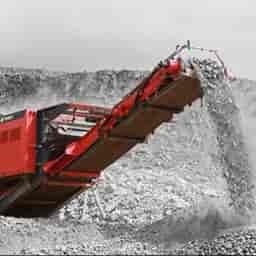

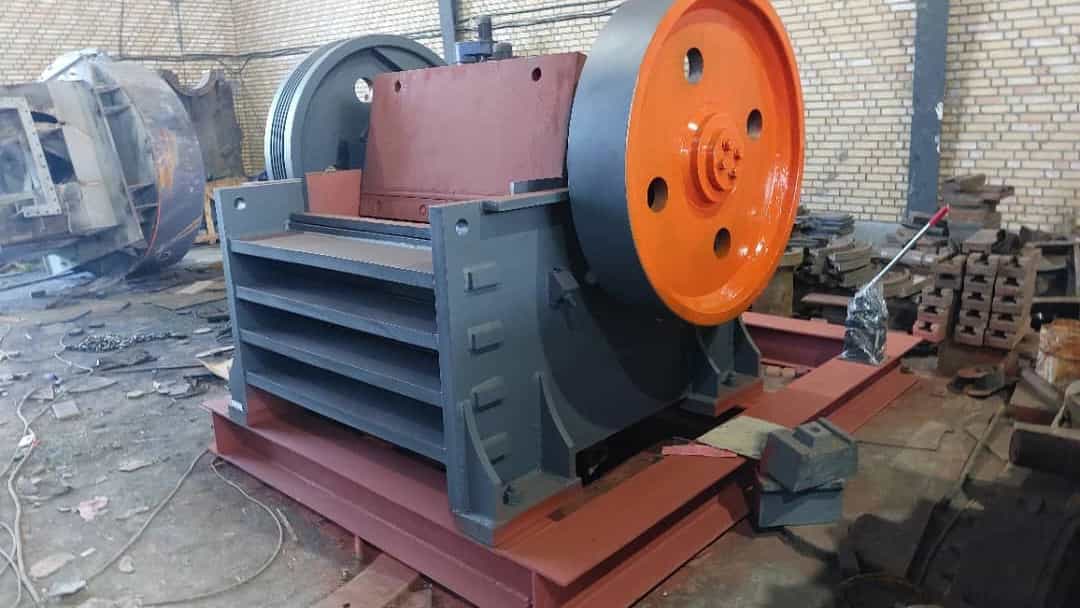
The machine is on, but the stones pass through the outlet more slowly than before. The head of the workshop in Mashhad is thinking about replacing the shoulder blade; Another dealer says the aperture setting should be checked first. Both possibilities may be true. The problem is that buying a part based on the name of the device or the appearance of the worn part alone does not determine the cause of the performance drop. Before ordering, it should be clarified which part is worn, whether the replacement part is compatible with the machine or not, and what effect the incoming feed has on the wear.
This guide is written for the mine operator, maintenance manager, and purchasing manager who wants to make technical decisions about selling jaw crusher parts, not just put together a few prices.
Where to start to choose jaw crusher parts?
Start by accurately identifying the device and recording signs of failure; The name of the part is the second step. As long as the model or reference dimensions of the device, the position of the part and the working conditions are not known, comparing the prices will not eliminate the possibility of incompatible purchases.
The jaw crusher is usually placed at the beginning of the crushing line: the stone is compressed between the fixed jaw and the moving jaw and then it is removed from the machine for the next steps. In many devices, eccentric shaft movement and toggle assembly contribute to jaw movement. For this reason, loss of capacity, abnormal sound, or change in output granularity should not be attributed to a part without checking.
In the first review, answer three questions:
- What has changed? Capacity, output size, machine noise, vibration or wear pattern?
- Which part has a sign? Jaw shoulder teeth, side armor, toggle assembly, seats or bearings?
- What are the feed conditions? Input stone size, amount of fines, stone material and how it enters the hole
If the jaw teeth are flattened or the wear is concentrated in an unusual area, a replacement or displacement of the jaw may be necessary. But the time and method of replacement should be determined by the design of the same device and the manufacturer's instructions; Even the residual thickness criterion is not the same in different designs. Metsu's application manual also emphasizes replacing the shoulders before complete wear and early inspection in case of abnormal wear.
Which variables change the selection of the piece and its actual price?
Dimensional compatibility, material and profile of the part, feed conditions and possible stoppage of the line are the four main decision variables. A part with a lower initial price is not necessarily a more economical choice if it wears out sooner or if its installation requires modification and rework.
When referring to the Crusher Equipment Sales Center, it is best to provide the part specification as a technical request, not a generic name. Phrases like "the shoulder and jaw of this model" are the starting point of the conversation; To confirm the order, the dimensions, installation location, restraint method and clear pictures are also important.
How to check the dimensions and installation method of the part?
The part must be compatible with the installation location and the method of harnessing the device, not just with the nominal size of its opening. For the jaw shoulder, check the length and width, thickness, location of the wedges and the difference between the fixed and movable jaw before placing the order.
Take pictures of the current part in front and back view and match the dimensions to the drawing, part code or approved machine specification. If the inscriptions on the license plate are garbled, do not rely solely on the operator's memory or the appearance of the parts. jaw shoulder, side armor and parts of the Togol collection each have a different role and position; To order each one, information about the same installation location is required. The parts list and manufacturer's guide also distinguish between wear parts and components such as shafts and bearings.
What effect do stone material and wear pattern have on the choice?
One tooth profile is not suitable for all feeds. The selection of the jaw comb should be coordinated with the abrasiveness of the stone, the size and composition of the feed and the adjustment of the outlet opening of the machine.
For example, a very fine-grained feed, a high-wear stone, and a stone that inflicts more impact on the part will not necessarily yield the same results from a tooth design or an alloy composition. Sandvik's technical guide also considers the choice of jaw profile as dependent on the characteristics of the stone and feed, and differentiates between wear resistance and impact tolerance. This tip is not a ready-to-select alloy version of another device; It reminds that the general title "manganese steel" is not enough to judge the suitability of the part.
Part or topic of investigation | Sign to be recorded | Required information before inquiry | Common error |
Fixed and movable jaw shoulder | Smoothing of teeth, local wear, product size change | Device model, dimensions, back photo and on the piece, feed type | Order only by model name or nominal machine size |
Armor | Thickness reduction or asymmetric wear on the housing side | Installation position, dimensions, photo of stone contact | Ignoring the simultaneous wear with the jaw shoulder |
Togel set and accessories | Abnormal noise, Visible looseness or damage after a safe stop | Device specifications and repairer inspection | Jaw shoulder replacement without investigating the source of the problem |
Bearings and related components | Increased temperature, abnormal noise or vibration | Technical code, lubrication status and troubleshooting findings | Order parts before diagnosing the cause of failure |
Sand crusher machine price | Need to buy or renew the whole line, not just one piece | Required capacity, type of feed, crushing steps and accessories | Price comparison The whole device with the cost of repairing one part |
The price of sand stone crusher is not the same as the price of jaw crusher parts. A jaw crusher is usually part of a crushing line; To compare device or line prices, you need to know which equipment, capacity and services are included in the offer. To compare parts, check the price of each pen along with compatibility, installation conditions and possible downtime.
When evaluating an order, I first ask "What has changed in the performance of the machine?", not "What part do you want?" This simple question helps the purchase request not to be separated from the technical diagnosis, and the healthy part is not replaced without reason.
Several costly mistakes can be prevented at this stage:
- Photography only from the shoulder of the jaw: The back view and the place of restraint are also necessary to check the fit.
- Attributing any loss of capacity to the material of the part: Feed change, opening adjustment and asymmetric wear should also be checked.
- Ignoring the place of wear: Unilateral wear is not just a number for "part life"; It is a clue to check the status of feed and related components.
- Price comparison without delivery conditions: It should be clear which parts the offer includes, with what specifications and what accompanying items.
A less noticeable symptom is a gradual change in output grain size next to jaw shoulder wear. A research on jaw crusher shows that the geometry change due to wear and the change of the outlet opening can affect the product size distribution; Of course, its laboratory results should not be generalized to all mines without investigation. For this reason, periodically recording the opening adjustment and observing the output product is more useful for the repair decision than relying on the appearance of the part on a particular day.
تماس با ما