
Knowing the climate of Lorestan for the construction of a solar and hydroelectric power plant
Procedures for obtaining legal licenses and titles in Lorestan
Receiving legal permits for the construction of renewable power plants is done according to the laws of Satba organization and local bodies. For systems below 200 kW, registration is done through the Lorestan Province Electricity Distribution Company, while large-scale industrial projects are tracked through the national license portal. In the hydroelectric sector, it is necessary to obtain an agreement and license from the Lorestan Regional Water Company to use the water flow. Going through these processes requires providing a technical and economic justification plan, site plan maps and environmental approval. Our field experience shows that simultaneous coordination with the Jihad of agriculture and natural resources prevents the occurrence of long stops in the process of projects and significantly reduces the time of issuing construction permits.
Key equipment and hybrid systems engineering
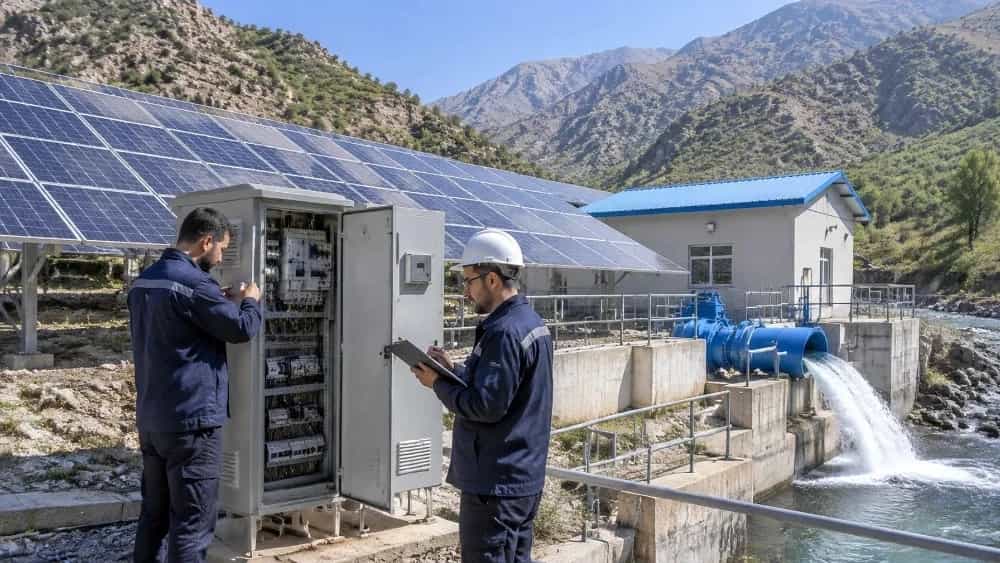
Equipments used in solar and hydroelectric power plants include monocrystalline photovoltaic panels, grid-connected inverters, micro hydro turbines, charge controllers, and stainless steel structures. The choice of equipment quality directly affects the useful life of the power plant, which is usually over 25 years. In the solar sector, basic restraint of structures against regional winds, and in the water sector, the use of appropriate garbage collection systems to prevent damage to turbine blades is of vital importance. By supplying international and domestic standard brands, Delsa Electro Industry uses parts that have the least loss of efficiency in Lorestan's harsh weather conditions. The online monitoring system is also installed on the electrical panels for real-time monitoring of voltage, current and energy production.
Implementation challenges and operational solutions on the site
The implementation of clean energy projects in the mountainous areas of Lorestan is faced with challenges such as the roughness of the land, difficult access routes and temperature fluctuations. To overcome these obstacles, implementation teams use light geotransformation machinery and precast concrete foundations to speed up installation. One of the key points in the implementation of the hydroelectric sector is the precise adjustment of the input flow rate to the turbine to avoid ram impact and damage to mechanical equipment. Also, DC and AC wiring should be done with proper cross-section and UV-resistant cables to minimize energy loss. Periodic inspections and regular washing of panels are other maintenance requirements that are carried out by the support team.
Table of comparative technical specifications of solar and hydroelectric systems
Technical and operational indicators | Solar power plant (photovoltaic) | Small-scale hydropower plant |
|---|---|---|
primary energy source | direct and indirect solar radiation | flow and pressure drop of flowing water |
sustainability of production Electricity | Depending on the time of day and weather conditions | Continuous if there is a stable flow of water |
Initial investment cost | medium to high (depending on panel capacity) | requires the construction of a hydraulic structure and turbine |
useful life of the equipment | 25 to 30 Year | 30 to 40 years with periodical repairs |
Licensing authorities | SATBA organization and electricity distribution company | Satba and regional water of Lorestan province |