
History of fish breeding in the world and Iran
Despite the long history of fish breeding in the pool, the history of artificial proliferation is short fish. The first step in artificial fertilization was taken by a German scientist of Ledvik or Web (1-5). He obtained a separate trout from the ready -made trout and mixed them, which was the first artificial fertilization of fish eggs. In the case of warming fish, in the year 5, the prostitutes were prepared from the natural spawning sites. But the induction of spawning to the breeders began in the year by the Brazilian biologists and later developed in Asia in Varopopa and North North. In the year 6, silver and ardent raised in the soil pools were reproduced artificially by injecting ordinary pituitary pituitary gland extract, and now the moldin of various fish is used to be widely used using synthetic hormones and pituitary fish hormones. .
Why is the breeding of trout in Iran boom?
The need for healthy protein materials and the lack of water resources in Iran has always taken into account the use of two or more orientation of water resources. One of these multifunctional exploits is fish farming, and farming is divided into two groups of cold and hydrothermics in terms of temperature tolerance.
Cryptical fish grow at 2 to 5 degrees Celsius and temperatures above 2 degrees Celsius cause this fish to death. Also, the pH is suitable for breeding salmon 0.5-5 and the pH outside this range causes the fish to be losses. The amount of water -soluble oxygen to grow this fish also depends on several factors such as height, temperature, salinity, etc., but the oxygen output should not be less than five mg / l.
There are multiple ways to increase the oxygen of the solution, including the use of aerations that have different types today and have multiple functions. In general, increased salinity of water reduces oxygen saturation, and freshwater has ppt2/8 salinity, and salmon only tolerates PPT 2 salinity. Salin salinity for salmon is also PPT 2. It should be borne in mind that salmon is a hunter and carnivorous fish, so water transparency has a significant effect on its growth. In other words, the fish should see its food to eat it. In general, transparency in salmon breeding must be supplied to the floor of the pool and the amount of suspended material should be less than 2 mg/l.
The benefits of aquatic breeding
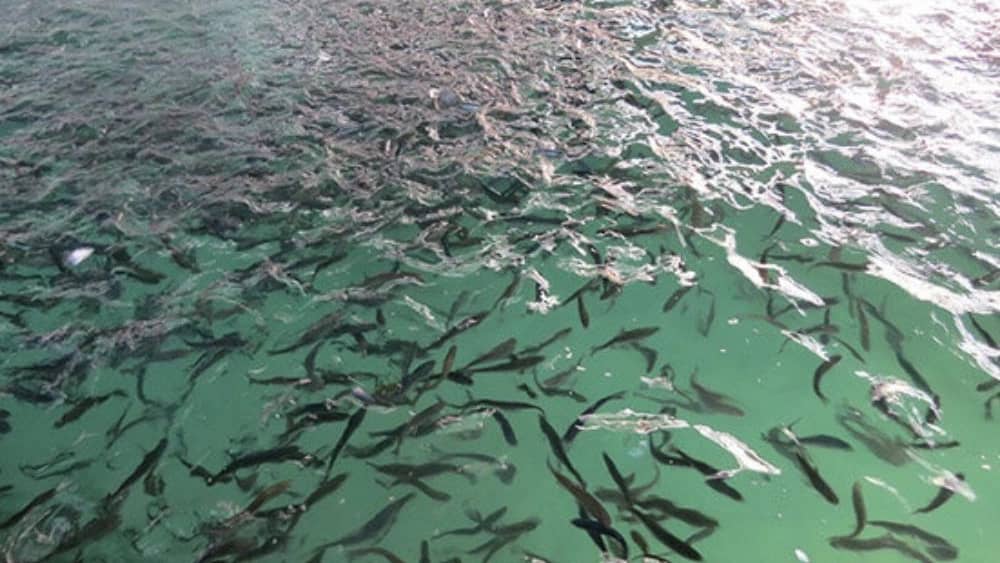
Despite the current growth of the world's population, the production of animal protein is of great importance. Aquaculture cultivation is known as the most general and effective way to produce protein in the future of the world. By comparing the world's most important animals such as poultry, pig, fish and gaves, the importance of fish breeding becomes clear.
The characteristics of the fishing fish
The general features of the salmon
Baby salmon can be released throughout the year, and it is best to have the release weight of about 5 grams so that both breeding period is not too long and less losses. (Losses are below 5 grams). Generally, one tons of fish can be harvested for seven liters per second.
In general, according to fisheries experts, at least one meter land is needed for salmon breeding. Low trout has led some people to grow and sell this fish in their homes in the north of their homes.
Suitable physical and chemical conditions for water breeding
Temperature:
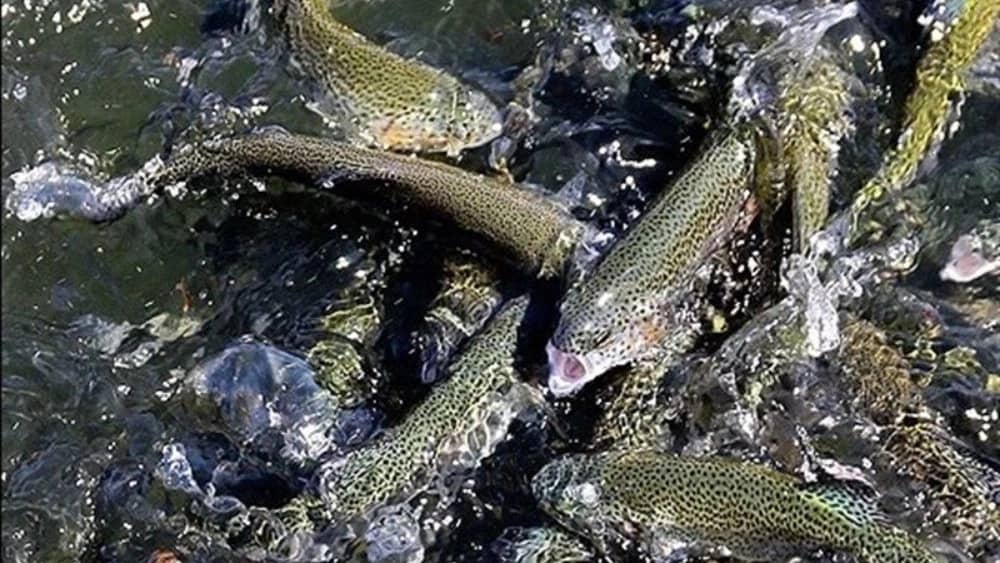
Suitable temperature for salmon breeding is 2 to 2 degrees Celsius. Of course, the most appropriate temperature for breeding this fish is 2 degrees Celsius. The higher and lower temperatures of this range reduces growth and the temperature above 2 degrees causes losses.
PH of water or acidity:
The most suitable pH for salmon breeding is 0.8 to 4.3.
Soluble Oxygen:
The amount of water -soluble oxygen depends on many factors such as height, temperature, salinity, etc., but the oxygen of the output should not be less than 5 mg / l. There are multiple ways to increase the oxygen of the solution, including the use of aerations that have different types today and have multiple functions.
Salinity:
Increased water salinity in general reduces oxygen saturation. Freshwater has a salinity of 0.5 to 4ppm and tolerates salmon to 2 ppm. Salinity of 1 ppm is suitable for salmon.
Transparency:
Salmon is a hunter and carnivorous, so water transparency has a significant effect on its growth, in other words, fish should see its food to eat it. Generally, in the breeding of trout, transparency should be provided to the floor of the pool and the amount of suspended material should be less than 5 mg / l.