


Introduction
1. Initial design
1.1. Receive order and need assessment
The first step in the manufacturing process is to get customer order and accurate needs assessment. At this point, the Top Tech Factory Design Team will hold meetings with their customers to fully understand their needs, requirements and expectations. This need assessment includes the dimensions of the can, the type of product to be packaged, the type of printing and design, and the number of cans needed.
1.2. Graphic design
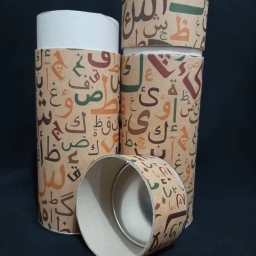
After the need assessment, the graphic design team begins to design the can. This design includes choosing colors, fonts, images and brand logo. The purpose of the graphic design is to create an attractive canyon according to the customer's brand identity. Top Tech factory, with a team of experienced designers, is capable of presenting a variety of creative designs that help customer attention.
1.3. The final approval of the plan
After the initial design, the design is provided to the customer for approval. At this point, the customer can submit their comments and suggestions on the design, and the Top Tech Design Team prepares the final design by making the necessary changes. After final approval of the project, the production process begins.
2. The selection of raw materials
2.1. Selection of cardboard
Choosing a cardboard is one of the most important steps in the production of cylindrical cardboard cans. The type of cardboard used should be selected according to the type of product that is to be packaged. The Top Top Factory uses a variety of cardboard, including recycled cardboard, craft cardboard, and glass cardboard. Each of these cardboard has its own characteristics and benefits and is selected according to customer needs.
2.2. The selection of ink and veni
Choosing the right ink and varnish is also of great importance. The ink used should be of high quality and light resistant. Verni also applies to the print as a protective layer, increasing the durability and gloss of the can. The Top Top Factory uses quality and environmentally friendly inks and varnishes.
3. Print
3.1. Preparation of printed files
After selecting the raw materials, print files are prepared. These files must be prepared with high quality and high quality to make printing correctly. The Top Tap Factory uses advanced design and printing software to prepare print files of the highest quality.
3.2. Offset printing
Cylindrical cardboard cans are usually printed by offset printing. This printing method is of high quality and reasonable cost and is suitable for high circulation printing. In this method, the design is transferred on a metal plate (plate) and then printed on cardboard by printed rollers.
3.3. Print quality control
After printing, the cans are examined to ensure the quality of printing. At this point, colors, resolution, and the absence of any defects in printing are examined. The Top Tap Factory, with the precise quality control system, ensures that all cans are produced with the highest quality printing quality.
4. Cutting and Dikat
4.1. Cardboard cut
After printing, the cards are cut to the desired sizes. These cuts must be carefully made to make the cans properly. The Top Top Factory uses laser and CNC cutting machines to make the cuts with high accuracy.
4.2. Daikat
Dikat is a specialized process in which cardboard is cut into the final form of cans using specific molds. This process is particularly used to create specific and complex shapes in the cans. The Top Tap Factory, with its advanced diekate machines, is capable of producing cans of attractive shapes.
5. Laminate
5.1. Apply the laminate layer
The laminate is a thin layer of plastic applied to the printed surface of the can. This layer enhances the durability of the can, resistance to moisture, and create a shiny or matte appearance. The Top Factory uses a variety of laminates such as shiny laminate, matte lamination, and UV lamination.
5.2. Increased durability and appeal
The laminate not only enhances the durability of the can, but also gives it a beautiful and attractive look. Laminated cans are more attractive to customers and can help increase product sales.
6. Making a can's body
6.1. Shaping
After cutting and lamination, the cards become cylindrical. This process is done by shaped devices that wrap the cardboard around a cylindrical mold and attach its edges.
6.2. Adhesive
The edges of the cardboard are connected using special adhesives. The adhesive used should have high adhesion and heat resistant power. The Top Top Factory uses quality and standard adhesives to produce high -strength cans.
6.3. Body quality control
The cans of the cans are examined after construction to ensure the strength, correct shape, and the absence of any defects in the construction. Cans that are defective are out of the production process.
7. Making a can's door
7.1. Door production
The cans are usually made of cardboard or plastic. The door production process is similar to the body production process and includes cutting, forming, adhesion and quality control.
7.2. Connecting the door to the body
After making the door and body, the door attaches to the can of the can. This connection should be so that the door is easily opened and closed and at the same time fully placed on the body to prevent air and moisture from penetrating the cans.
Conclusion
The process of producing cylindrical cardboard cans is a sophisticated process that requires expertise, modern equipment and quality raw materials. Using these factors, the Top Tap Factory produces high quality cans in accordance with international standards. These cans not only protect products, but also act as an effective marketing tool and help increase product sales.