

1. Washing Machine Type
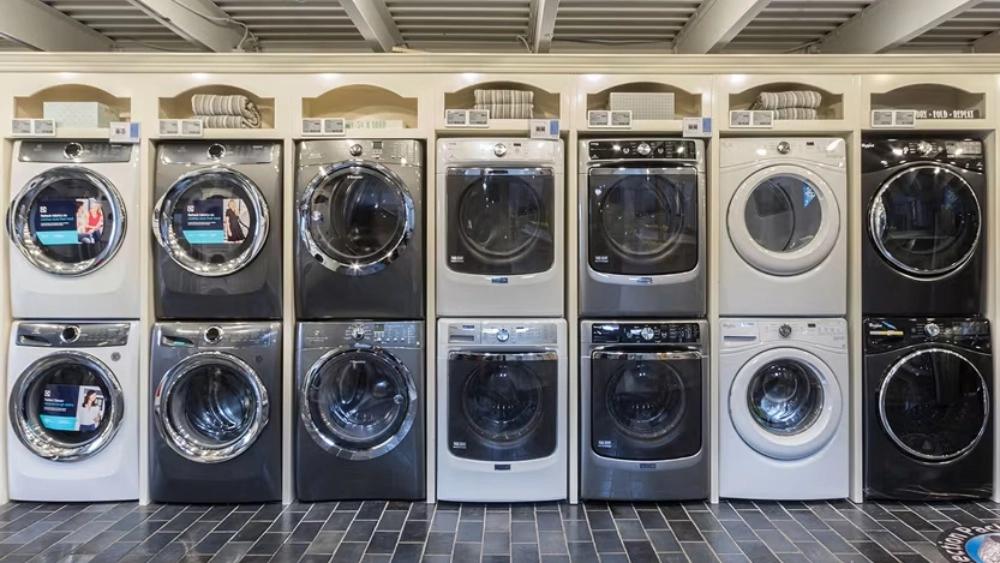
The washing machine is usually divided into three categories:
Door from above (Top Load):
They are cheaper and lighter.
Shorter wash time.
A good option for small homes.
More water consumption than front door models.
door from front (Front Load):
Consumption of less water and energy (higher productivity).
More capacity.
Better and softer washing for clothes.
Suitable for large families.
Twin cars:
They have a lower price.
Suitable for areas with low water pressure or unstable power lines.
Need manual monitoring and adjustment.
2. Capacity of the washing machine
The capacity of the washing machine (per kilogram) depends on the number of family members and the amount of clothes you want to wash each time:
For a person: 5-6 kg is enough.
For a family of two to four people: 6-8 kg.
For populated families: 9 kg or more.
3. Consumption of Energy and Water (Energy Label)
Look for a car with a+ or higher energy tag. These machines have more productivity, consume less water, and are more economical in the long run.
4. Washing programs and capabilities
The more advanced models of the washing machine offer more features, such as:
Specific programs for washing all kinds of fabrics (baby clothing, wool, fast and economic washing).
Anti -wrinkle capability.
Automatic washing of the boiler.
Steam technology (Steam) for more sterilization.
5. Dimensions and size
Notice the space where the washing machine is to be installed:
Coordinate the width and height of the washing machine with your kitchen/laundry space.
Check out the ability to open the car door (especially in front door models).
6. The motor rotation speed
The rotation speed of the motor is measured in RPM and has a direct effect on the quality of drying:
For ordinary clothing: 800-**** RPM is enough.
For better drying: **** RPM or more.
7. The amount of sound and tremor
Lower sound cars and anti -vibration systems for apartments are better options. Look for a model with less than 50 dB sound in washing mode.
8. Budget and Price
Washing machines are in a variety of precious intervals. Along with the features you need, keep in mind. Usually low -cost machines, newer technology and longer durability are more expensive but will be more cost -effective in the long run.
result
Before buying, pay attention to your needs and conditions and determine your budget. Then select an option that is a combination of quality, performance and capabilities.

Kausar Khosravi
Post Author
164
common:article
Good content is the key to your site's visibility
Contents of this post
1. Washing Machine Type
2. Capacity of the washing machine
3. Consumption of Energy and Water (Energy Label)
4. Washing programs and capabilities
5. Dimensions and size
6. The motor rotation speed
7. The amount of sound and tremor
8. Budget and Price
result