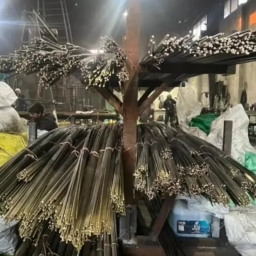

Rebar is one of the essential and widely used parts in various industries that have different types. In the meantime, rice rebar has found a special place in some industries because of its specific features. But what is the difference between rice rebar and other types of rebar? In this article, we comprehensively examine the main differences between rice rebar and other types of rebar, we examine the features and applications of each.
What is the rebar?
Rebar or reinforcement is a type of reinforcing metal that is often used in various construction and industries to increase resistance. This product is manufactured in various shapes and alloys, including steel rebar, aluminum rebar, copper rebar and rice rebar. Each of these types of rebar has specific features and applications. In the meantime, rice rebar has a special place because of its unique capabilities.
What is a brass rebar?
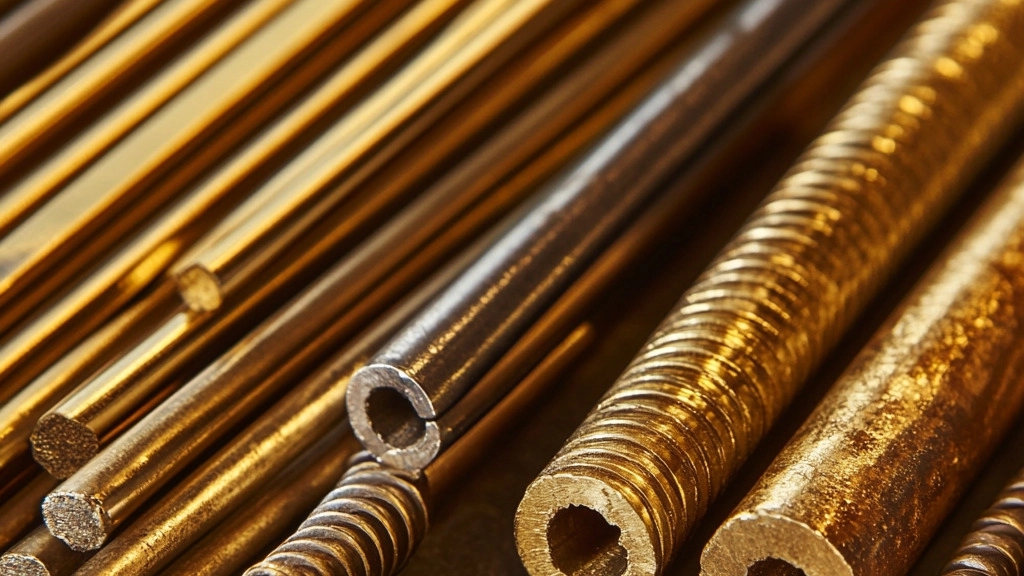
The rice rebar is made of combined copper and zinc alloy and is one of the best choices for industrial, decorative and mechanical applications. This type of rebar has been widely used due to its attractive gold color, excellent corrosion resistance and proper electrical and thermal conductivity.
Types of rebar and comparison with rice rebar
For better comparison, it is best to get acquainted with the types of rebar and the features of each:
1. Steel rebar
Features: steel rebar is one of the most consumed types of rebar that has high tensile strength and high pressure resistance.
Applications: In construction, especially in reinforced concrete, reinforcement of walls and heavy structures is used.
Difference with Brass Rebar: Unlike rice rebar, steel rebar is less resistant to corrosion and is mostly used in the construction industry.
Applications: In construction, especially in reinforced concrete, reinforcement of walls and heavy structures is used.
Difference with Brass Rebar: Unlike rice rebar, steel rebar is less resistant to corrosion and is mostly used in the construction industry.
2. Aluminum rebar
Features: Lightweight, Excellent Light Reflection, and Corrosion Resistance.
Applications: used in aerospace, automotive and decoration industries.
Difference with Brass Rebar: Aluminum rebar, unlike brass rebar, has less electrical conductivity and weaker mechanical strength.
Applications: used in aerospace, automotive and decoration industries.
Difference with Brass Rebar: Aluminum rebar, unlike brass rebar, has less electrical conductivity and weaker mechanical strength.
3. Copper rebar
Features: High resistance to electricity current and superb thermal conductivity.
Applications: are used in the production of cables, terminals and electrical components.
Difference with Rice Rebar: Copper rebar has less mechanical strength and corrosion resistance than rice due to lack of zinc in its composition.
Applications: are used in the production of cables, terminals and electrical components.
Difference with Rice Rebar: Copper rebar has less mechanical strength and corrosion resistance than rice due to lack of zinc in its composition.
4. Rice rebar
Features: Brass rebar has high corrosion resistance, proper mechanical strength, machine capability and attractive appearance. Also has good electrical or thermal conductivity.
Applications: used in marine, automotive, construction, decorative and decoration industries.
The advantage over other types of rebar: Brass rebar is a combination of strength, anti -firness and beauty that makes it superior to some applications.
Applications: used in marine, automotive, construction, decorative and decoration industries.
The advantage over other types of rebar: Brass rebar is a combination of strength, anti -firness and beauty that makes it superior to some applications.
The main differences of rice rebar and other types of rebar
1. Corrosion resistance
Rice rebar has a very high resistance to moisture, acids and rust.
The steel rebar rings easily unless it has durable coating (such as galvanized).
Aluminum rebar is similar to rice, but it works poorly in very acidic environments.
The steel rebar rings easily unless it has durable coating (such as galvanized).
Aluminum rebar is similar to rice, but it works poorly in very acidic environments.
2. Electrical and thermal conductivity
Brass rebar: has excellent conductivity and is suitable for the manufacture of thermal and electrical parts.
copper rebar: is better than rice rebar, but it is mechanically weaker.
Steel and Aluminum Rebar: are much less conducive than rice rebar.
copper rebar: is better than rice rebar, but it is mechanically weaker.
Steel and Aluminum Rebar: are much less conducive than rice rebar.
3. Machinery capability
Brass rebar: has great machinery capability and this has made it popular in the accurate industry.
steel rebar: has more difficult machinery and requires harder tools.
Aluminum Rebar: its machine is comfortable but does not have the right mechanical power.
steel rebar: has more difficult machinery and requires harder tools.
Aluminum Rebar: its machine is comfortable but does not have the right mechanical power.
Application of brass rebar in different industries
1. Electronic Industry
Rice rebar is used in the production of fittings, terminals and connectors because of its proper electrical conductivity.
2. Marine industry Its resistance to corrosion in humid and acidic environments has made it used in the manufacture of butterflies, pipes and marine fittings.
3. Automotive Industry Brass rebar is used in the production of precision and precise car parts, such as bearing and gearboxes.
4. Interior decoration Rice rebar is used in the design of handles, frames, and other decorative elements.
Conclusion
The difference between rice rebar and other types of rebar in its unique properties, such as high resistance to corrosion, proper thermal and electrical conductivity, appearance and machinery capability. Given these features, the ideal brass rebar is ideal for industries that care about durability, precision and beauty.