
What is wire?
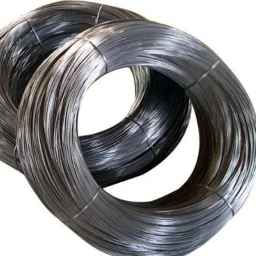
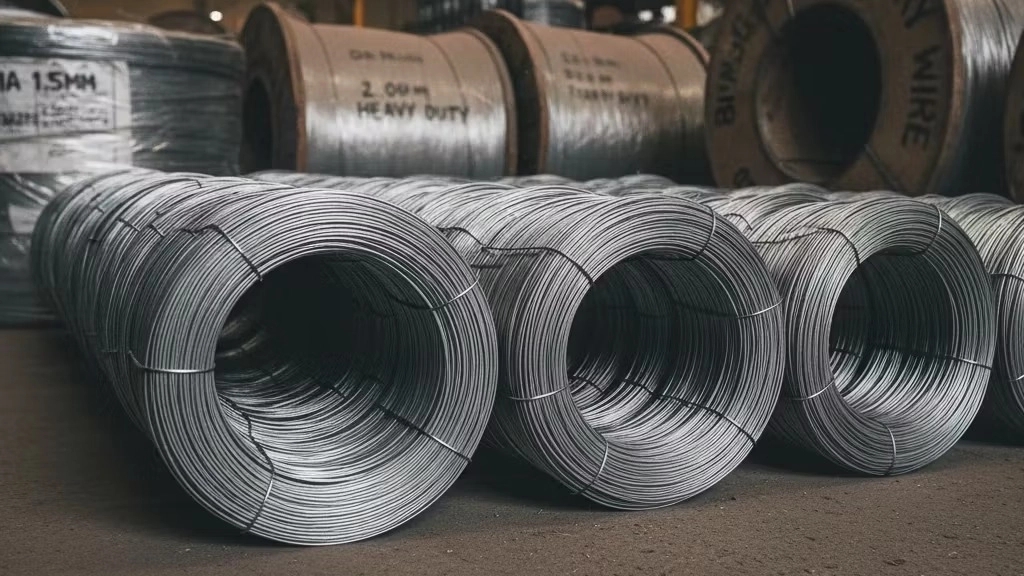
Simply, wire is a flexible single strand wire that is produced from metals such as steel, copper, aluminum or stainless steel. The main structure of this product is a solid metal core whose thickness is defined by the diameter of the wire (from a few tenths of millimeters to a few centimeters).
In electric types, the wire core is usually made of copper metal and polyvinyl chloride (PVC) materials are used for insulation. This combination provides high durability and proper resistance to heat and humidity. The nominal voltage tolerance of some wire wires varies between 300 and 750 volts, and based on the thickness of the cross section, their use in low voltage or medium pressure circuits is determined.
Basic production process (wire drawing)
The production of wire is a mechanical process known as "wire drawing". This process involves passing larger diameter ingots or wire through smaller diameter holes (dies).
- Preparation of raw materials: Usually steel bars with round or square section are used. These rods must first go through surface cleaning processes (acid washing to remove oxides).
- Primary stretching: The rod enters the stretching machine and its diameter is gradually reduced. Each time the wire passes through a die, its length increases and its diameter decreases. This reduction in diameter increases the tensile strength of the metal, because its crystal structure is under stress. Annealing: To produce very soft and flexible wires (such as black wire), the material must undergo annealing heat treatment after several stages of stretching. This process eliminates the internal stresses caused by the tension and reduces the hardness of the wire.
- Surface operation (optional): After reaching the final diameter, depending on the need, coating operation (such as galvanization or PVC coating) is performed on it.
The general formula for the reduction of cross-sectional area in wire tension (assuming constant volume):
[ A_1 d_1^2 = A_2 d_2^2 ] where ( d_1 ) and ( d_2 ) are the initial and final diameters, and ( A_1 ) and ( A_2 ) are the initial and final cross-sectional areas, respectively.
Types of wire
1. Galvanized wire
This type of wire is extremely resistant to environmental corrosive factors due to its zinc coating. As an active metal, zinc sacrifices itself against electrochemical corrosion (iron rust) and protects the steel core.
Galvanized wire is produced in two types cold galvanized and hot galvanized:
- Cold galvanizing (electrogalvanizing):
- Method: The zinc protective layer is created through the process of electrolysis (plating) on the surface of the black wire. In this process, an electrolyte bath containing zinc salts is used.
- Features: The thickness of the zinc layer is thinner (typically 5 to 15 µm). The final surface is very smooth and shiny. Application: This method is mostly used for light applications, internal use, temporary packaging and decorative products that do not require very high resistance to moisture. Galvanizing):
- Method: After complete degreasing and acid washing (to remove any surface oxide), the wire is immersed in a molten zinc bath with a temperature of about (450^\circ \text{C}). In this case, a metallurgical bond is formed between zinc and iron.
- Features: The protective layer is thicker and rougher (typically 50 to 100 µm). It has a very high resistance to corrosion and harsh environmental conditions.
- Application: Ideal for landscaping, fence construction, outdoor civil applications, structures exposed to moisture or rain, as well as in the agricultural and telecommunication industries.
2. Black Annealed Wire
Black wire is the beating heart of construction and packaging industries.
- Production: This type of wire is produced from low carbon steel and is thermally annealed in special furnaces. The annealing operation softens the wire and increases its flexibility. Features: Its dark and matte color is caused by a thin layer of iron oxide on the surface that remains after the thermal process. This wire is very soft and can be easily bent by hand, but it is less resistant to rusting in wet environments. Application: It is widely used in the construction industry for packaging and reinforcement (tying rebars together), molding, production of springs that require high flexibility, and as general wiring.
3. White wire (Bright Wire)
White wire is actually the same black wire that goes through the cleaning and washing process after the annealing process, and then it is coated by cold galvanizing method (with a thin layer of zinc) or sometimes without coating (simply due to the glossiness of the surface after cleaning).
- Features: It has brighter and more shiny color than black wire. Its resistance to rust is higher than black wire and less than hot-dip galvanized.
- Usage: This type of wire is often used in metal decorations, production of light industrial laces, production of nails and other general uses that require a clean appearance.
4. Copper Coated Wire
These wires are produced from a steel core and their outer surface is covered with a thin layer of copper.
- Manufacturing: This coating is usually applied through electrolysis processes or thermal processes.
- Features: The main advantage of this type of wire is improved electrical conductivity compared to pure steel, as well as good oxidation resistance (due to the copper layer). It also has a shiny and beautiful appearance.
- Application: Decorative industries, production of special springs, earthing wires in some electrical circuits (where copper conductivity is needed but steel strength is essential), and some mechanical parts.
5. Stainless Steel Wire
This wire is made of stainless alloys (such as 304 or 316 steel) that contain at least 10.5% chromium.
- Features: Very high resistance to corrosion, heat, and chemical agents (especially acids and salts). High tensile strength without the need for additional coating.
- Application: Production of food and pharmaceutical industry equipment (due to its hygienic properties), marine applications, chemical industry, corrosion-resistant springs and high-performance engineering equipment.
6. PVC (Plastic Coated Wire)
In this type, the metal wire (which can be galvanized or black) is insulated with a coating of polyvinyl chloride (PVC).
- Purpose: PVC coating to increase electrical insulation, more protection against moisture, and improve appearance and wear resistance.
- Application: Outdoor and indoor wiring that needs protection from weather conditions or contact with mild chemicals, production of protective nets and nets in environments Moist.
Applications of wire in various industries
The wire is used in a wide range of industries due to the diversity of its material and physical properties.
Construction industry
In this industry, wire is one of the most used connections:
- Reinforcement: Its most vital application is to connect the longitudinal and transverse rebars to each other in concrete structures so that the shape of the reinforcement network is maintained during concreting. Usually, annealed wire (black or white) with sizes of 1 to 1.5 mm is used.
- Connection of forms: To store temporary forms used in concrete pouring.
- Production of chicken nets and construction meshes: Wires are welded in specific dimensions and reinforcing networks of the floor and walls are created. They do.
Automotive industry and mechanics
In this area, the strength and elasticity of wires is important:
- Springs: Production of small and large springs that need to bear the load and return to the original shape.
- Control cables: Making steering cables in braking or gas supply systems.
- Retaining parts: Using high strength wires in parts that need to keep parts under It is vibration.
Electronics and electrical industry
In this area, electrical conductivity and insulation are important:
- Internal wiring: PVC-coated copper wire as phase and neutral wire in electrical panels and fixed equipment wiring.
- Earth wire: In some systems, galvanized or copper wire is used to connect to the ground.
Agricultural industry
Flexibility and moisture resistance is a priority:
- Fence production: Hot galvanized wire is the main material for the production of farm and poultry fence nets.
- Scaffolding: To support fruit trees and creeping plants.
- Hay and fodder packaging: For compact closure Straw and hay bales.
Packaging industry and general industries
Technical characteristics and advantages of wire
- High flexibility (Ductility): The ability to bend into different shapes without breaking, especially in the annealed type.
- Tensile Strength: Especially in wires with a small diameter and intense stretching process, they have a very high tensile strength tolerance. The ultimate tensile stress (( \sigma_u )) in these wires can reach more than 1500 MPa.
- Corrosion resistance: In galvanized and steel types, this feature greatly increases the useful life of the product.
- Recyclability: As a metal product, it can be easily recovered and reused.
- Affordable price: Relatively simple production process (compared to pipes or profiles) has made it one of the most economical options for volume applications.
Factors affecting the price of wire
The final price of wire is influenced by several key factors:
- Type of base metal: The price of copper and steel is much higher than carbon steel. The price of steel is also a function of the price of iron scrap and iron ore.
- Thickness and diameter of the wire: The price is calculated by weight (kilogram). However, to reach smaller diameters, more stretching operation is required, which can increase the energy cost and depreciation of the machine.
- Coating method: Hot galvanizing is more expensive than cold galvanizing due to the high consumption of molten zinc and the complexity of the operation.
- Coating weight: In galvanizing, the weight of zinc is in grams per square meter. ((\text{g/m}^2)) is measured; The higher the weight of zinc, the higher the price.
- Fluctuations in the global market: The global prices of steel, zinc and copper have a direct and immediate effect on the finished price of wire.
Important points in choosing and buying wire
To ensure proper performance and expected durability, it is necessary to observe the following points:
- Determining the exact application: Is the wire going to be exposed to moisture (hot-dip galvanized), need a lot of flexibility (black annealed) or should it be a good conductor (brass or copper)?
- Check the mechanical properties: For structural and load-bearing applications, it should have a minimum tensile strength (UTS) Check the wire according to the desired standard (for example, ASTM or national standard).
- Coating thickness: For galvanized wires, be sure to check the amount of zinc coating ((\text{g/m}^2)) with the seller to ensure the required corrosion resistance.
- Annealing quality and cleanliness: For wires Packaging must ensure that the annealing process is done correctly so that the wire does not become brittle.
- Branding and standardization: Buying from reputable manufacturers that have modern quality control equipment (such as salt spray tests for galvanizing) will prevent future problems.