

برای اطلاعات بیشتر با ما تماس بگیرید.
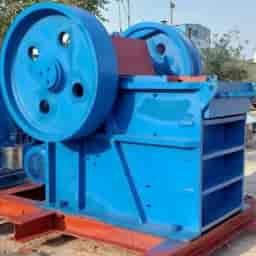
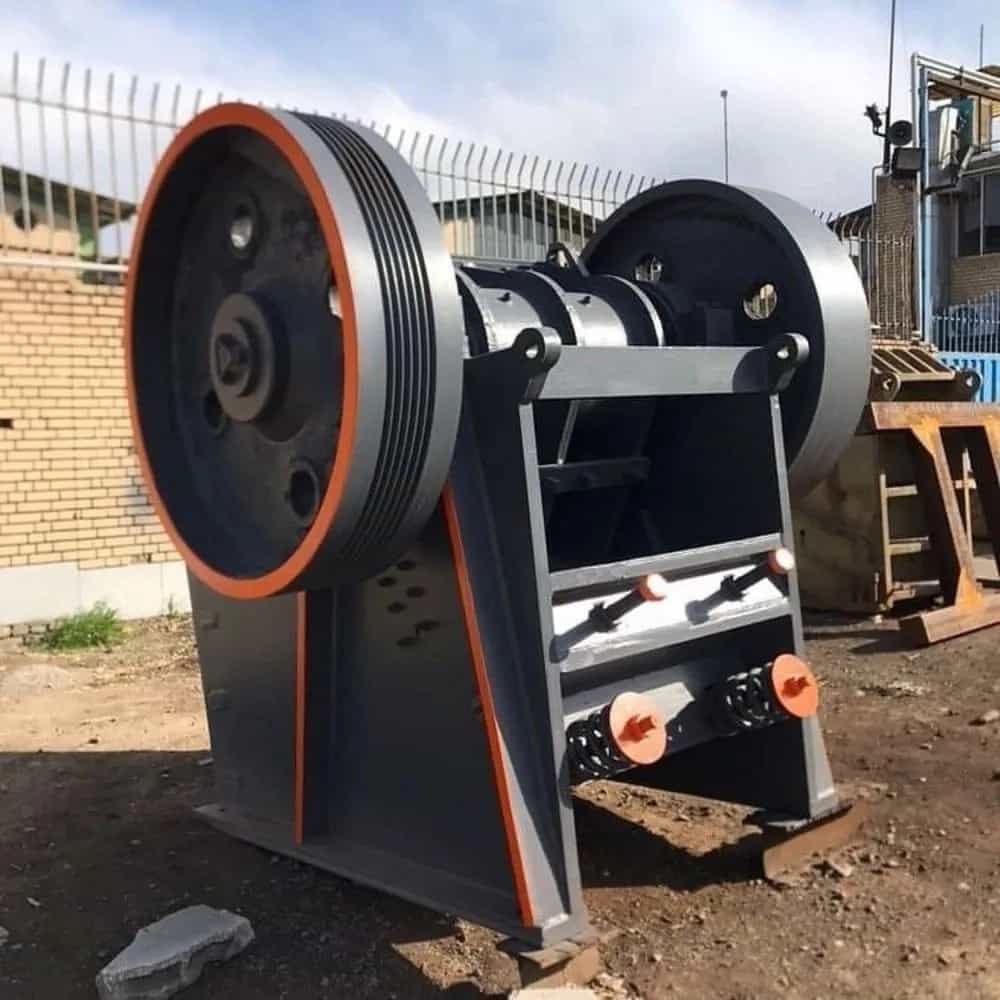
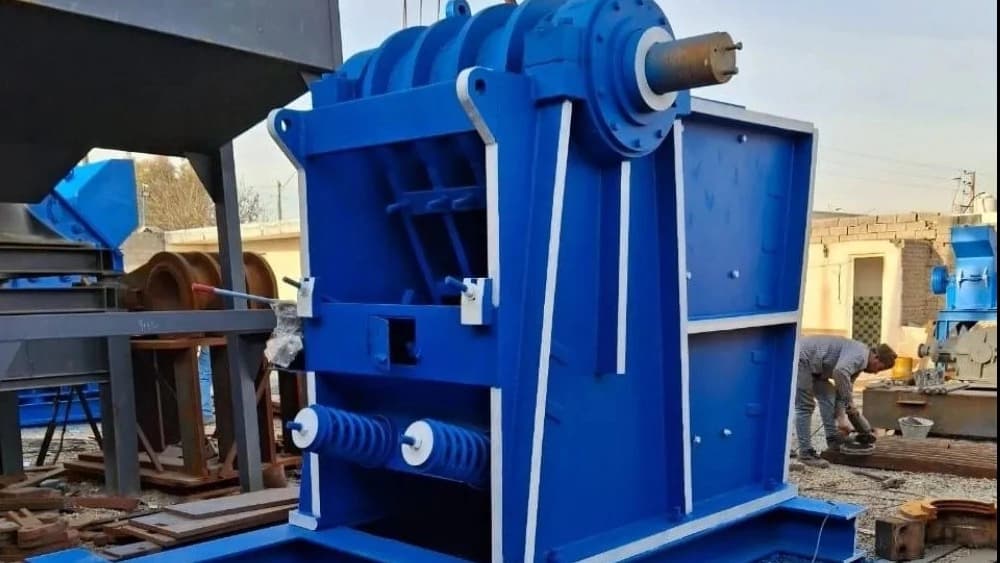
Construction of jaw crusher machine
The importance and position of jaw crusher in the crushing industry
Mining and mineral processing industry has always needed powerful and efficient equipment to reduce the size of rocks and minerals. In the meantime, Jaw Crusher plays a central role as one of the oldest, most common and reliable primary crushing machines. Due to its high reliability, simple mechanical structure and the ability to crush materials with very large input dimensions, this device is considered the cornerstone of many processing lines in sand mines, building stones, recycling and chemical industries. The construction of a jaw crusher is a complex engineering process that requires metallurgical knowledge, advanced mechanical design and a detailed understanding of the forces acting on the parts. As a specialized reference in this industry, "Jehan Sang Shek" factory has used its years of experience in optimal design and manufacturing of jaw crusher with the highest quality standards to provide durable and high efficiency products.
History of jaw crushers: origins to industrial evolution
The history of jaw crushers goes back to the 19th century. The first mechanical stone crushers were developed to meet the growing needs of the construction and mineral extraction industry during the industrial revolution.
The first inventions and patents
The first registered patent for a jaw crusher was granted to Scotchley in 1847. But the main turning point was Kodel's patenting of the gyratory jaw crusher and then improved designs by Smith. These designs formed the basis of the mechanism of two movable and fixed jaws that we know today.
Evolution in the 20th century
During the 20th century, with the increasing need for mass production of aggregates and reducing the dimensions of raw materials with greater productivity, engineers focused on two main factors:
1. Increasing capacity: enlarging the dimensions of the entrance opening and improving power transmission systems
2. Improving the life of wearing parts: Using manganese steels and wear-resistant alloys to make jaws.
Today, jaw crusher manufacturing has reached a stage that includes the use of advanced Computational Fluid Dynamics (CFD) modeling and Finite Element Analysis (FEA) to ensure optimal stress distribution and reduce material fatigue failures. The "Jahan Stone Crusher" factory is at the forefront of these innovations by using the latest engineering achievements.
Principles of Jaw Crusher: Crushing Mechanics
jaw crusher works based on the principle of crushing by compression. This method is the most common form of primary shredding.
Compressive crushing mechanism
The shredding process in this device is as follows:
1. Input of materials: Raw materials (feed) enter the upper opening of the machine through the hopper.
2. Compression: Materials are placed between two jaw surfaces: Stationary Jaw and Swing Jaw.
3. Crushing force: The movable jaw moves towards the fixed jaw with a reciprocating motion and applies a very high force to the material. This force exceeds the tensile and compressive resistance of the material and leads to its breaking.
4. Discharge: After being crushed to a size that can pass through the outlet opening, the material is directed downwards and exits under the moving jaw.
Setting the reduction ratio (Reduction Ratio)
The most important parameter in the design and performance of jaw crusher is the size reduction ratio. This ratio determines how many times smaller the input material will be. This adjustment is directly related to the distance between the tips of the jaws at the bottom of the device, which is called "Discharge Gap Adjustment". In the process of making a modern jaw crusher, this adjustment is done hydraulically or mechanically.
Crankshaft mechanism and eccentric shaft
The beating heart of the jaw crusher is the power transmission system and the movement of the mobile jaw. This movement is provided by a main shaft that receives rotational power from an electric motor or a diesel engine. An eccentric piece is installed on this shaft.
[ E = \frac{M \cdot r}{I} ]
where (M) is the torque, (r) is the eccentric radius (which determines the amount of jaw movement), and (I) is the inertia of the system. The rotational movement of the shaft, due to the eccentric movement, drives the crankshaft and finally drives the movable jaw forward and backward in an oscillating manner in the vertical plane.
The main components in the manufacturing process of jaw crusher
To succeed in making a jaw crusher, knowing and designing each of the following components is critical:
1. Main body and frame (Frame)
The body of the device is the main structure that bears all the crushing forces. This section should have the highest possible strength.
Materials: Usually made of high strength cast iron or thick welded steel plates.
Design: It should be designed in such a way that it can withstand strong vibrations and properly transfer the compressive forces to the supports. At Jahan Crusher Factory, the body is manufactured using advanced welding techniques and non-destructive testing (NDT) to ensure there is no weakness in load bearing.
2. Jaws (Jaw Plates)
The jaws are the parts that are in direct contact with the material and suffer severe wear. The quality of making the jaws determines the lifespan of the device.
Fixed and movable jaw: Both are made of wear-resistant alloy steels.
Standard materials: The most common material is high manganese steel (High Manganese Steel - Mn13, Mn18 or Mn21), which increases the hardness of its surface due to its work hardening properties.
Surface design: The inner surface of the jaws has teeth (chevrons) that improve the efficiency of crushing and feeding materials.
3. Crankshaft and eccentric shaft system
This set turns the rotational force into a reciprocating force.
Shaft: It should be made of forged steel with appropriate heat treatment to be able to withstand high shear and bending stresses.
Bearings: Spherical roller bearings with high capacity are used to bear very heavy radial and axial loads. Correct design of the bearing housing is vital to prevent dust penetration.
4. Setting Adjustment Mechanism
This system provides the possibility to change the size of the output.
Types: Can be implemented mechanically using adjusting nuts or hydraulically (which is more common in modern machines). Hydraulic mechanisms provide more precise control.
5. Overload protection mechanism (Toggle Plate System)
This system is responsible for the mechanical safety of the device.
Protective plates (Toggle Plates): Two triangular plates are located behind the movable jaw. If an uncrushable object (such as a metal mass) is jammed, the pressure is transferred to the protective plates through the movable jaw. If the force exceeds the limit, these plates (which are consumable parts) will break and prevent damage to the main frame. This is an essential feature in making a safe jaw crusher.
The step-by-step process of making a jaw crusher
Manufacturing a jaw crusher is a multi-stage engineering project that requires careful coordination between design, casting, machining and assembly.
First stage: Design and Engineering
This stage is the foundation of the success of the project.
Determining the capacity and size: Based on the customer's needs (for example, the capacity of tons per hour and the size of the feed), the dimensions of the opening (width and height) and the type of stone to be crushed (hard or soft) are determined.
Three-dimensional modeling and stress analysis (FEA): Using software such as SolidWorks or Inventor, the complete model of the device is designed and then with analytical software, the distribution of stresses under maximum loading conditions is checked. This ensures that all parts are designed with a sufficient safety factor.
Second stage: Fabrication of Major Components
Frame production: The main frame is made either by casting a large mold or by laser cutting thick steel sheets and carefully welding them. Precision in welding is very important to prevent distortion due to heat.
Precise Machining: The main shaft, eccentric plates and bearings must be machined to very precise tolerances to minimize vibration and increase component life.
Third step: Casting wear parts
The adjusting jaws and plates are usually cast from special manganese steels.
Heat treatment: After casting, the parts must be subjected to controlled heat treatment to stabilize the desired mechanical properties (such as hardness and toughness).
Fourth step: Primary assembly (Sub-Assembly)
At this stage, the internal components such as the shaft, crankshaft, bearings and adjustment mechanism are installed inside the frame. Grease injection and primary lubrication of the systems are done.
5th step: installation of jaws and final settings
Sixth step: testing and commissioning
The device is subjected to test loads before delivery. Tests include the following:
Check for unauthorized vibrations.
Measurement of electric motor current consumption under load.
Performance test of aperture adjustment mechanism.
Jahan Stone Crusher Factory believes that quality in manufacturing jaw crusher can only be achieved by strictly following engineering procedures and using first-class raw materials.
Key considerations in design and construction to increase efficiency
Optimizing the performance of a jaw crusher requires attention to details that are often overlooked.
Effect of jaw plate shape on capacity
The geometric shape of the inner surface of the jaw (closed role) has a direct effect on the absorption of feed and the capacity of the device. Grooved teeth make the stones inside the opening to be pushed towards the center of the machine and not locked. This phenomenon is known as "locking effect" (Nipping Angle). The Napping angle must always be greater than the internal friction angle of the material to prevent the rock from sliding in the hole.
Management of dust and lubrication
In making a jaw crusher, bearing seals are of great importance. The entry of fine particles into the bearing chamber is the main cause of their premature failure. The use of centralized lubrication systems and double sealing systems in advanced models ensures the longevity of expensive parts.
Correct choice of electric motor
Choosing the engine should be based on the required capacity (horsepower) and starting torque. Since jaw crushers start at full load, the motor must be able to provide maximum torque at the first moment. The use of variable speed control drives (VFD) in some applications can help optimize energy consumption.
Safety tips in the construction and operation of a jaw crusher
Due to the nature of the work of the device and the huge forces involved in it, it is mandatory to observe safety principles in the process of manufacturing the jaw crusher and operating it.
Safety in construction
1. Protective Covering: All moving parts such as pulleys, belts and flywheels should be covered by tight metal guards to prevent the operator's hands or clothing from entering.
2. Emergency stop system: Emergency stop buttons (E-Stop) must be clearly marked and accessible to the operator.
3. Load limits: Permissible limits of compressive force and working temperature must be installed on the body as permanent labels.
Safety in operation
1. Preventing the entry of non-crushable objects: Entry of metals or reinforced concrete can lead to broken jaws and protected plates and endanger the safety of the device.
2. Periodic inspection: Regular inspection of shafts and possible cracks on the body (especially around the bearings) is essential.
3. Providing proper ventilation: In closed environments, dust management due to silicosis is very important and standard suction and ventilation systems should be installed.
Summary and future of jaw crusher industry
Making a jaw crusher is an art that combines classical mechanical knowledge with modern material engineering and simulation technologies. This device will still remain the industry's primary stone crusher due to its relative simplicity of maintenance and high destruction power. Relying on years of experience in the design and manufacture of jaw crushers, the "Jehan Sang Shekan" factory is committed to providing products that not only have the highest efficiency in the harsh working conditions of Iran's mines, but also optimize energy consumption and minimize downtime with intelligent designs. The future of this industry will move towards more automation, the use of smart sensors to continuously monitor the wear of parts, and the improvement of impact- and wear-resistant alloys to significantly increase the durability and performance of jaw crushers. Accurate design and perfect implementation is the key to success in this specialized field.
نظرات و تجربیات شما
دیدگاه شما چیست؟
با ثبت امتیاز خود، به ما در تولید محتوای بهتر کمک کنید.