

برای دریافت مشاوره تخصصی، بازدید پروژه و استعلام قیمت با مشاورین ما تماس بگیرید.
Why are traditional water supply networks no longer responsive? ⚠️
With the water shortage crisis, it is no longer possible to continue these methods; Therefore, the use of welded polyethylene nets has become a necessity.
What is a polyethylene pipe and why is it the best option for water supply? 🧪
Polyethylene pipe (HDPE) is a type of engineered polymer that is specially designed to transport fluids.
Important technical features
High resistance to pressure
No chemical corrosion
High flexibility
Longevity of more than 50 years
Resistance to UV rays
Quick and easy installation
For this reason, today in projects:
Agricultural water supply
Urban water transmission lines
Drip irrigation networks
Water transfer from wells
Greenhouse projects
It is the most used.
What is polyethylene welding? 🔥
Polyethylene welding is a process in which two pipes are molecularly connected without using mechanical connections.
What is the result?
✅ The pipe and connection practically become one integrated piece.
That is:
Zero leakage
High resistance
No need for washers or screws
Very long life
Types of polyethylene welding methods
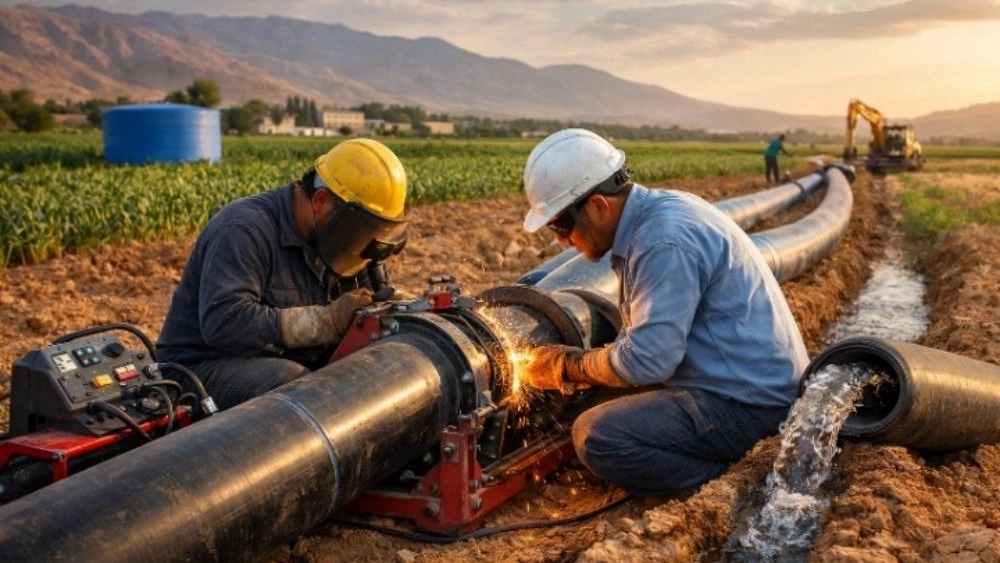
Butt fusion
The most common method of water supply projects.
Steps:
Turning two pipe ends
Warm up with a hot plate
Apply pressure
Connection cooling
The main advantage: level connection and super resistant.
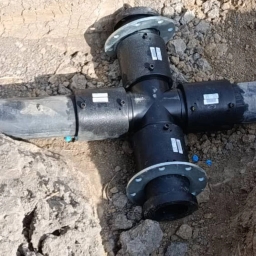
Electrofusion welding
Used in sensitive projects or limited space.
Features:
High accuracy
Suitable for network repairs
Digital process control
socket weld
It is used for small sizes and is mostly seen in branches.
The steps of implementing a professional water supply network 🚧
Basic execution is not just welding; Rather, it is a complete engineering process.
Step 1: Designing the transfer path
Water flow calculation
Checking the slope of the land
Determining the diameter of the pipe
work pressure analysis
Step 2: Standard excavation
Important points:
Soft bed
removal of sharp stones
Observe proper burial depth
This step plays a big role in the life of the network.
Step 3: specialized welding of pipes
The operator must have:
Polyethylene welding certificate
Project experience
Calibrated device
Be.
Step 4: Pressure test (Hydro Test)
It is done before exploitation.
Objective:
Leakage check
Weld quality control
Ensuring pressure tolerance
Step 5: Final burial and setup
After confirming the test:
Layered earthing
Installation of faucets
Starting the system
The most important mistakes in implementing the water supply network
Most of the failures of projects are due to these things:
Welding by non-specialist force
Using a non-standard device
No control of boiling temperature
Selecting the wrong pipe diameter
Not testing the network before burying
These mistakes cause the project to fail even in the first year.
Economic benefits of polyethylene welding for farmers 💰
The basic implementation of the water supply network causes:
✅ Reduce water consumption
✅ Increasing irrigation efficiency
✅ Reducing the cost of pump electricity
✅ Removal of annual repairs
✅ Increase in product production
It will.
In many projects, the implementation cost is recovered within 2-3 agricultural seasons.
The effect of polyethylene networks in the management of Iran's water crisis
Iran has entered a period of serious water scarcity.
Modern water supply networks help:
Maintain underground resources
Remove transfer waste
Smart irrigation should be implemented
Stable agriculture should be formed
For this reason, the agricultural jihad organizations also support the implementation of polyethylene lines.
Characteristics of a professional water supply implementation team
A professional performer must:
Do engineering design
The welder must have a certificate
Use calibrated equipment
Provide performance guarantee
have real project experience
The future of agricultural water transfer projects 🚀
The global trend shows the future of water supply towards:
HDPE pipes
Irrigation under pressure
Intelligent systems
Reduce energy consumption
It is moving.
Investment in this area means water security and sustainable agriculture.
Final summary
If the water supply project is implemented with standard engineering design and welding, you will have a network that will work for decades without problems.