
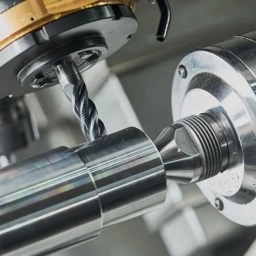

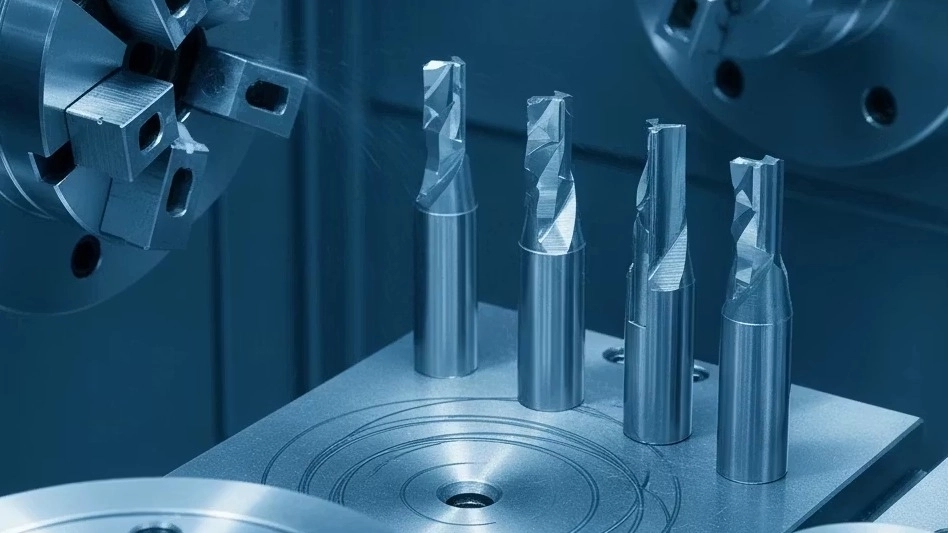
Steel turning, a term that for many craftsmen and operators of turning machines, reminds of big and sometimes boring challenges. From constant tool breakage to poor surface quality and skyrocketing costs, machining this widely used alloy can become a real nightmare. But does it have to be like this? Definitely not. With the right technical knowledge, choosing the right tools and using smart strategies, you can turn the difficult process of steel turning into a profitable, precise and fully controlled operation, an industrial dream.
This article is a comprehensive guide that will accompany you step by step on the path of conquering stainless steel. We will show you how by deeply understanding the properties of this substance and with the help of experts and first-class tools available in the Azadmehr store, you can overcome all problems and achieve results beyond expectations. So if you are tired of struggling with turning steel, stay with us until the end of this article.
Why is turning steel so challenging?
Before we look at the solutions, we must know the enemy well. Stainless steel or stainless steel, due to the presence of alloy elements such as chromium, nickel and molybdenum, has unique properties that make it difficult to machine. Understanding these properties is the first step to success in turning steel.
1. Low thermal conductivity
One of the main reasons that turning steel is a nightmare is its very low thermal conductivity. During chipping, huge heat is generated in the cutting area. In other metals such as carbon steels, a large part of this heat is dissipated through chips. But in steel, the heat remains concentrated in the cutting area and on the edge of the tool. This high temperature softens the cutting edge, changes the plastic shape of the tool and wears it extremely fast.
2. Strong desire for hard work (Work Hardening)
Stainless steels, especially the austenitic series (such as 304 and 316), tend to work very hard. This means that the machined surface will quickly become harder than its original state due to the pressure and heat caused by cutting. If your tool momentarily rubs against the surface instead of cutting, or if your feed rate is too low, the next layer to be chipped will be much harder. This phenomenon greatly increases the pressure on the tool and destroys its life.
3. High toughness and adhesion
Steel is a very tough and sticky material. This adhesion creates a phenomenon called "built-up edge" or BUE (Built-up Edge). In this case, the fine particles of the raw material stick to the cutting edge of the tool as a cold weld. This false edge disturbs the geometry of the cut, spoils the quality of the surface, and with sudden tearing, it may take a part of the main edge of the tool with it and cause it to break. Steel turning is almost impossible without controlling this phenomenon.
4. Long and stringy shavings
Shavings produced in steel turning are usually long, stringy and very strong. These stubborn chips easily wrap around the work piece and the tool holder, disrupt the process, damage the surface of the piece and pose a danger to the operator. Management and control of these chips is one of the key principles in successful steel machining.
The golden key to success: choosing the right tool for turning steel
About 80% of the success in turning steel depends on the correct choice of tools. Using an inappropriate tool not only does not bring the desired result, but also leads to waste of time and exorbitant costs. Azadmehr store, with a deep understanding of these challenges, has compiled a complete and specialized set of special steel turning tools.
1. Turning inserts for steel (grade M)
Your first and most important choice is the lathe insert. Inserts designed for stainless steel are known by the letter M in the ISO standard. These inserts have special features:
- Type of substrate (Substrate): They are usually made of fine-grained carbides with high toughness to withstand the impact and pressures caused by steel cutting.
- Coating: Multi-layer PVD coatings such as TiAlN (Titanium Aluminum Nitride) or AlTiN (Aluminum Titanium Nitride) are ideal for steel machining. These coatings have excellent heat resistance, create a slippery surface to prevent sticking and create a thermal barrier between the chip and the tool.
- Geometry & Chipbreaker: Special steel inserts have very sharp cutting edges and are reinforced at the same time. The positive angle of the chip and the special design of their chip breaker is such that it helps to reduce the cutting force and turns long and stringy chips into small and controllable parts.
Azadmehr Store offers a wide range of grade M inserts from world-renowned brands, helping you to choose the best option based on the type of steel (304, 316, 420, etc.) and the type of operation (finishing, roughing).
2. Strong holder and tool holder
Vibration is the number one enemy of tool life and surface quality in steel turning. Due to the high cutting forces, any vibration in the tool holder system is quickly transferred to the cutting edge and causes the lip to fill or break. Using quality, rigid holders with a strong clamping system (such as Screw-on or Lever Lock systems) is essential to minimize vibration. Our experts at Azadmehr store can guide you in choosing a holder that provides the most stability for your device and operation.
Machining parameters: precise settings for a perfect cut
Even with the best tools, using the wrong parameters can make the entire steel turning process fail. Correct adjustment of cutting speed, feed rate and depth of cut is an art that is achieved with experience and knowledge.
1. Cutting speed (VcV_cVc)
Cutting speed in turning steel is a double-edged sword.
As a general rule, for austenitic steels such as 304 and 316, medium to low speeds (eg between 100 and 180 m/min, depending on insert grade) should be used. Always the best starting point is to follow the insert manufacturer's catalog recommendations.
2. feed rate (fff)
The feed rate should be high enough so that the tool is cutting continuously and it is prevented from rubbing on the surface and creating hard work. A constant and positive advance creates a suitable chip thickness and helps control heat. Too little progress is disastrous.
3. cutting depth (apa_pap)
A very important point in steel cutting: the depth of cut should always be greater than the nose radius of the tool. If the cutting depth is less than the radius of the tip, the tool compresses the work surface instead of cutting and causes severe difficulty. Also, to avoid vibration, it is better to use uniform and fixed depth of cuts.
An important tip from Azadmehr store specialists: Instead of wasting time and raw materials to find optimal parameters, contact our technical consultants. According to the tool you buy and your machining conditions, we provide you with a table of initial suggested parameters to minimize the trial and error process.
Smart cooling: thermal management, the key to tool life
As mentioned, heat is the biggest enemy in turning steel. Therefore, its management is of particular importance.
- Use of cooling liquid (soap water): It is necessary to use a large volume of cooling liquid with a suitable concentration (usually between 7 and 10%). The function of the coolant is not only to reduce the temperature, but also to lubricate the cutting area to prevent sticking, as well as to wash and remove chips. The soapy water nozzles should be focused exactly on the cutting edge.
- High-Pressure Coolant: This method is considered a revolution in steel cutting. Spraying coolant with very high pressure (70 bar and more) directly under the chip acts like a hydraulic wedge and helps to break the chips. Also, this method effectively removes heat from the cutting area and sometimes increases the life of the tool several times.
Machining strategies to overcome challenges
In addition to choosing the right tools and parameters, applying a few simple strategies can make a big difference in the end result of turning steel.
- Minimizing tool overhang: The more the tool overhangs the toolholder, the greater the potential for vibration. Always keep the overhang as short as possible.
- Intelligent entry and exit of the part: Never allow the tool to dwell on the surface of a rotating workpiece (dwell). This immediately becomes difficult work. When entering the cut, try to use a ramping motion to gradually increase the pressure.
- Uniform tool path: Avoid sudden changes in direction or depth of cut. These changes cause fluctuations in cutting forces and increase the possibility of vibration and tool failure.
Azadmehr Store: Your partner in conquering steel turning
All the mentioned knowledge and techniques will be useless without access to the right tools. Azadmehr store has established itself as a specialized center for solving the challenges of steel cutting with years of experience in the field of supplying industrial cutting tools. We are not just a seller, but a technical partner for you.
- Expert consultation: Our technical team is ready to offer the best and most economical tool solution by listening to your needs and challenges.
- Unique variety of special steel tools: We have provided the most complete collection of M grade inserts, rigid holders, and accessories for steel turning from the world's top brands.
- Quality guaranteed and competitive price: We believe that quality should not be expensive. By eliminating middlemen and offering original products, we provide you with the best quality at a fair price.
- Easy access and fast shipping: Easily place your order through the website or by phone and receive it at your workplace as soon as possible.
Conclusion: Steel is no longer a nightmare
Steel turning doesn't have to be an expensive, time-consuming and frustrating process. By combining three key elements:
You can turn this operation into a predictable, accurate and profitable part of your business. Azadmehr Store is proud to be by your side as a reliable consultant and supplier. Contact us today or visit our website and take the first step to turn the nightmare of steel turning into a dream of productivity and quality.
