

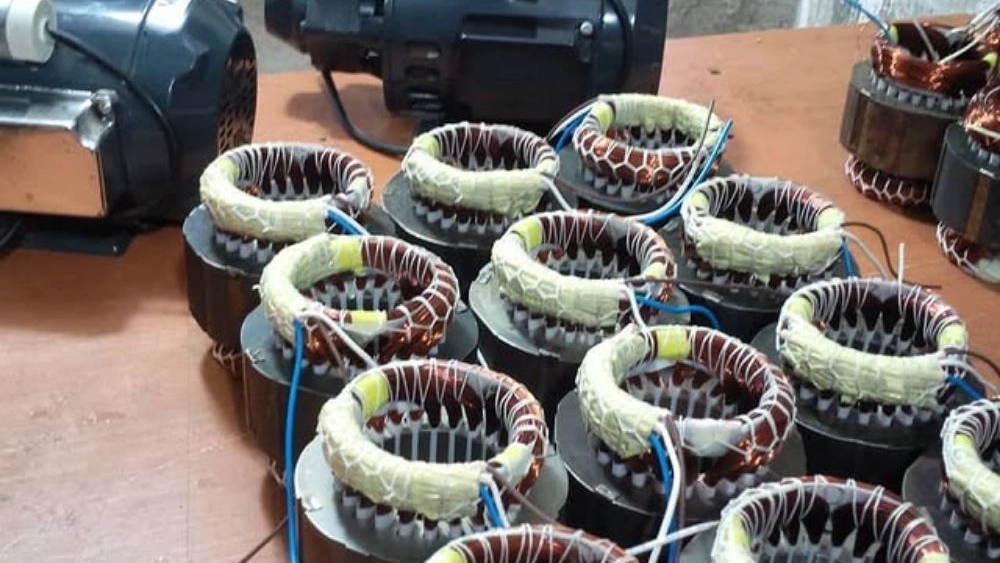
The strategic importance of the automatic winding industry
Basic principles in the design of electromotor winding machines and equipment
1. Tension control system (Tensioner)
2. Traverse Mechanism
3. Spindle and rotation speed
All kinds of winding machines produced in Fampco workshop
Coil Winding Machines
Armature winding devices
Stator Winding & Inserting Devices
Challenges of materials and metallurgy in equipment manufacturing
The role of automation and Internet of Things (IoT) in modern winding
Design to manufacturing process in Fampco workshop
- Assessment of needs: Review of the customer's electric motor map and the desired production run.
- Conceptual design: Presentation of the prototype of the proposed device and mechanism.
- Engineering design (CAD): 3D modeling of all parts in advanced software such as SolidWorks. At this stage, the design of electromotor winding machines and equipment is tested virtually to eliminate possible interferences.
- Simulation and analysis (FEA): Stress analysis on sensitive parts to ensure no breakage at high pressures.
- Manufacturing and machining: Using precise CNC machines to turn parts.
- Assembly and testing: Assembling parts and performing Initial tests with real wire.
- Installation and training: Delivery of the device to the customer's place and full training of personnel.
Economic benefits of using in-house manufacturing equipment
Technical points in the maintenance of winding machines
- Continuous cleaning of the wire path from dust and copper shavings.
- Periodical oiling of rails and moving carriages.
- Calibration of wire tension sensors on a monthly basis.
- Inspection of nozzles in terms of wear that can injure the wire.