

تماس فوری
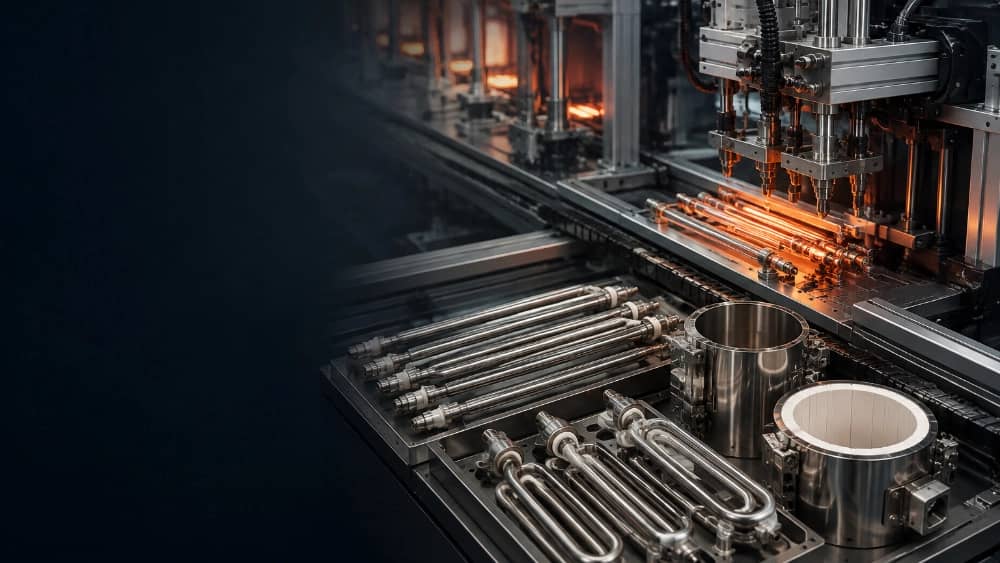
Element production factory; A comprehensive guide to ordering and buying all kinds of industrial elements
Thermal elements are the beating heart of many industrial equipment. Wherever there is a need to accurately convert electrical energy into heat, the name of industrial elements shines. To achieve the best performance in the production line, understanding the manufacturing process and selecting the correct parts is critical. In this article, we will review the Walid Element factory and the key points in ordering this equipment for the Celsius industrial group.
The key role of the element production plant in various industries
Element Production Factory is a specialized group for designing and manufacturing heating equipment that are used in industries such as packaging, plastic injection, food and oil and gas industries. Choosing a reliable manufacturer guarantees high efficiency and long life of your equipment. By understanding the technical needs of various industries, Celsius Industrial Group has provided the possibility of producing and ordering all kinds of industrial elements in accordance with today's standards.
Getting to know all kinds of industrial elements
Elements are produced in different shapes and structures according to the type of application. Here are the main categories of these products:
rod element
It is one of the most common types of elements that are used in different forms to heat air, water, oil and metal surfaces. These elements are widely used in packaging machines and industrial tubs.
Flanged element
This element is designed to heat the fluids inside the tanks. The presence of the flange makes its installation and sealing in large tanks very easy and is ideal for the chemical and petrochemical industries.
belt element
It is used to heat the cylinder of extruders and plastic injection machines. This element is placed around the cylindrical body of the device and transfers heat uniformly.
Ceramic element
With ceramic insulation, this type of element has a very high thermal stability and is an excellent option for small furnaces and plastic processing devices that require a stable temperature.
Element coil heater (spring)
cartridge element
With dense and fast heat transfer capability, it is designed for plastic injection molds and metal parts that need fast heating.
The stages of making the element in the element production factory
Manufacturing a standard industrial element is an engineered process that goes through the following steps:
Check the technical specifications
In the first step, our experts examine the needs of the project, including temperature, power, dimensions, working environment and type of fluid or target surface, so that the best design is selected.
Selection of material and insulation
Depending on the application, resistance wire (thermal element) and insulation materials are selected. This step ensures that the element is resistant to pressure, temperature and corrosion.
Body and sheath design
The sheath of the element should be selected according to the environment of use (for example, anti-corrosion sheath for acidic liquids) to protect the useful life of the element.
Assembly and quality control testing
After manufacturing, the element undergoes electrical, insulation and thermal stability tests to ensure the health of the final product.
Important criteria for choosing the right element
To buy or order the element, it is necessary to pay attention to the following parameters to avoid premature failure:
- Type of application: Specify whether the element is for heating air, water, oil or mold.
- Thermal power: The power must be proportional to the volume and speed of heating you need.
- Working voltage: Compatibility of the voltage (single-phase or three-phase) with the electrical system of the set is required.
- Operating temperature: The type of element must be selected according to the maximum temperature of your process.
- Dimensions and installation location: The available space and the connection method determine the final dimensions.
- Environmental conditions: Presence of moisture, dust or chemicals requires special materials.
- Temperature control system: Determine if you need a temperature sensor or thermostat for accurate heat control.
Why is ordering custom elements important?
In many production lines, the elements in the market do not meet the specific needs of the device. Ordering a custom element allows you to receive a product with exact dimensions, appropriate power, desired connection type and material resistant to special environmental conditions. This work leads to optimization of energy consumption and prevention of wastage of resources.
Advantages of buying directly from the manufacturer
Collaboration with Element production factory (Celest industrial group) brings you the following benefits:
- The possibility of expert advice before purchase.
- Complete coordination of the element with the dimensions and specifications of the device.
- Significant reduction of maintenance and repair costs.
- Achieving uniform distribution of heat and better quality of the final product.
- Ability to provide similar spare parts in the future.
Solutions to increase the life of industrial elements
For more productivity, follow these tips in operation:
- Avoid selecting more power than necessary.
- In liquid systems, avoid dry operation of the element (without fluid) separately.
- Calibrate temperature sensors and thermostats periodically.
- Clean deposits on submerged elements periodically.
- Check electrical connections for looseness.
How to order from Celsius Industrial Group
If you need high-quality and engineering elements for your equipment, Celsius Industrial Group is ready to cooperate with you. To place an order, prepare the following information:
- Picture or physical sample of the previous element.
- Exact dimensions including length and diameter.
- Power (watts) and voltage (volts) written on the plate.
- Type of device and the environment in which the element is placed.
- Required quantity.
What is the cause of industrial element burning? Examining the reasons and prevention methods
Industrial element is one of the important parts in heating equipment, packaging devices, plastic machinery, tanks, furnaces and production lines. Failure or burning of the element can cause the temperature of the process to drop, reduce product quality, stop the machine, and increase repair costs.
But what is the cause of industrial element burning? In many cases, the problem is not just the quality of the element itself; Rather, the wrong choice of power, improper installation, lack of temperature control, sedimentation, or inappropriate operating conditions can significantly reduce the life of the element.
In this article, we examine the most important reasons for the burning of industrial elements and the solutions to prevent it.
What does the burning of an industrial element mean?
The burning of the element usually means that the internal resistance wire is cut off, the insulation is damaged, the connections are lost, or its heating power is severely reduced. In this situation, the element can no longer produce the required heat of the device or its performance becomes unstable.
The common signs of failure of the industrial element are:
- Not heating up the device or the tank
- Later heating of the system compared to the normal state
- Blowing fuse or power cut of the device
- Observing discoloration, swelling or cracks on the element body
- Burning smell at the installation site
- Abnormal temperature fluctuation
- Disconnecting and connecting the device operation
- Reducing the quality of the production process
The most important causes of industrial element burning
Different factors can cause premature failure of the element. It is very important to identify the main cause before replacing the element; Because if the root problem is not solved, the new element may also be damaged in a short period of time.
Choosing the wrong power of the element
One of the most important reasons for element burning is choosing a power that is not proportional to the type of application. When the power of the element exceeds the capacity of the system, the temperature of the surface of the element rises too much and damages the resistance wire, internal insulation or its body.
For example, using a high-power element in a small tank or choosing an element with high thermal density for oil and sensitive fluids can reduce the life of the part.
The solution to prevent this problem
- Choose the power of the element based on the volume, type of material, target temperature and heating time.
- In industrial projects, calculate the power technically.
- Avoid buying the element based only on the apparent dimensions or the power of the previous element.
- Consider the actual operating conditions of the device when choosing a new element.
Dry operation of the element in fluids
Dry operation is one of the most common causes of burning elements used in water, oil, tanks and industrial tubs. When the surface of the element is not in full contact with the fluid, the generated heat is not transferred to the environment. As a result, the temperature of the surface of the element increases rapidly and will cause it to burn or change its shape.
This usually happens under the following conditions:
- Liquid level reduction in the tank
- Float or level sensor malfunction
- Element switching on before filling the tank
- Incorrect installation of the element at the wrong height
- Air presence in the location of the element
A solution to prevent dry running
- Use a suitable liquid level sensor or floater.
- Consider a safety circuit to cut off the element when the fluid level decreases.
- Before turning on the system, make sure the element is completely in the fluid.
- In periodic visits, check the operation of the level control equipment.
Sedimentation on the body of the element
Sediments in water, solutes, minerals and process pollution can accumulate on the surface of the element. This deposit layer acts like an insulator and prevents the proper transfer of heat from the element to the fluid.
In such a situation, the element is subjected to more thermal pressure to bring the fluid to the desired temperature. Increasing the surface temperature can ultimately reduce the life of the element and cause it to burn.
Sediment control solution
- Periodically check and clean the body of the element.
- In water systems, use a suitable hardener or filter.
- Use anti-scaling materials suitable for the material of the element sheath.
- Put service and maintenance of the tank in the preventive maintenance program.
Failure of thermostat, thermocouple or temperature controller
The function of the temperature control system is to cut off or reduce the power of the element after reaching the set temperature. If the thermostat, thermocouple, or temperature controller is not working properly, the element may stay on continuously.
Non-stop operation causes the process temperature and element surface temperature to rise. In addition to damage to the element, this issue can also damage the product, tank, mold or other components of the device.
A solution to prevent uncontrolled temperature rise
- Test the thermostat and temperature controller periodically.
- The installation location of the temperature sensor should be compatible with the type of application.
- Use the appropriate temperature controller with power and type of load.
- For sensitive systems, use the second temperature control or safety thermostat.
- Do not set the set temperature higher than the permitted range of the element.
Fluctuation of electricity and improper voltage
The element is designed to work at a certain voltage. Increasing the voltage can increase the power consumption and the temperature of the element and cause it to burn faster. On the other hand, poor connections, consecutive outages and industrial electricity problems can also disrupt the performance of the element.
In general, the power of the element is related to the square of the voltage:
P=V2R P = \frac{V^2}{R} P=RV2
Therefore, increasing the voltage can significantly increase the production power and cause the temperature of the element to rise.
A solution to protect the element against power fluctuations
- Adapt the input power voltage to the specifications listed on the element.
- Use a standard switchboard and suitable protection equipment.
- Check connections, cables and terminals regularly.
- In case of extreme fluctuations, use power stabilization and protection solutions.
- For high-power loads, use contactors, SSR or appropriate switching equipment.
Poor electrical connection or substandard wiring
Looseness of the terminal screw, use of improper cable, burnt wires or incomplete connection in the electrical panel increases the resistance at the connection point. This creates additional heat and may damage the cable, terminal and the element itself.
In some cases, the element is thought to be burnt; While the main problem is the connections or wiring of the device.
Solution for checking element connections
- Check all terminals for looseness.
- Use a cable with the correct cross section.
- Replace damaged cables and wires.
- Prevent moisture and dust from entering the connection compartment.
- Leave electrical equipment installation to professionals.
Incorrect installation of the element in the device
The method of installing the element has a direct effect on heat transfer and its life. If the cartridge element is installed in a hole with an improper diameter, there is insufficient thermal contact with the mold body. As a result, the heat remains inside the element and the possibility of its burning increases.
Also, improperly bending the rod element, applying shock, applying excessive pressure to the terminals, or installing the belt element with improper fastening can cause premature failure.
Important points for installing all kinds of industrial elements
- The cartridge element must be placed inside the installation location with appropriate tolerance.
- The belt element must have complete and uniform contact with the cylinder surface.
- The rod element must not be installed in an inappropriate place or with irregular bending.
- The terminal section and cables must be protected from excessive heat.
- To install flanged elements, sealing and the location of the flange must be be checked carefully.
Choosing the wrong material for the sheath of the element
The type of element sheath should be compatible with its working environment. For example, the element used in water, oil, chemicals, wet environment or corrosive fluids, must have a body suitable for the process conditions.
If the material of the sheath is not resistant to corrosion or ambient temperature, the body of the element will be damaged, leakage will occur and eventually the element will fail.
The solution to choosing the right material
- Specify the type of fluid and its corrosiveness.
- Declare the maximum working temperature before ordering.
- In humid or corrosive environments, use the appropriate sheath.
- Do not repeat the technical specifications of the previous element without careful examination; The previous material may have been the cause of the failure.
Frequent switching on and off of the element
Turning on and off too much and in short time intervals can put a lot of thermal stress on the element. This problem is usually caused by the temperature controller not being set, the wrong location of the sensor or the wrong choice of control hysteresis.
Severe thermal cycles, over time, cause wear of the internal components and reduce the durability of the element.
A solution to reduce thermal stress
- Review the settings of the temperature controller.
- Install the temperature sensor in the right place.
- Use more accurate controllers for sensitive processes.
- Choose the power of the element according to the heat capacity of the system.
The reason for the burning of various types of industrial elements
Each type of element, according to its structure and application, may fail for certain reasons.
The reason for burning the rod element
The rod element usually burns due to dry operation, sedimentation, improper bending, choosing high power and being in an inappropriate environment. In liquid applications, lowering the water or oil level is the main risk.
The reason for the burning of the cartridge element
In the cartridge element, the lack of proper contact with the mold hole or the metal body is one of the most important failure factors. If the diameter of the hole is larger than the standard, the heat transfer will decrease and the internal temperature of the element will increase.
The reason for burning the belt element
Loose fastening, lack of full contact with the cylinder, unevenness on the surface of the device and excessive temperature setting are important factors for the burning of the belt element.
The reason for burning the flanged element
Dry operation, low fluid level, sedimentation, choosing an inappropriate sheath for the material inside the tank and failure of the temperature control system are considered to be the main reasons for the failure of the flanged element.
The cause of ceramic element burning
Thermal shock, physical impact, incorrect installation, excessive temperature increase and use in conditions outside the design range can cause damage to ceramic elements.
How to increase the life of the industrial element?
Increasing the life of the element does not happen only by buying the right product; Basic installation, process control and periodic maintenance are also essential.
Choose the power and model of the element correctly
Before ordering, specify information such as device type, working temperature, voltage, usage environment, material, tank volume and installation location dimensions. The correct choice is the most important step to prevent the element from burning.
Service the temperature control system
Thermostat, controller, thermocouple and control equipment should be checked regularly. Improper temperature control exposes even the best industrial element to failure.
Avoid dry running
In water, oil and tank applications, it is necessary to use a level sensor and protection circuit. Never turn on the submersible element before making sure there is fluid.
Clean up deposits in time
Periodic descaling improves heat transfer and prevents element surface temperature from rising. This issue is especially important in systems with hard water.
Check the electrical connections
Periodic inspection of cables, terminals, contactors and connections of the electrical panel prevents excess heat and damage to the element.
What information is required when ordering a replacement element?
To choose and order a replacement element, it is better to provide the following information to the technical expert:
- Image of the previous element and its specification plate
- Element type; Rod, cartridge, belt, flanged or ceramic
- Power and voltage required
- Length, diameter, shape and exact dimensions
- Type of device and place of use
- Working temperature of the process
- Type of fluid or substance in contact with the element
- Environmental conditions such as moisture, corrosion or dust
- Type of connections and required cable length
The connection of this article with the element production factory
Knowing the reasons for element burning helps to choose a better product and reduce repair costs. If the element is selected based on the power, material, dimensions and actual conditions of the device, the possibility of premature failure will be significantly reduced.
Reasons for failure and reduction in the life of heating equipment; Basic maintenance and operation guide
Industrial heating equipment, from simple elements to complex heating systems of tanks and furnaces, are the beating heart of many production processes. The sudden stoppage of this equipment due to failure can lead to heavy financial losses, loss of product quality, and stoppage of the production line.
But why do heating equipment fail sooner than expected? Why is their useful life reduced to less than what is mentioned in the catalog? In this article, from the technical and expert point of view of Celestial Industrial Group, we will examine the main reasons for shortening the life of heating equipment and ways to prevent them.
thermal management; The main factor or the first factor of destruction?
Many failures in heating equipment are caused by improper temperature management. Heating equipment is designed to work in a certain temperature range (Operating Temperature Range). Any departure from this range causes thermal stress.
The phenomenon of thermal stress
When the heating equipment is turned on and off repeatedly and with a very large temperature difference (thermal shock), their material undergoes sudden expansion and contraction. Over time, this process causes micro-cracks in the casing of the elements, the body of the tanks or the wall of the furnaces and finally leads to the physical failure of the part.
Lack of stability in temperature control
If the control system (such as thermostat or PID controller) is not accurate enough, the temperature will fluctuate up and down (Overshoot). These constant fluctuations greatly reduce the life of thermal components, as the component is constantly trying to compensate for very high and very low temperatures.
environmental factors and pollution; Hidden enemies of heating systems
The environment in which the equipment is located has a direct role in their lifetime. Unlike mechanical parts, heating equipment is directly involved with thermal energy, and any environmental factor can show its effect quickly.
Clogging sediment and insulating layer
In systems that use water or liquid fluids for heat transfer, scale formation is one of the most deadly factors. Mineral deposits are placed on the heating surface and act as an insulating layer. In this case, the element or heater must produce a much higher temperature for the heat to pass through the deposit layer. This increase in internal temperature causes the part to burn quickly.
Corrosion and oxidation
Environments with high humidity, acid gases or corrosive chemicals can destroy the body of heating equipment. Strong oxidation causes thinning of the sheaths and eventually leakage of electric current or fluid leakage.
Dust and environmental pollution
In air heating systems or dryers, the accumulation of dust on the heating surfaces reduces the efficiency and increases the excessive temperature of the parts. Also, the entry of suspended particles into electrical parts can cause a short circuit.
electrical problems; Hidden roots in electrical panel
Heating equipment is directly related to electrical energy, and any irregularity in the power supply directly affects their health.
Voltage and frequency fluctuations
The sudden increase in voltage increases the power consumption in a non-linear way and causes resistance wires to burn. On the other hand, the voltage drop can also cause a change in the heating pattern and double pressure to the control systems.
Loose connections and contact resistance
Loose terminal screws or use of cables with a low cross-section will cause electrical resistance at the connection point. This resistance is the source of excess heat, which damages not only the element, but also the cables and connections and can lead to fire.
Load imbalance in three-phase systems
In three-phase heating equipment, if the load is not properly distributed between the phases, one phase will be overloaded and fail sooner than the others.
Human errors in installation and operation
Sometimes the main cause of failure lies not in the quality of the part, but in the way humans interact with the machine.
Improper installation and non-observance of tolerances
Installing the cartridge element in a hole with an inappropriate diameter, or the complete lack of contact of the belt element with the body of the device, causes the heat to be trapped in the part itself instead of being transferred to the system. This "heat trap" is the fastest way to burn equipment.
Choosing the wrong wattage
Choosing equipment with much higher power than the actual need (over-designing) makes the system reach the desired temperature in a very short period of time and then it is repeatedly disconnected and connected, which creates the same problem of thermal stress.
Ignoring maintenance instructions
Many breakdowns are preventable, but failure to perform periodic visits, neglecting sensor calibration, and failure to perform periodic cleaning are among the main factors that reduce equipment life.
Golden solutions to increase the lifespan of heating equipment
To prevent production line stoppage and reduce maintenance costs, following points are recommended by technical teams:
- Using precise control systems: Using PID controllers and high-precision sensors to prevent temperature fluctuations.
- Installation of protective equipment: Using voltage protectors, suitable fuses and automatic cut-off systems in case of error.
- Strict in material selection: Selection of sheath and body material suitable for the type of fluid and environment (for example, using stainless steel in corrosive environments).
- Preventive maintenance program (PM): Periodic cleaning of deposits, checking electrical connections and calibration of sensors.
- Correct and engineered installation: Ensuring full contact of heating surfaces with the target environment and strict compliance with technical dimensions.
- Using high-quality products: Buying equipment from manufacturers that meet manufacturing standards and quality control testing They do.
Conclusion and the role of the Celsius industrial group
The failure of heating equipment is a complex process that is usually the result of a combination of environmental, electrical, and human factors. Knowing these factors will help you invest in "prevention" instead of spending money on frequent repairs.
Celius Industrial Group is by your side, relying on years of experience in providing and consulting industrial heating equipment, to ensure the correct selection of equipment according to the specific conditions of each industry by providing standard products and detailed technical advice.