
تماس فوری
The previous element is burnt, the production line is stopped and now you have to order its replacement. It's tempting to just quote the length, diameter, and power listed on the old part; But if the cause of the failure was improper contact with the surface, sediment or wrong choice of power, the new element may also meet the same fate.
Successful element making starts from knowing the working conditions, not copying the previous piece. You must specify what material you are heating, how you will heat it, what temperature you will reach and at what time, and in what space the element will be installed. This information makes the element type selection and price inquiry more accurate.
What should we specify first to order the element?
Determine the first application and actual working conditions; Then decide on the shape, power and material of the element. A suitable element should both provide the heat needed for the process and be able to transfer that heat to the environment without overheating the sheath.
Before calling to design and manufacture all kinds of industrial heating elements, answer these questions:
- What is being heated? Water, oil, passing air, a metal mold, or the outer surface of a cylinder?
- What are the temperature conditions? What is the initial temperature, the target temperature, and the optimal time to reach it?
- How is the element installed? Is it possible?
- What are the limitations of the device? Specify the supply voltage, installation space, connection type, wire exit location and access for replacement.
- What caused the previous element to fail? Record signs of deposits, corrosion, local discoloration, wire damage, or loose installation.
Which type of heating element is more suitable for your application?
Choose the type of element based on the heat transfer path, not just the appearance of the old part. Direct contact with the fluid, placement in the mold and heating of the outer surface of the device, each require a different design and installation method.
Heating of water, oil and fluids
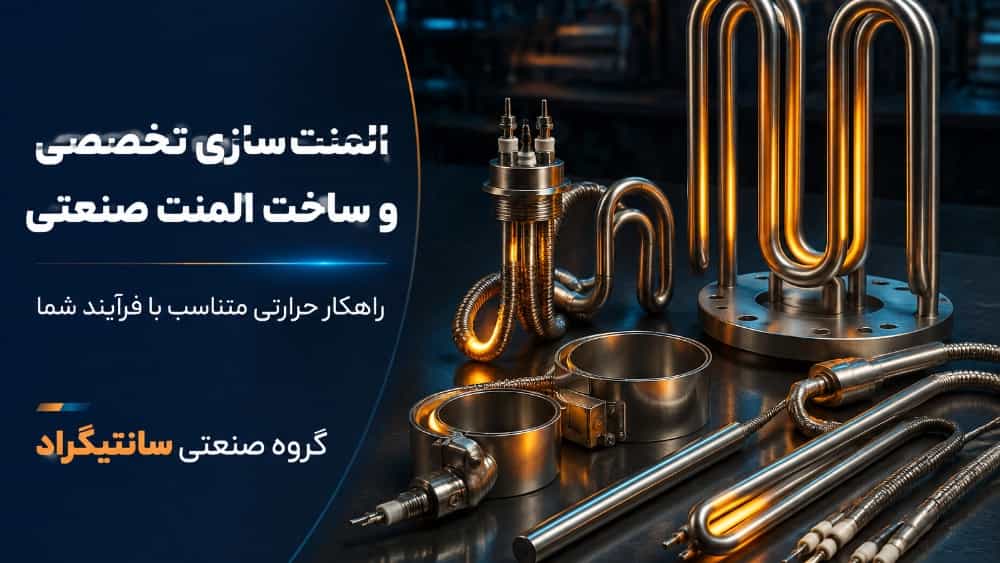
For direct fluid heating, the type of fluid and its contact with the surface of the element are decisive. In these applications, depending on the design of the tank and the process conditions, a rod element with a threaded connection or a flanged assembly can be checked.
When ordering, state the composition of the fluid, the amount of precipitation or corrosiveness, the minimum level of the liquid and the possibility of its circulation. Thick fluid or the surface on which the sediment sits does not remove heat from the sheath like clean water; Therefore, choosing the surface power without checking these conditions can reduce the life of the element. The sheath material must also be compatible with the contact environment.
Heating of mold, cylinder and passing air
For the metal mold, heat transfer from the element to the body is very important; For the cylinder, uniform contact with the outer surface is important. In the passing air path, the speed and distribution of the air flow must be checked along with the power of the element.
The cartridge element is usually placed inside the designed hole in the metal part, and the quality of its seating affects the heat transfer. The belt element is closed around cylindrical surfaces such as the cylinder of the device; For air heating, you can also check the rod or finned structures suitable for the channel and air flow. The final choice depends on the plan and working conditions of the device.
Usage | Checkable option | Important information when ordering | Error Common |
Water or fluid tank | Threaded rod or flanged assembly | Fluid type, volume, temperature, installation location and minimum liquid level | Choice based on power rating only |
Oil or thick fluid | Immersed element with fluid design | Viscosity, operating temperature, fluid circulation and limitations Deposition | Ignore localized heating |
Metal mold or block | Cartridge | Hole diameter and depth, material Mold, temperature and wire exit location | Order without measuring installation location |
Machine cylinder | Belt or belt | Diameter Cylinder, installation width and connection space | Incomplete contact of the element with the cylinder |
Hot air channel | Rod or finned according to the flow | flow rate and air temperature, channel dimensions and installation location | power selection without checking air flow |
This table is a starting point for selection, not a substitute for technical review. Two devices with the same application may need different elements due to differences in dimensions, heating time or installation conditions.
What errors shorten the life of the element?
Many premature failures are caused by incorrect selection of operating conditions or improper installation. Before reordering, check the failure pattern of the previous part to avoid returning the problem to the machine with a new element.
For basic troubleshooting, this order works:
- Record the location of the failure. Discoloration or concentrated damage in one area can be a clue to poor heat transfer, poor contact, or fouling; Definitive diagnosis requires component and circuit inspection.
- Remeasure effective dimensions. Total length is not always equal to heater length. In checking the surface power, the area of the heated section is important, not just the apparent length of the element.
- Review the installation conditions with the designer. In the mold, check the slack and hole condition; In the tank, liquid level, sediment and fluid circulation; and in the cylinder, the contact of the element with the body.
- See the temperature control independently of the element itself. The location of the sensor, the operation of the controller and the protection against excessive temperature increase must be compatible with the application.
- Agree about the tests before delivery. Measuring the electrical resistance and checking the insulation are among the tests that can be requested to control the quality of the element; The type of test and acceptance criteria should be clear in the order specifications.
Purchasing trick: If the previous item has broken several times at a certain point, stop ordering the same sample. The photo of the installation site, the image of the damaged part, and the description of the time of failure are more useful for technical inspection than a healthy photo of the part.
Practical scenario: from line stoppage to reliable build order
Suppose the oil tank element of a production line fails earlier than expected. The solution is not to immediately order the same power and the same dimensions; First of all, it should be clarified what is the condition of the oil at the beginning of the work, how is its circulation and whether there are signs of localized heating on the surface of the element.
The operator can prepare a photo of the element and installation location along with electrical specifications, tank dimensions, oil type, starting and target temperatures, heating time and failure history. Then the technical team can check if the same structure is suitable or if a change in the heating surface, the number of elements, the sheath material or the temperature control method is necessary. This is a hypothetical decision-making scenario, not a performance report for a specific project. Technical guides also recommend paying attention to the surface power and ability of the fluid to transfer heat for thick fluids.
In order to better connect this guide with the related pages of the site, the three suggested anchor texts are:
- Types of industrial heating elements — for the introduction page of the options and application of each type of
- rod and flanged element — for the page related to tank and fluid heating
- guide to choosing the power of the heating element — for the training page for calculating and checking power
If you have not reached the conclusion for the order, send the same technical information and images to Celius Industrial Group and ask to review the possibility of designing and manufacturing according to your device. A detailed description of the problem is a better basis for technical discussion and price inquiry.
Summary and final action
The correct ordering of the element begins with the precise definition of the heating problem and does not end with the selection of the part. If you clarify the type of environment, heat transfer path, installation dimensions, temperature control conditions and failure history, you can make more confident decisions about design, construction and price. To check the needs of your device, share its specifications and images with Celestial Industrial Group and ask for a solution that fits the actual conditions of the production line instead of simply ordering the same as the previous part.