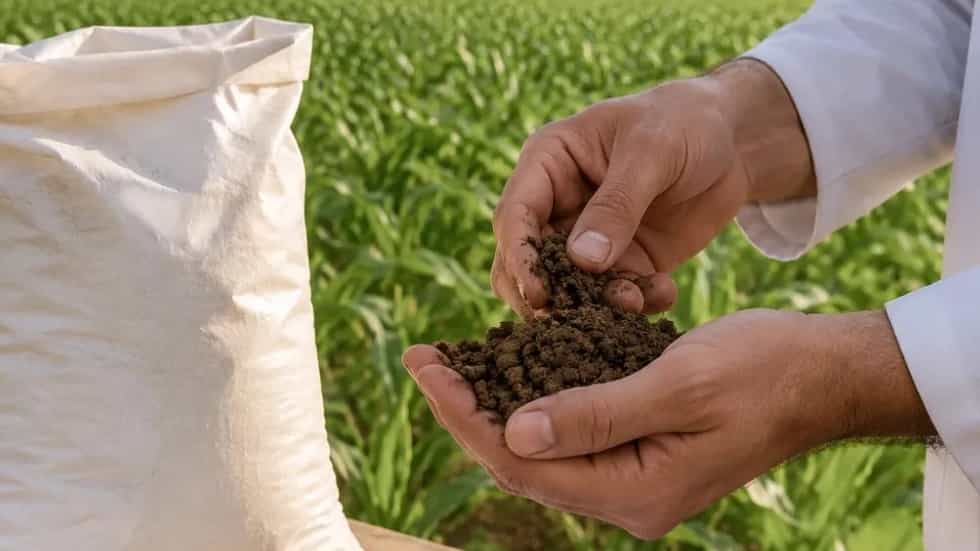

Sometimes two farms with similar crops and weather conditions get different results after using fertilizer; One has balanced growth and an acceptable yield, and the other faces yellowing of leaves, poor growth, or a cost whose yield is not known. In many cases, the problem is not a lack of fertilizer; The problem is that the type of fertilizer or its amount is not coordinated with the soil, water, crop and growth stage. In the fields around Karaj, the difference in soil texture and irrigation water quality can make a single version unsuitable for two fields. The right choice starts from knowing the needs of the farm, not from comparing the prices of fertilizer bags.
Short answer: How to choose the right farm fertilizer?
To choose the right fertilizer for the farm, first test the soil and water, then measure the nutrient requirements of the crop at the current growth stage and select the fertilizer based on the results of these two tests. The consumption amount should also be proportional to the irrigation method, soil salinity, type of product and technical recommendation.
The name written on the fertilizer is not the only selection criterion. Complete or expensive fertilizers are not necessarily suitable for every land; As the observation of the yellowing of the leaves alone does not prove that the plant needs a specific element. Sometimes the outward symptoms are caused by nutritional deficiency, but factors such as salinity, improper irrigation, root damage or disease can also cause similar symptoms.
To make an initial decision, answer these four questions:
- What is the product and at what stage of growth is it?
- What deficiencies or limitations does the result of the soil and water test show?
- In what way is the fertilizer supposed to be used: soil, foliar spraying or with irrigation?
- On what basis is the consumption amount determined?
Which factors are important in choosing agricultural fertilizer?
The right type of fertilizer depends on the actual needs of the crop and farm conditions; A single fertilizer does not give the same answer for all soils and crops. The most important factors are the results of soil and water testing, the growth stage, the characteristics of the fertilizer and its consumption method.
What is the role of soil and water testing in fertilizer selection?
Soil testing helps you to check the condition of nutrients and some effective characteristics of the soil. Water testing is also useful for identifying factors such as salinity and irrigation water quality; Factors that can affect the absorption of food elements.
Don't pay attention to just one number or one element on the test sheet. The interpretation of the result should be related to the type of crop, sampling depth, sampling time and field conditions. If the soil sample is taken from an inappropriate place or different parts of the land are mixed together, the result can not give an accurate picture of the field.
For better sampling:
- Examine homogenous sections of land separately.
- Do not take representative samples from areas where manure or organic matter has locally accumulated.
- Coordinate the sampling depth with the type of crop and laboratory recommendation.
- For important decisions, seek the help of an accredited laboratory and expert interpretation.
How does the growth stage of the crop change the type of fertilizer?
The plant's nutritional needs do not remain constant during the season. The needs of the establishment and vegetative growth stage are different from the needs of flowering, fruit or seed formation and crop ripening; Therefore, the time of use should be checked along with the type of fertilizer.
In the initial stages of growth, root establishment and proper access to nutrients are important. In the next steps, the feeding program should be adjusted according to the production goal and the characteristics of the same product. This does not mean prescribing a specific combination for all farms; The exact recommendation depends on the product, variety, soil, water, climate and irrigation method.
What are the different types of chemical fertilizers?
Types of chemical fertilizers can be classified based on food element or method of consumption. Nitrogen, phosphate and potassium fertilizers each have a different role in plant nutrition, and compound, micronutrient or soluble fertilizers are also used for specific conditions and methods.
When checking the specifications, pay attention to the percentage of nutrients, chemical form, solubility, usage instructions, production date and storage conditions. The choice of fertilizer should be based on the needs of the farm; Not just the number of ingredients listed on the package.
Fertilizer group | General application | Important point when choosing |
Nitrogen | Supply nitrogen needed by the plant | Coordinate the amount and time of consumption with the product and the risk of leaching |
Phosphate | Supply phosphorus in the program Nutrition | Check the characteristics of the soil and plant access to phosphorus |
Potassium | Supply potassium required by the product | Type Consider the crop, soil conditions and fertilizer quality |
Compound fertilizer | Providing several nutrients at the same time | Combination of elements should match the actual needs of the farm |
Micronutrients | Supply the required elements in small amounts | Consume according to deficiency diagnosis and technical instructions |
Soluble or soluble fertilizer Injection | Application via foliar application or irrigation system, depending on the product | Check solubility, compatibility with water and application method |
What is the effect of irrigation method and consumption method?
Fertilizer that is suitable for one application method is not necessarily a good choice for another method. When used with irrigation, the solubility and compatibility of fertilizer with water and equipment should be checked; In foliar spraying, the recommended concentration and implementation conditions are also important.
Before combining several fertilizers, check their compatibility. Improper mixing can cause sedimentation, clogging of equipment, or reduced usability of nutrients. Base the recipe on the product and the expert's advice and avoid making experimental combinations on a large scale.
Costly mistakes in fertilizer selection
In examining the needs of agriculture in Karaj, one of the most frequent mistakes is that the farmer sees a sign like the yellowing of the leaves and without testing, he gives a certain fertilizer to the whole land. My experience in the field of supplying and selling agricultural fertilizer has shown that a hasty diagnosis can increase the cost of consumption, without solving the main cause of the problem.
At Aromaad Company, Dr. Ahmad Abbasi Moghadam emphasizes that the purchase of chemical fertilizer should be done after clarifying the needs of the farm. The product name or reputation of a compound is not a substitute for soil, water and plant growth test information.
A few things you should consider before buying:
- Don't consider the appearance symptoms as a definitive diagnosis. Leaf color change can be caused by several different factors; Also check the type of element, the location of the symptom and the history of irrigation.
- Don't take more fertilizer as the equivalent of more yield. Applying more than needed may damage the nutrient balance or the root environment and create additional costs.
- Record the history of the field's application. Record the type and amount of fertilizer, application time, weather conditions and crop reaction so that the next season's plan is based on real data.
- Price along with quality and Measure the appropriateness. The price of agricultural fertilizer is only one of the purchase criteria; The percentage of elements, the authenticity of the product, the storage conditions and its suitability for the way of consumption are also important.
- Take sampling seriously. Soil testing that is taken from an inappropriate place can lead to incorrect advice.
A practical framework for choosing and buying agricultural fertilizer
The practical path of fertilizer selection begins with the registration of farm information and continues with determining the need, checking the product and measuring the result. This method reduces the possibility of disproportionate purchases and takes decision-making away from guessing and imitating others' versions.
- Record the farm information: Write down the type of crop, planted area, growth stage, irrigation method and fertilization history.
- Prepare soil samples and water if needed: Do basic sampling and get help from a laboratory or an expert to interpret the results.
- Determine nutritional needs: Possible deficiencies, soil limitations and production goals together Measure.
- Read the fertilizer specifications: Check the percentage of elements, usable form, solubility, application instructions and manufacturer information.
- Adapt the application method to the product: Make sure the fertilizer is suitable for your desired soil application, irrigation or foliar application.
- Determine the application amount based on technical advice: Avoid generalizing the application amount from one farm to another.
- Monitor the result: Record plant status and field conditions and revise the diagnosis if the problem remains unanswered.
When visiting a fertilizer sales center, take the product information and the test result with you. Providing clear specifications helps the dealer or expert to consider options based on the actual needs of the farm. Aromaad Company is active in the field of supplying and selling all kinds of agricultural fertilizers; However, the final choice should be based on product specifications, farm needs and technical advice, not just vendor or brand name.
Conclusion: The ultimate criterion is the real need of the farm
In my experience, successful fertilizer selection begins with asking a simple question: "What exactly does my farm need?" The answer to this question should be found along with the soil and water test results, product type, growth stage and consumption method; Not by choosing the most expensive or cheapest option in the market.
Dr. Ahmed Abbasi Moghadam and Aromaad company are active in the field of supply and sale of agricultural fertilizer and checking the product specifications along with farm information can clarify the selection path. Before buying, prepare your test sheet and cultivation specifications and discuss the compatibility of fertilizer with farm conditions.