

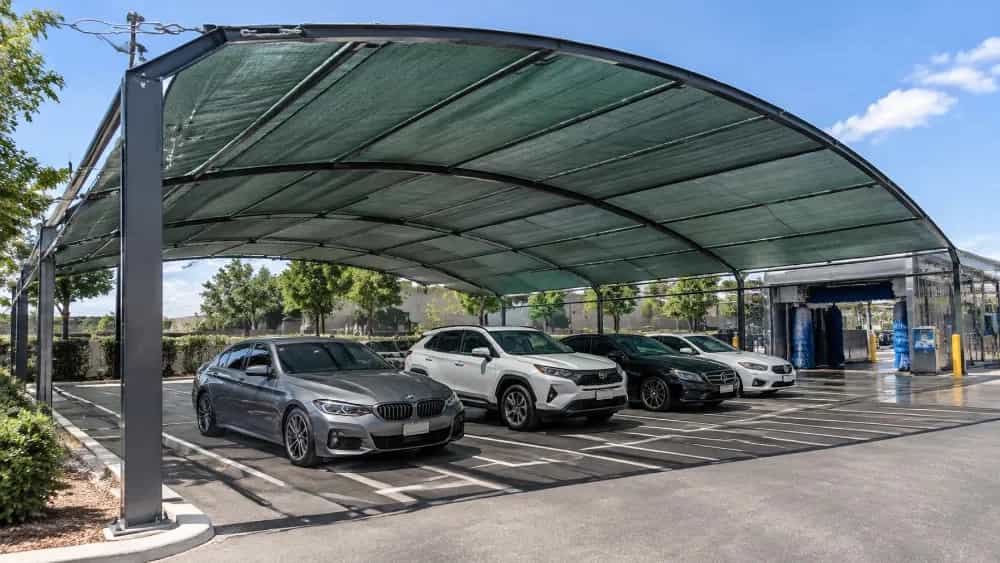
Purchasing car wash and parking canopy mesh with 80-90% texture density and polyethylene materials equipped with 3-6% anti-UV stabilizer is the most efficient way to reduce the temperature of the car cabin between 5-8 degrees Celsius and prevent sunburn of the body color. Unlike polycarbonate sheets or metal roofs, this mesh structure maintains continuous air circulation and reduces the cost of the metal structure by 60%. For commercial windproof coverings, netting with a weight of at least 120 to 180 grams per square meter and double-belt edging guarantees the useful life of the structure for more than 5 years.
The difference between the thermal and structural behavior of canopy mesh and traditional parking roofs
In the implementation of canopy structures for public spaces such as parking lots of office complexes, shopping centers and car washes, the choice of building materials is determined by two factors: the trapped temperature under the roof and the force of the wind on the columns. Rigid materials such as polycarbonate and galvanized sheets absorb the radiant heat of the sun and create a severe greenhouse effect due to the complete blockage of the wind flow path. In our field investigations on projects installed in humid and hot areas, the temperature under the metal sheet in the peak hour of summer radiation has been recorded up to 12 degrees higher than the ambient temperature.
On the other hand, canopy netting (greenhouse and commercial shade) is woven from heavy polyethylene (HDPE) monofilaments or strips. The open pores of the network structure direct the hot air upwards due to the law of convection. This constant circulation prevents the formation of thermal stains and turbidity of the car body killer in the car wash, and when drying the body after washing, it facilitates the evaporation of moisture without the deposition of water solutes burning the car paint.
Besides the thermal factor, wind load is the most critical threat to open-span structures. Rigid monolithic roofs require deep foundations, heavy industrial cans and dense rafters so that the wind does not prevent the structure from being torn down. The netting of the parking canopy minimizes the drag coefficient of the structure due to passing a part of the strong wind flow. This physical feature makes the static calculations of the supporting structure lighter in favor of reducing the consumption of iron and eliminates the risk of tearing the roof in intermittent storms.
Technical analysis of density percentage and standard grammage for car wash and parking lot
The density of the mesh fabric determines the percentage of visible light and sun heat blocking. In the Iranian market, nets are classified from 30 to 90%, but for parking applications, options less than 80% do not have defensive efficiency. 50 or 60% net is designed only for greenhouse shading and plant cultivation, and its direct heat transfer rate to the car is high.
Appropriate density separation parameters
- 80% density (120 to 140 grams): creating a precise balance between standard shading and natural lighting of the area; A technical choice for washing areas and body waxing in car washes, without the need for high-consumption projector lights during the day. 89-90% density (160-180 grams): Extra dense shading; Ideal for long-term parking lots, large housing complexes and open spaces without side air flow.
Polymer resistance and importance of UV stabilizer additive percentage
The quality of the thread in the canopy net is directly related to the virgin granule used and the ultraviolet stabilizer masterbatch formulation. Raw polyethylene loses its molecular bonds against the sun's ultraviolet rays and turns into powder in less than a year. Adding at least 3 to 6% of anti-UV materials in the extrusion stage will make the strands flexible in the cold of winter and resist the harsh rays of the summer sun. The use of recycled waste in yarn production reduces the elasticity index and causes premature rupture at the point of contact with the connections.
Climatic challenges of northern Iran and the solution for canopy longevity in high humidity
In the humid and temperate climates of the Caspian border, continuous rains, high acidity of rain and seasonal algae are the main challenges of canopy maintenance. After some time, tarpaulin fabrics or PVC coverings will suffer from layered mold, unpleasant smell and water accumulation in the vents. Also, constant contact of the metal surface of the roof with moisture accelerates the rotting of the screws.
The mesh netting of the polyethylene canopy does not absorb water; As a result, the rain moisture quickly passes through the pores or dries without damaging the tissue. In practice, it has been observed that by implementing the standard inclination angle between 15 and 20 degrees in the structure, even the falling leaves of wet trees do not accumulate on the surface of the net and are cleaned by the gentle flow of the wind. To maintain the visual effect in urban car washes, metallic gray, earthy and muddy green colors have a higher visual durability in the face of environmental soot and dust deposits.
The next issue is resilience against wet winter winds. The cut edges of the lace will wear under continuous mechanical tension if left unbraced. The edge stitching technique with resistant canvas strips and the use of stainless rivet rings at 50 cm intervals prevents the concentration of stress on the taropod and transfers the force uniformly to the body of the tension cables.
The principles of bracing, edging and windproof installation in commercial spaces
A canopy net of the highest quality, without the implementation of basic bracing, will succumb to dynamic pressures in the first season of autumn winds. Installing a parking lot is fundamentally different from installing a greenhouse; In a car environment, you can't just fasten the net to the pipes with a regular zip fastener. The reciprocating movement of the wind puts concentrated pressure on the plastic fasteners and gradually tears the net.
Key stages of engineering resistant installation
This execution method not only neutralizes the vibration and ear-splitting sound of the wind blowing in the car wash area, but also preserves the geometric stability of the roof against strong winds with a speed of more than 70 kilometers per hour.
A direct purchase guide for parking canopy netting and accurate square footage calculation
Measuring the surface of the land is not enough to purchase the netting of the parking lot and car wash. An accurate estimate requires the calculation of the slope of the roof, the curvature of the structure's arch, and the additional area for border embroidery. For each standard two-car park opening (width 5 meters and length 6 meters), at least 30 to 50 cm of tolerance should be considered.
Purchasing directly from the original manufacturer assures the buyer that the consumables are produced from first-hand heavy polyethylene with a valid batch number, not from recycling old plastics that lose their resistance in the summer by causing an unpleasant polymer smell and changing shape. Also, the delivery of laces with a real guarantee of resistance to the sun's rays, reduces the risk of color and texture quality loss in the period of several years of use. Choosing the appropriate roll width (rolls of 4, 6, 8 and 10 meters) minimizes the number of joints in large openings and creates eye-catching visual integration in public and residential projects.
Technical parameter | 80% density (car wash and area) | 90% density (car parking) | double-wall polycarbonate sheet (solid roof) |
sunlight blocking rate | 80% | 88 to 92% | 60 to 75% |
Direct heat reduction | 4 to 6 degrees Celsius | 6 to 8 degrees Celsius | zero (creating a greenhouse effect and trapping heat) |
natural air circulation | excellent (complete convection transfer) | desirable and Continuous | Completely blocked |
Wind resistance | Wind pressure drop due to holes | Wind passage without tearing Structure | requires super heavy skeleton to avoid breaking |
useful lifespan in radiation | 4 to 6 years (with UV grade A) | 5 to 7 years (with 5% UV masterbatch) | 2 to 4 years (brittleness due to yellowing) |
Output cost compared to iron | Very economical and light | economic and standard | high due to the need for double substructure |