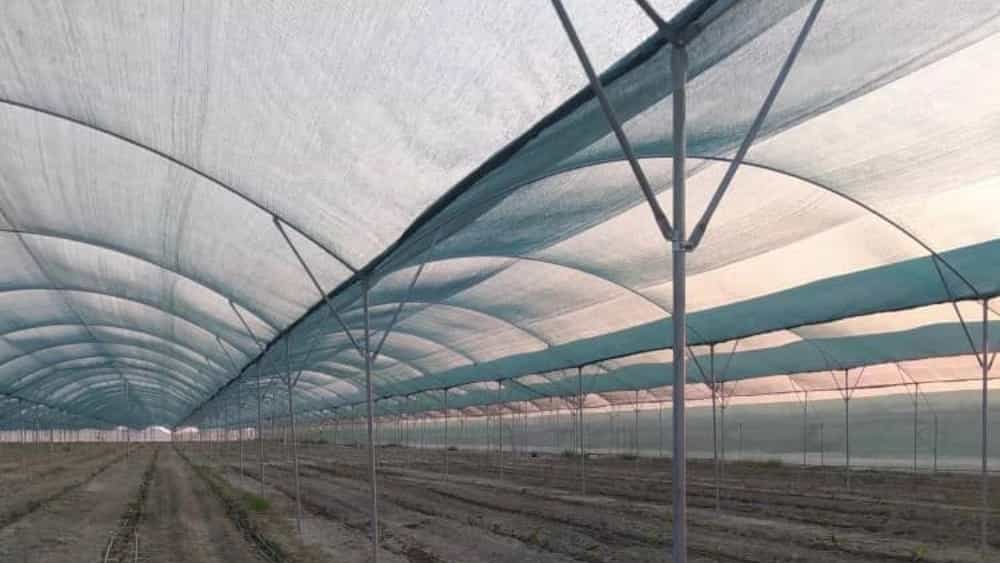

At midday on a hot day, the leaves in the greenhouse go limp, and the first suggestion is usually, "Put a thicker net." But if the light after installation is not enough for the product, the heat stress solution can become a new problem. A buyer in Tehran or Karaj may see two rolls of the same color with different prices; In Mazandaran or Ahvaz, the main question is which net is more compatible with the conditions of the same greenhouse. The root of the mistake is choosing greenhouse netting based on the color, appearance, or price of each roll, without checking the percentage of shade, the light required by the plant, and the installation conditions.
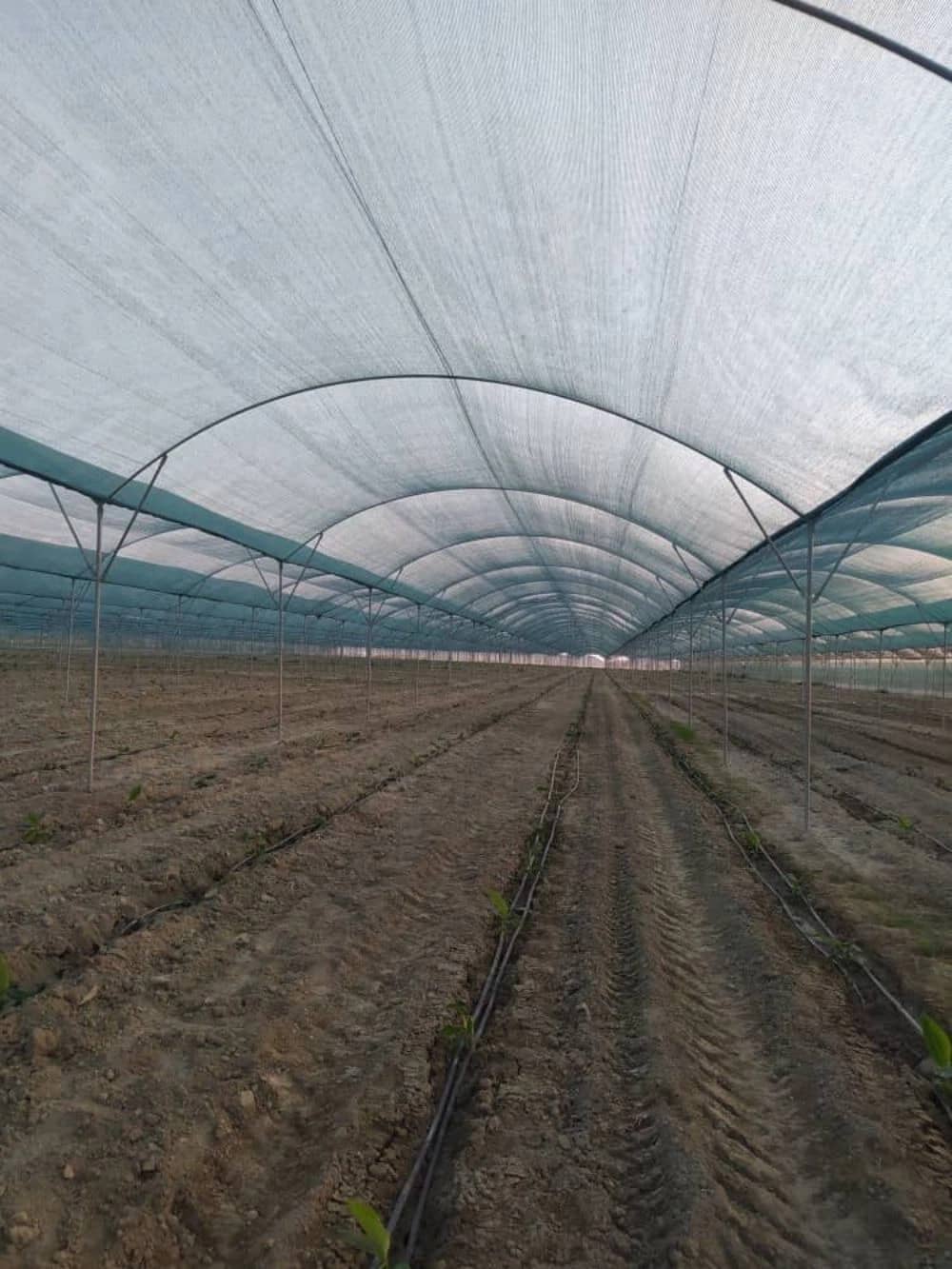
How to choose a high-quality greenhouse net?
A good greenhouse net is not the net that creates the most shade; It should keep enough light for the product and at the same time help to manage light and heat stress. The right choice starts with knowing the plant and the season and is completed by checking the measurable characteristics of the net, the actual dimensions and the installation method.
Shading percentage shows how much the mesh reduces the incoming light. This number alone does not prove the quality of construction, nor does it guarantee that the temperature of the greenhouse will drop to a certain extent. A research on nets of the same percentage but with different colors has shown that the color of the net can change the amount and composition of the light reaching the plant. Therefore, "being green" or "being 50%" of the product is not a complete answer to the needs of a greenhouse.
Before comparing options, clarify these five questions:
- What kind of plant is growing and at what stage? The need for seedlings is not assumed to be the same as a product that is in the flowering or fruiting stage.
- What is the main problem? Sunburn, indoor air heat, plant stress or a combination of these things?
- How much light does the greenhouse receive? Roof covering, season, direction of the structure and the shade of the surrounding buildings. They are important.
- How is the ventilation done? Mesh does not take the place of vents, air flow or cooling equipment.
- Where is the mesh supposed to be installed? On the roof, in the wall or in a temporary part of the structure?
For an initial comparison, on a day representative of greenhouse operating conditions, measure light intensity at plant height before and after trial installation. If a plant-specific light meter is available, its data will be more useful than guessing based on the apparent darkness of the net.
What variables determine the quality and price of greenhouse netting?
Shade percentage, material and texture uniformity, roll width, durability specifications and installation method all have an effect on the actual value of the lace. For this reason, two apparently different prices can only be compared when their technical specifications and sales unit are the same.
Percentage of usable shade and light for the plant
The percentage of shade should be chosen according to the crop and season, not as an indication of greater quality. High shade during bright hours may be beneficial, but the same shade during low light hours or seasons can limit the light the plant needs.
For example, the University of Minnesota extension guide on its cultivation tunnels notes the difference in the effect of 30 and 50% netting and warns that more shading may lead to reduced yield for some crops. This finding is not a fixed version for Iranian greenhouses; It shows that the decision should be weighed with the product and the conditions of the place.
The phrase "100% greenhouse shade price" is not suitable for product selection alone. If 100% means a cover that practically blocks all light, then that product is not suitable for shading the main surface of growing plants dependent on natural light. Such cover may be supplied for another use; Before comparing prices, it should be clear what exactly the seller called "100%".
The texture, material, width and durability of the lace
Check the quality of the greenhouse netting from an actual sample and the declared specifications, not just from the product photo. Uniform texture, healthy edge, usable width and clear information about the material and sunlight resistance are the starting points for evaluation.
When examining the sample, hold it up to the light: a noticeable change in tissue density, irregular stretching, or obvious weakness at the edges can make mounting difficult. Then, get the exact width of the roll, length, declared weight or grammage, texture type and warranty conditions in writing from the seller. The mere fact that the roll is heavier does not prove that the percentage of shade or its useful life is higher.
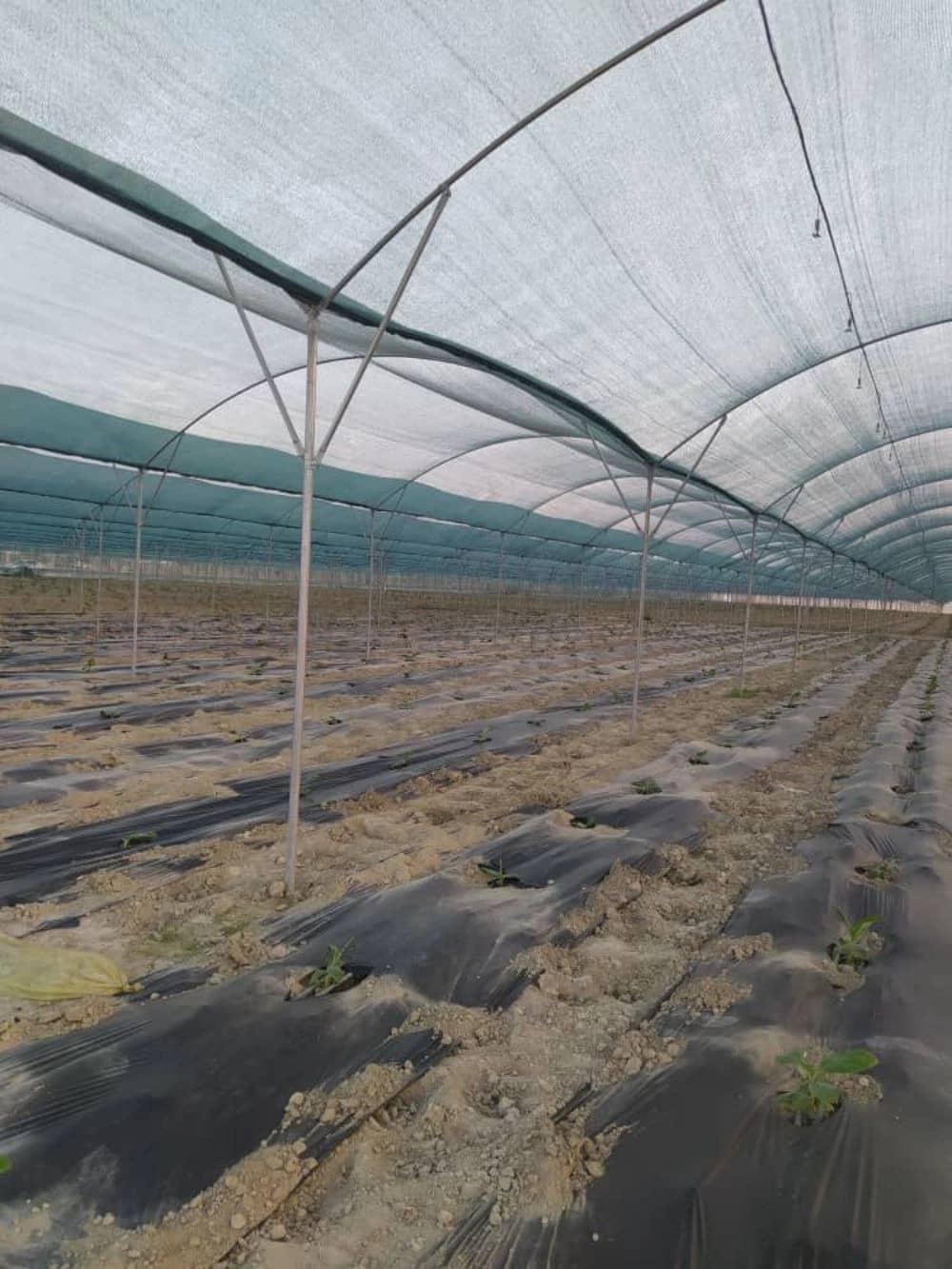
To read the greenhouse shade price list, this matrix is more useful than looking at the price column:
The option under consideration | When is it worth considering? | Essential question before choosing | Error Common |
Shading about 30% | When maintaining light is a priority and light shade is checked | How much light will be at the height of the plant after installation? | Imagine that it is enough for all products |
Shading about 50% | When it is necessary to reduce the light more during its launch periods | Is there enough light during low light hours? Does it stay? | Choosing simply because it's "cooler" |
Ladies with higher shading | For special applications or areas with different lighting needs | Can the crop and growth stage tolerate this amount of shade? | Covering the entire greenhouse without testing |
So-called 100% coverage | When the goal, cutting The light is clear in application | Is the product really a greenhouse net or a darkening cover? | Knowing it is the same as the usual shade |
Two rolls with the same percentage and color | To compare the construction quality and cost | Are the width, length, texture, durability specifications and unit price the same? | Price comparison of rolls with different sizes |
These percentages are categories for discussion and testing, not prescriptions for cultivation. Research on colored nets also shows that even in the same nominal percentage of shade, the transmitted light and its effect on the plant can be different.
I, Behzad Valizadeh, chose the greenhouse net from the question "What happened to the plant?" I'll start, not with the question "Which roll is darker?". If the main issue is keeping warm air out, ordering a denser mesh without looking at ventilation can add cost without addressing the root cause.
When examining a greenhouse in Tehran, Karaj, Mazandaran or Ahvaz, the name of the city is only the starting point of the conversation. What changes the decision is the conditions of the structure: the type of cover, whether the vents are open or closed, the crop, the time of cultivation and what hours of intense light reaches the plant. For this reason, I don't necessarily suggest a percentage of shade for two greenhouses in the same city.
A quiet mistake is to order by floor area. If the surface to be covered has a slope, arch or protrusion, the floor area is not equal to the amount of mesh required. Another mistake is not asking the actual width of the roll: a cheaper roll may require more cutting, splicing and installation time.
I recommend testing a limited section before covering the entire structure. In the same hours, compare the light at the height of the plant and the condition of the same crop in the experimental section with the section without netting. This is especially valuable when two green meshes with the same shade percentage on paper do not look the same in practice. Published research on colored laces also shows the importance of measuring light transmission and product response, beyond color or nominal percentage.
Roadmap for choosing and ordering greenhouse netting
For an accurate order, first record the plant's needs, then measure the installation surface and finally compare the offers of the same specifications. This order helps to see the cost of the roll, the required amount and its possible effect on cultivation in one decision.
- Record the problem. Note the crop and growth stage, season of use, hours of stress and current ventilation status. If the plant is only affected for part of the day, consider a temporary or partial cover from the start.
- Check the light and installation location. Determine what surface the netting will be placed on and whether the current greenhouse cover or surrounding structures already reduce light. Don't evaluate shading in isolation from ventilation; The University of Minnesota guide also considers proper ventilation to be an essential part of tunnel heat management.
- Dimension the surface of the cover. Measure the length and width of the actual installation sections and determine the direction of the roll placement and the location of the joints. For example, a rectangular area of 8 x 24 meters is 192 square meters before calculating overlap and cutting; This number is not necessarily the final amount of the order.
- Request the same specifications from each seller. Enter the shade percentage, color, material, texture type, roll width and length, warranty conditions, price unit and additional costs in a single list. In reviewing the options of north canopy lace, the same information should be the basis of the conversation, not just the name of the product.
- Compare the final price of the installed surface. If the price of one option is stated in meter length and the other option in square meter, first convert both to the same unit. Canopy green netting price without roll width, shade percentage and required amount is not enough criteria to make a decision.
- Plan for trial installation and review. Try a limited section before full implementation. After installation, check the light condition at the height of the plant, ventilation, net tension and connection points so that a new problem is not hidden.
Conclusion: My ultimate criteria for selection
I consider greenhouse netting to be a suitable choice when its specifications are clear and suitable for the light needs of the plant and the actual conditions of the structure. The lowest price of a roll or the highest shade percentage is not a sign of a better purchase alone.
If you are considering selling the best quality greenhouse canopy netting, consider the product name, installation surface dimensions, season of use, and main greenhouse problem before making a final decision. With these four data, it is possible to have a more detailed conversation about the options of the northern canopy netting and make a verifiable choice instead of guessing based on the color and price.