

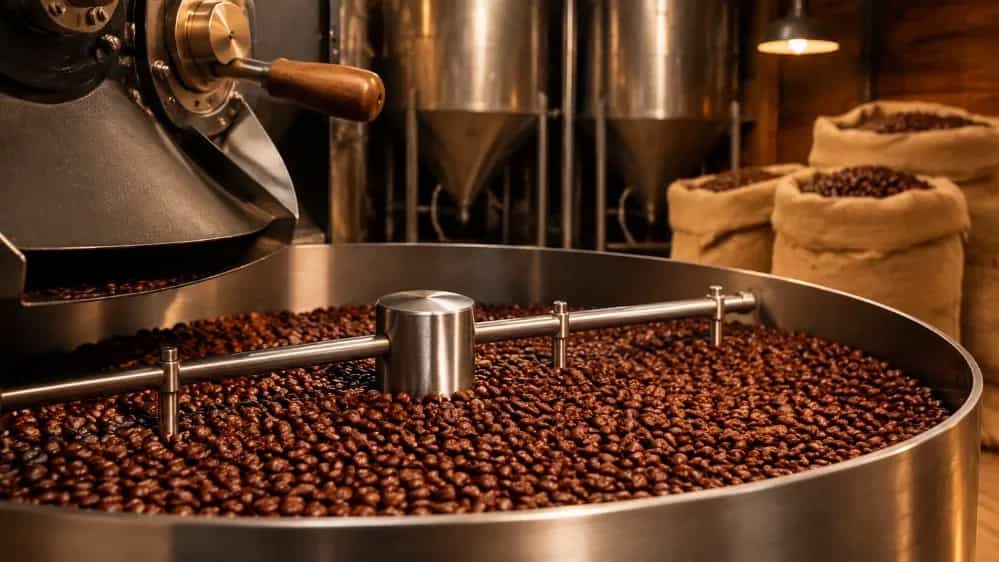
Bulki Coffee, as a specialized center for roasting commercial and specialized beans and processing beverage powders in Isfahan, manages the direct supply chain of raw materials for cafes, workshops, and beverage stores. Access to stable roast profiles and uniform mixes without fluctuations in flavors requires relying on industrial equipment to control temperature and sort raw grains at the roasting origin. By removing the brokerage layers of the banking market, this collection supplies freshly roasted seeds and latte, mocha and hot bar supplements to the entire central market of Iran with the guarantee of chemical and physical freshness.
Isfahan beverage market shows a different extraction behavior in industrial devices compared to humid cities due to climatic conditions, low relative humidity and specific water hardness. Ignoring these parameters at the time of roasting profile design will produce espresso shots with unpleasant bitterness or lack of consistent crema. The main difference between local workshops and intermediary suppliers is in the accurate understanding of the behavior of urban water and the calibration of the roasting process on this basis.
Engineering process of green bean roasting in the dry climate of Isfahan
In practice, it has been observed that the reduction of environmental humidity in roasting workshops changes the rate of convection heat transfer in the roasted tank. In order to avoid the phenomenon of surface burn (Facing) or underdevelopment of the seed center, Bolki Kafi adjusts the stage of preheating and entry of Arabica and Robusta green seeds based on precise software curves. This control prevents the premature decomposition of chlorogenic acids and the production of gas taste in the final cup.
Physical sorting before drum charging is of undeniable importance. The removal of defective seeds, pebbles from dry harvests and unripe seeds is done mechanically to increase the life of the grinding blades of the partner sets. In the field experiences of the high-traffic cafes of Isfahan, the presence of even half a percent of defective seeds in the consumed beans makes the extraction efficiency unbalanced and asymmetric.
Matching roast profiles with cafe use and home use
The technique of roasting Robusta seeds, with the aim of achieving a heavy wind, requires the control of the first crack phase with a mild temperature gradient. On the contrary, Arabica specialty lines, which are prepared for demi uses or citrus flavor layers, are discharged from the drum at lower temperature points and with a specific color index. This separation of production lines allows the bar owner to order the right combination based on the taste of his local customer.
unmediated supply chain; Elimination of long-term storage damage
One of the main challenges of coffee activists in the central provinces is buying coffees that have been in unspecialized warehouses for months and experienced excessive degassing. Coffee that has lost its active carbon dioxide gas is oxidized and does not create any standard hydraulic resistance when passing the high-pressure espresso water stream. Order-oriented production in sufficient bulk minimizes the cycle time from roasting to the barista's load.
Direct supply chain management eliminates the overhead costs of frequent transportation between metropolises. The institutional buyer or cafe manager achieves weekly price stability and stable access to grain quotas without having to deal with the spiraling fees of traditional markets, which allows for profitable planning for downstream businesses.
Industrial formulation of hot and cold base powders
Beverage supply is not limited to coffee beans; The uniformity of the texture and the stability of the foam in the hot load depend on the quality of the used powders. In many cases, the market is faced with powders that have too much added sugar or due to the use of non-standard fats, they curdle or settle against the heat of milk.
Specialized production and processing of powders such as masala tea, hot chocolate with various percentages of cocoa butter, white chocolate, foamers and non-dairy creamers require micronized grinding and homogenization. In the production workshops, the precise granulation adjustment of the particles makes the speed of powder solubility compatible with the foaming speed of the steam nozzle, and natural flavorings maintain their structure at high temperature.
Eliminate hidden sugars and focus on natural concentration
In the tests conducted on the taste of today's audience, the trend towards less sweet powders with a higher percentage of purity of the active ingredient (such as fresh spices in masala or alkalized cocoa powder) is far more than ready-made commercial products. The precise adjustment of the formula at the origin of production in Isfahan provides the ability to produce and package the compounds based on the real bitterness of chocolate or the pure spiciness of ginger and cardamom.
Guide to storage and storage of coffee and powder in the temperature conditions of Isfahan
Severe temperature changes between day and night in the cold and hot seasons of Isfahan require that the storage environment of raw materials has a controlled humidity below 50%. Powders are highly hydrocolloid and absorb moisture; If they come into contact with the open air, they will become lumpy (Caking) and lose their fragrance in less than a few days. Coffee beans should also be placed in bags equipped with a one-way gas discharge valve and away from direct sunlight so that lipid oxidation does not occur.