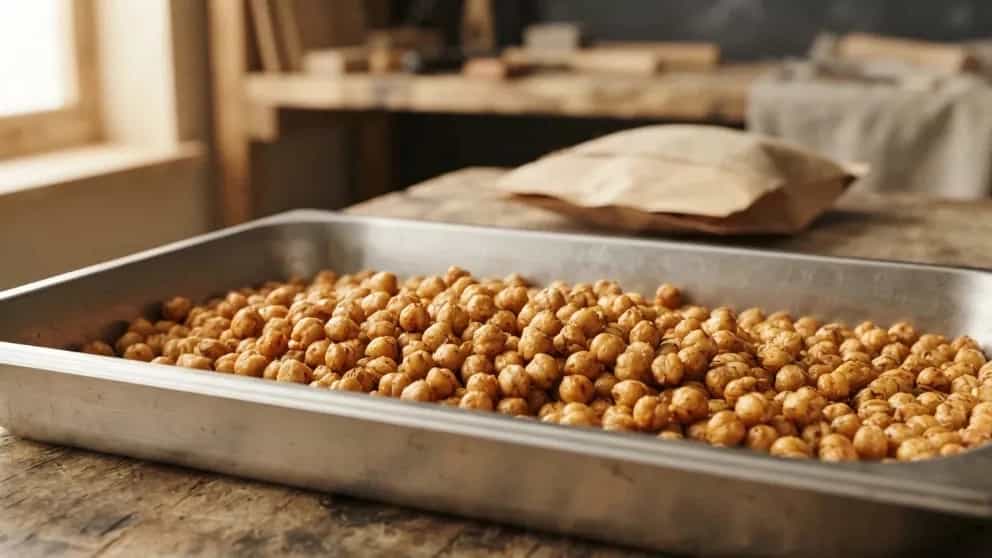

The price per kilo of chickpeas seems reasonable, but when the order arrives at the destination, some of the seeds are crushed and the taste of the shipment is different from the original sample. For the wholesale buyer, this difference is not just a matter of appearance; It affects sales, repackaging and customer trust. In Tabriz market, like any other major market, asking "How many kilos?" Without specifying the product type and delivery terms, it does not give an accurate comparison. The root of the problem is buying based on the name of the product instead of its verifiable specifications.
What should be determined to buy wholesale chickpeas?
Before comparing prices, match the type of chickpeas, seed quality, order weight, packaging method and delivery destination. Then measure the final price based on the salable product at the destination, not just the declared price per kilo.
For a comparable inquiry, include these items in the order message:
- Type of product: plain, salted or double-edged; If you want 'raw', please write exactly what you mean.
- Grain specifications: size and uniformity, color, acceptable amount of breakage and expected taste.
- Order conditions: Net weight, number and weight of packages, production or processing date and product batch specifications.
- Delivery conditions: destination city, shipping cost, approximate delivery time and responsibility for handling possible damage in path.
If one seller announces the price at the workshop and the other the delivery price at the destination city, these two numbers are still not comparable. For buying bulk chickpeas with nationwide delivery, the basis of the decision should be the same specifications and the final cost of delivery.
What factors change the price of wholesale peas?
The price of bulk chickpeas is formed by the combination of the quality of the raw material, processing, sorting, packaging and transportation. Expressions such as "price of chickpeas per kilo" or "price of chickpeas in bulk" have a useful answer only when these details are written next to the price number.
What effect does the type of processing and taste have on the price?
Nhodchi plain, salty and two atisheh should not be priced or compared based on their name alone. The degree of roasting, uniformity of taste, added ingredients and output quality should be clear for each order.
In the salted chickpea price inquiry, in addition to the rate, ask if the saltiness is uniform throughout the shipment. For the price of two-atisheh chickpeas, take a sample of the same requested specification and check its color, crispness and taste; The title "Two Flames" alone does not define your desired degree of roasting.
The term "raw chickpeas" can also be ambiguous in the purchase conversation. When asking raw chickpea price, specify whether you mean unprocessed chickpeas for consumption after cooking or plain chickpeas without salt; These two should not be ordered interchangeably.
What is the effect of sort, packaging and shipping route?
Humidity, storage temperature and environmental conditions affect the quality of dry products. The FAO guide on the storage of pulses explains that the product exchanges moisture with the moisture of the environment; Therefore, package health and post-delivery storage conditions are part of the purchase evaluation, not a separate issue.
Query type | Suitable for | Most important qualitative question | tips when comparing the price |
peas with nuts | selling in bulk or a combination of nuts | How uniform and crunchy are the seeds Is it? | Compare the price with the product of the same grade and weight. |
Salted peas | Dry and mixed nut store | Is the salinity and taste quality uniform in the shipment? | Record the taste and packaging specifications along with the price. |
Nhodchi Do Atisheh | A customer interested in taste Roaster | Is the color and crispiness of the sample consistent with the final order? | Do not replace the product name with the sample review. |
Bulk chickpeas | Higher volume orders or repacking | What is the breakage rate and condition of the bags? | Include the cost of repacking and possible drop. |
Product Called "raw" | Depending on the exact definition of the buyer and seller | Is the product unprocessed or simple and without salt? | Before clearing the ambiguity, compare the price with ready-to-eat chickpeas. Don't. |
Finished price per kilo of salable goods = total price of goods, packaging and shipping ÷ healthy and salable weight after delivery. This calculation helps to measure a seemingly cheap rate with its true cost.
My Field Experience: Costly Bulk Buying Mistakes
I, Aref Dehghanpour, in reviewing a major order, I first want to know how the buyer supplies the product; Then I will go to the price. The chickpeas suitable for small store packages are not necessarily selected with the same criteria as a bulk order for the combination of nuts.
At Dehghanpour's chickpea cooking workshop in Tabriz, I consider three questions important for the purchase dialogue to be accurate:
- Which shipment is the sample representative of? Agreement on the taste and appearance of the sample is valuable when the specifications of the shipped shipment are also recorded.
- At what stage is breakage checked? It is not enough that the grain is healthy before loading; The condition of the product during delivery should also be checked.
- How are chickpeas stored and transported after processing? Crispness and appearance of health are not the only criteria for food safety. Codex emphasizes that in low-moisture foods, it is important to prevent contamination after the stage of reduction of microbial agents and during packaging.
The tip I recommend to buyers is: confirm the sample with the same title as on the invoice; For example, "salted chickpeas of agreed size and packaging", not just "good chickpeas". This will reduce the difference of withdrawal before sending.
Roadmap for inquiry and order delivery
A secure bulk purchase begins with a detailed description of the need and ends with product inspection at the destination. If each step is recorded, it will be easier to compare offers and track possible discrepancies.
- Write the use of the product. Specify whether the chickpeas are for bulk sale, store packaging, or combination with other nut products.
- Determine the sample specifications. Inquire about type, flavor, relative grain size, acceptable breakage rate, and net weight.
- Get a base price. Ask the seller for product price, packaging, shipping to destination, and conditions. declare the settlement separately. Also ask the validity date of the price; Inserting a fixed number without specification and inquiry time is not a reliable buying guide.
- Clarify the shipping conditions before confirmation. Specify the type of package, the number of packages, the destination city, the method of delivery and the method of recording the damage upon receipt. Measure.
For a conversation with Dehghanpour Peas Cooking Workshop or any other supplier in the field of wholesale chickpeas and nut products, a short message including the type of product, required weight and destination city is a more accurate starting point than asking for a price without details.
summary
For bulk purchases, the cheapest number is not necessarily the most economical order; A product is worth considering if its specifications are clear and it reaches its destination safely. I, Aref Dehghanpour, suggest that before making a decision, leave the sample and delivery conditions aside from the price and weigh the offers with a common standard.
If you are in doubt between simple chickpeas, salty, two atisheh or bulk supply for your order, specify the type of consumption, the required weight and the destination city. These few data make the conversation about product selection and price inquiry more accurate.
همین حالا تماس بگیرید!
پاسخ فوری و مشاوره رایگان در انتظار شماست.