

Choosing the cheapest ventilator on the market may seem economical at first, but if the unit cannot move the required volume of air or is not designed for continuous operation, the costs of repair, replacement and energy consumption can exceed the initial savings.
On the other hand, buying a very large or powerful fan is not always a good choice. A device selected beyond the actual system requirement may increase the purchase cost and energy consumption. Therefore, the best choice is not necessarily the most expensive or the cheapest product; Rather, it is ventilation that is in harmony with the needs of the project.
If you need guidance to choose the right ventilator for your workshop or factory, you can visit Nasimfan website or call 09126173497 Take it.
Before buying an industrial fan, determine the real needs of the environment
The first step to buy an industrial ventilator with a limited budget is to determine the ventilation needs. Before comparing prices, you need to know what the device is supposed to do. Is the purpose of exhausting hot air? Should it remove unpleasant odors or steam? Is the air flow used for dust reduction or general ventilation?
The answer to these questions determines the type of ventilator and the required specifications.
Measure the volume of the space to be ventilated
To start, measure the length, width and height of the desired space. The product of these three values determines the volume of the environment in cubic meters.
For example, a workshop with a length of 12 meters, a width of 8 meters and a height of 4 meters has a volume of 384 cubic meters. This number alone is not enough to choose a fan, but it is a good starting point to estimate the ventilation capacity.
Consider the type of pollutant or conditioning agent
The air of a welding workshop is different from the air of a normal warehouse. In environments with smoke, steam, humidity, heat or suspended particles, the choice of ventilator should be in harmony with the nature of the pollutant and working conditions.
If the goal is simply general air circulation, a simple ventilator may be the answer; But in applications where the local discharge of the pollutant or air transfer is done through the channel, checking the pressure and capacity becomes more important.
7 important points for buying an industrial ventilator with a limited budget
1. Don't just measure the initial price of the ventilator
The initial price is one of the important factors in the purchase, but it does not show all the costs of a device. An air conditioner that is purchased at a low price may end up costing more over time due to high power consumption, high noise, or the need for frequent repairs.
For a better comparison, consider the following costs:
- Purchase price of the device
- Installation and connection cost
- Electricity consumption during working hours
- Service and maintenance cost
- Possibility of stopping work in case of failure
- Cost of replacing consumable parts
If the device is going to work for several hours a day, checking the energy consumption is very important. In such a situation, it may be more economical in the long run to pay more for a low-consumption model.
2. Choose the fan based on the air flow rate
The air flow rate shows how much air the fan moves in a certain period of time. This value is usually expressed in units of cubic meters per hour.
One of the common mistakes in buying an industrial fan with a limited budget is choosing the device based only on the diameter of the propeller or the power of the engine. Two ventilators with the same diameter may have different performance due to the difference in propeller design, engine speed and body structure.
For a more accurate choice, the required capacity of the environment should be determined and then the technical specifications of the proposed models should be compared with it. It is also necessary to note that the declared flow rate in free conditions may differ from the actual performance of the device after installing the channel or filter.
3. Do not forget the static pressure of the system
If the ventilator is going to pass air through ducts, filters, dampers or long paths, system resistance is very important. This resistance is related to static pressure.
An outdoor fan may move a high volume of air, but once connected to a duct, its performance will decrease. Therefore, choosing a fan only based on free capacity can cause an inappropriate purchase.
In channelized systems, factors such as channel length, number of elbows, diameter change, filters and valves affect the path resistance. The technical sources of fan selection also emphasize the necessity of checking the flow rate and pressure of the system at the same time. US Department of Energy Technical Guide
4. Match the type of ventilator with the use of the environment
Industrial ventilators are produced in various models and structures. Choosing the right type can avoid additional costs.
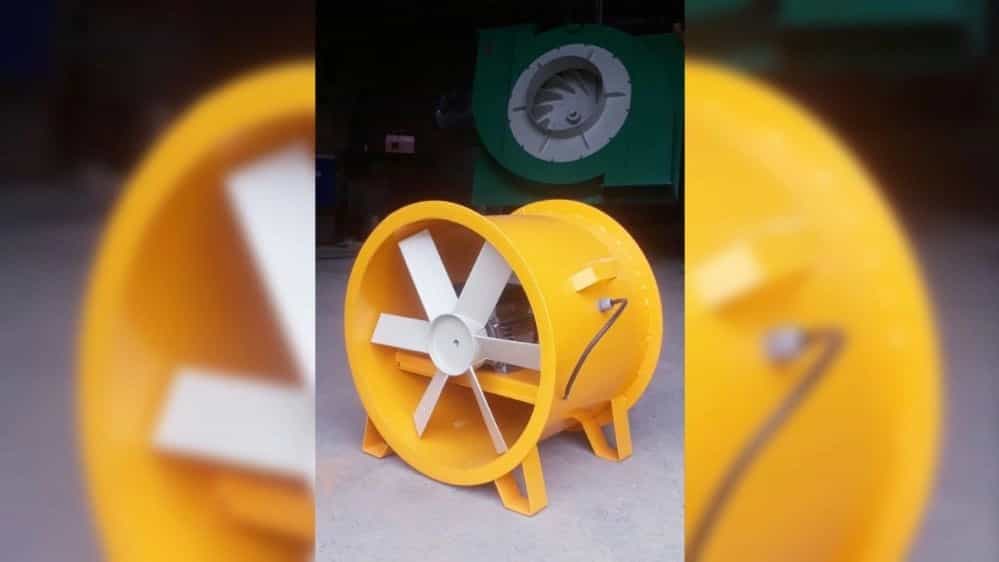
Axial fan: It is usually suitable for moving high volumes of air in paths with relatively low resistance. These models are used in general ventilation, hot air discharge and some wall or ceiling applications.
Centrifugal ventilator: In applications where higher pressure or connection to the ducting network is involved, it is considered an option to consider. This type of fan can be suitable for systems with filters or more complicated paths; Of course, the final choice depends on the performance specifications.
Ceiling or wall ventilation: In some spaces, direct installation on the wall or ceiling can reduce the cost of ducting. This method is suitable if the air inlet and outlet path and environmental conditions allow such an installation.
To buy an industrial ventilator with a limited budget, it is better to first determine the type of application and then compare the appropriate models for the same application.
5. Check engine power and power consumption
Motor power is one of the most important characteristics of the fan, but more power does not always mean better performance. The choice of motor must be in harmony with the flow rate, pressure and working conditions of the device.
If the fan is chosen too big, the purchase cost and energy consumption may increase. If its capacity is less than required, the device will not be able to provide the desired ventilation and you will probably have to use additional equipment.
To reduce the cost of electricity, it is better to pay attention to the efficiency of the fan, working conditions and the possibility of remote control in appropriate applications. Of course, the use of remote control must be in harmony with the motor and fan compatibility and installation requirements.
6. Choose the material of the body and propeller based on the environment
In humid, corrosive environments or with suspended particles, the material of the body and propeller can affect the useful life of the device. Choosing the wrong material may cause corrosion, reduce strength or increase the need for repair.
For typical environments, a standard metal structure may be the answer; But in certain environments, it is necessary to check the protective cover, the material of the propeller and the resistance to environmental conditions.
It is better to compare the cost of the material and structure of the device with the actual conditions of the installation site. Choosing a very resistant model for a simple environment may create unnecessary costs; On the other hand, choosing the wrong product for the corrosive environment can also lead to the cost of early replacement.
7. Include installation and maintenance in the budget from the beginning
The ventilator is not just an independent device; Its performance depends on the installation method and system conditions. Improper installation, vibration, obstruction of the air path or difficult access for service can reduce performance.
When shopping for an industrial ventilator on a budget, consider the following:
- Is the installation location suitable for the device?
- Is the air inlet and outlet free?
- Does the installation require a channel or peripheral equipment?
- Is it possible to access for cleaning and service?
- Is the device designed for the intended working hours?
Considering these factors will reduce the possibility of unexpected costs and help you use the true capacity of the ventilator.
How to choose between a cheap ventilator and a high-quality ventilator?
In the market, there are various models of industrial ventilators with different prices. Comparisons of these products should be made based on actual specifications, not just device appearance or advertising.
For example, two products may have similar prices, but differ in airflow, pressure, engine power, build quality, and warranty terms. In such a situation, checking the technical specifications can help to make a better choice.
When comparing products, ask the seller about the following:
- Aeration capacity under specific working conditions
- Static pressure or performance range
- Motor power and speed
- Body and impeller material
- Installation type and device dimensions
- Warranty and service conditions
- Suitability of the device for continuous or intermittent operation
If you are planning to buy an industrial ventilator with a limited budget, it is suggested to compare several models of the same category with the same specifications. Comparing products designed for different applications usually does not give accurate results.
Common mistakes when buying a cheap industrial fan
Device selection without capacity calculation
One of the most common mistakes is buying a ventilator based on guesswork or experience in a similar environment. Even two spaces of the same size may have different needs due to differences in the number of people, heat production, pollutants or the air exit path.
Not paying attention to the sound of the device
In environments where employees spend a lot of time, fan noise can affect comfort and working conditions. Choosing a machine with high rpm or improper installation may cause more noise. At the time of purchase, check the sound level and installation conditions.
Buying a bigger device than needed
A bigger fan is not always an advantage. A fan that is too large may have a higher initial cost and may operate in poor conditions. The technical guide for fan selection introduces the factors affecting performance and cost, paying attention to the performance point and avoiding excessively large selection. US Department of Energy Technical Resource
Ignoring environmental conditions
A ventilator suitable for a dry and clean environment is not necessarily suitable for an environment with moisture, steam, dust or corrosive substances. The environmental conditions should be included in the selection from the beginning.
What information is required to inquire about the price of an industrial ventilator?
In order to make the price inquiry more accurate and faster, it is better to prepare the following information:
Characteristics, description of the type of environment, workshop, factory, warehouse, or production space, dimensions of the environment, length, width, and height, use of heat exhaust ventilation, general ventilation, odor or steam release, installation type, wall, ceiling, channel, or other modes, air conditions, clean, humid, hot, with particles or pollutants, intermittent or continuous working hours, approximate budget, desired cost range
Having this information helps to choose the right options and prevents the suggestion of devices that are not aligned with the real needs of the project.
To review models and get advice on buying an industrial fan on a budget, visit Nasim Fan. You can also call 09126173497 and discuss your environment.
Why is it more important to make an informed choice than to buy cheaper?
The goal of economic shopping is not simply to pay less at the time of ordering. A suitable choice should satisfy the need for ventilation, be compatible with the installation conditions, and have reasonable running costs.
If the ventilator is selected according to the capacity of the environment, the possibility of needing to replace or add the device is reduced. Also, choosing the right type of fan and checking the path resistance can help the system work better.
On the other hand, a hasty purchase may cause problems such as insufficient ventilation, excessive noise, high power consumption or the need for repairs. For this reason, it is better to carefully check the technical specifications and actual conditions of use before ordering.
Frequently asked questions about buying an industrial ventilator with a limited budget
How to choose the cheapest industrial ventilator?
For economic selection, first specify the required capacity and type of application. Then compare the models that meet your needs in terms of flow rate, pressure, engine power and installation conditions. Low price alone is not a sufficient criterion; The cost of electricity, installation and maintenance should also be considered.
What type of industrial ventilator is suitable for a small workshop?
The type of ventilator depends on the dimensions of the workshop, the ventilation factor and the air exit path. In some spaces, the axial wall fan can be a suitable option; But if there is a channeling path or higher resistance, other models should be considered. It is necessary to determine the actual capacity before purchasing.
Is the low consumption industrial fan always more expensive?
Not necessarily. The price of the fan depends on the type of design, capacity, engine, type of parts and production conditions. Some energy-efficient models may have a higher initial price, but in the case of long-term operation, the reduction in power consumption can compensate for some of the price difference. It is better to compare the initial cost and the operating cost.
summary; Economic shopping begins with the right choice
Purchasing an industrial ventilator with a limited budget has a favorable result when the real needs of the environment are determined before choosing. Measuring the volume of the space, determining the type of pollutant, checking the flow and pressure, choosing the type of fan, paying attention to the engine power and considering the cost of installation and maintenance are among the most important steps of a smart purchase.
Instead of choosing based on price alone, look for models that are compatible with your project in terms of performance and working conditions. Such an approach can prevent additional costs and lead to the selection of more appropriate ventilation for the workshop or factory.
If you are looking for an industrial fan that fits your budget and project needs, visit Nasim Fan website to check the options or call 09126173497 call By providing the specifications of the environment and application, you can advance the selection path more accurately and reliably.