

Familiarity with a variety of fountains
Fountains are divided into two categories, indoor and outdoor.
Outdoor fountains are often covered with a special protective coating, which is not applied to indoor fountains, to maintain their durability against potential outdoor elements such as moisture, wind, heat, cold, and sunlight. Unlike indoor fountains that can be made with different materials such as stone, glass, metal and wood; The vast majority of outdoor fountains are made of stone. Indoor water fountains have internal lighting and work with electricity. Outdoor fountains are also powered, but have UL ground plugs and cover devices that protect the lights from electrocution in the event of moisture. The fountain equipment and structure are fully described in the fountain equipment article. One of the most important advantages of installing an indoor fountain is that it helps purify the indoor air. The flow of water releases negative ions and in this way it can absorb all the pollution and impurities in the air and make the air quality much better for breathing. Indoor fountains are smaller in size than outdoor fountains because the spaces in which they are installed are smaller and more limited.
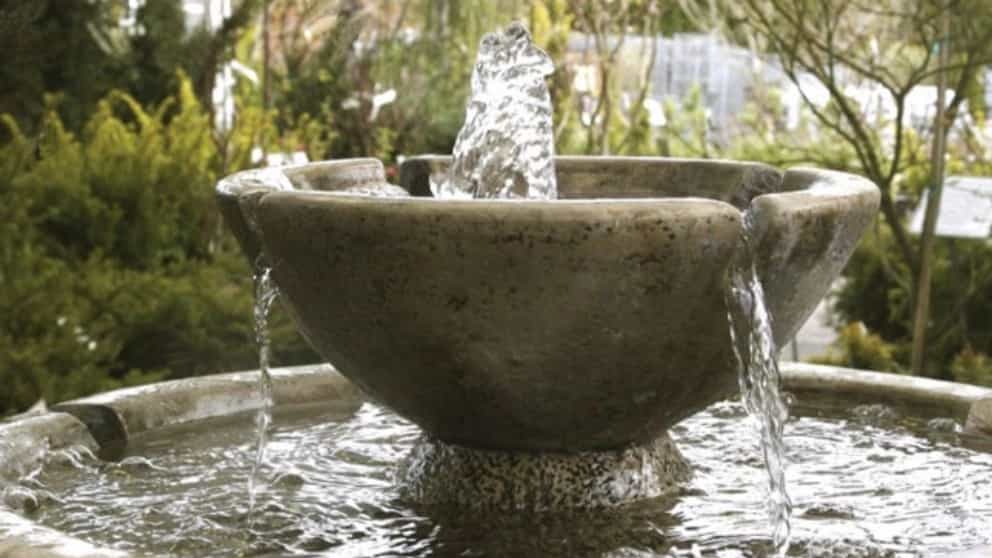
The types of outdoor fountains that you can consider for your garden include waterfall fountains, bird baths, freestanding, wall and bubbling fountains. Indoor fountains have three types: standing, wall and tabletop. It should be noted that there are different shapes, sizes, and colors to choose from in each of these indoor fountain subcategories.
Important Instructions for Care and Maintenance of Fountain
If you don't take proper care of your water fountain, it may soon lose its effectiveness, become worn out, or take on an unpleasant green appearance. Fortunately, you can avoid this by following the recommendations below. Be sure to follow the fountain manufacturer's instructions for proper assembly. If you have a wall-mounted fountain, make sure it is hung in a place that can properly support its weight. Place the fountain near a power outlet. Place the light switch on and off the water feature in a suitable place.
Keep the pump submerged in water all the time. Every so often, you should add water to your fountain. When you should do this depends on many factors, including location, weather, fountain size, etc. Too much or too little water can result in splashing, spilling, or loud fountain noise, as well as pump wear and tear.
Have a regular fountain cleaning schedule. You should do a light cleaning once or twice a week and a heavy cleaning once a month. Following a regular cleaning schedule will prevent algae build-up, water mineral stains, and clogged pipes. Algae will ruin your fountain pump and make your water smell bad. You can purchase a special anti-algae cleaner that will kill all living organisms on the surface of your fountain.
Pay attention to the type of material the fountain is made of, such as marble, travertine, limestone, contra or concrete fountains. Your fountain material may require a special cleaning method and cleaning method, so be sure to know what materials and cleaning methods you should use. For example, if you have a ceramic fountain, you should use a soft cloth and a mild soap.
The fountain should work almost all the time. If you constantly turn your fountain on and off, the motor may fail. Also, if you keep turning it off, the water will get dirty faster and the pump will have to work harder to clean it.
If you want to fill the indoor or outdoor space of your home and work environment with a soothing aroma in addition to the soothing sound of water to make you feel more relaxed, you can add a little of your favorite essential oil to the fountain. However, since fountains generally use certain materials, you should definitely check with your fountain dealer to find out what materials you can add to your fountain.

Steps to clean the inner and outer garden fountain
Once your indoor or outdoor garden fountain is up and running, regular maintenance is essential to keep it functioning properly. Be sure to clean the fountain once or twice a week partially and completely once. Below are the seven main steps to cleaning your fountain:
Turn off your water fountain and unplug it from the power source. This eliminates the risk of electric shock when cleaning the fountain.
Remove any decorative items from your fountain. Rocks, gravel, and other items should be removed and cleaned to prevent algae growth.
Remove the pump from your water fountain. Your pump should be cleaned every three months to make sure it is free of any debris. To know how to properly remove the pump, refer directly to the manual of the fountain or its manufacturer.
Empty the water in the fountain. You can also drain it once a month or when it looks dirty. Depending on the size of the fountain, you can empty the fountain over the sink or use a vacuum cleaner or a small pump to remove the water.
Clean the fountain and its components. Use a non-abrasive sponge or a soft, clean cloth to avoid scratching or damaging the inside of the fountain. Clean the fountain, pump and stones with warm water and mild liquid soap or use a calcium descaler. As a natural alternative, you can spray distilled white vinegar on the inside of the fountain and on hard-to-reach corners or areas that are hard to reach with a sponge. Using vinegar and water prevents the formation of mineral deposits. Vinegar has antibacterial, antiviral and antiseptic properties and kills germs, and most importantly, it is completely natural and does not rely on the use of harsh chemicals.
Refill your fountain with fresh, clean water. Use distilled or purified water. Tap water contains minerals that can cause corrosive stains and the need for frequent fountain cleaning, as well as overwork the pump. Depending on the size of the fountain, you can fill it from the sink or use a bucket to transfer the water.
Plug the fountain in and turn it on. Look at the fountain for a few minutes to make sure the pump is installed correctly and the fountain is working properly.