
☑️ What is suitable for building adhesive and recommended?
Building adhesive is always a sticky mortar that is usually sold in bags and packages at hardware stores or on the Internet for sale to end consumers or businesses.
Construction adhesive as an adhesive mortar, which is very easy to work with, and is a modern product with high usability, which can significantly ease the work for architects and builders, and can also be used by non-professionals with good results. well done
Therefore, it is no longer surprising that building glue, as a modern form of adhesive mortar, is very popular, at least among craftsmen who work professionally and commercially in the most diverse types of construction sites.
As mentioned at the beginning, building glue is a very practical mortar and so-called glue, which are also modern in terms of methods of use and mixing, which ultimately leads to the fact that it is more or less known to all traditional people. And it is suitable and recommended for very different applications, such as classic adhesive mortar for slab stone adhesive and facade adhesive.
☑️ Ceramic tile adhesive
The so-called absorbent tiles with a ceramic base, to be placed on the walls or on the floor of a room that is prepared for gluing, can be assembled and glued in a very simple and clean way with the provided building adhesive, even by Unprofessional people.
When laying ceramic materials with the help of glue, it should be applied and used as a very thin but standard mortar by the building or the person himself.
☑️ Concrete stones adhesive
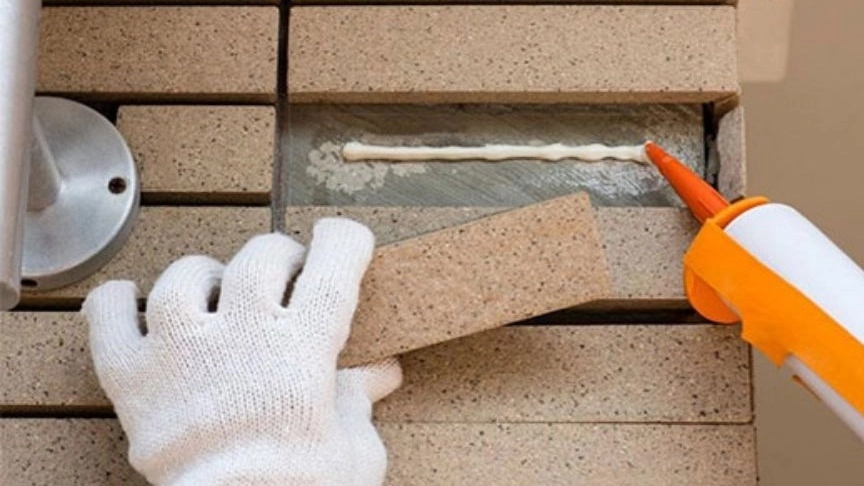
Stones made of so-called light concrete, which is used as a brick, made of limestone sand, flat stones, concrete blocks and finally, especially Stones made of lightweight concrete, regardless of whether these stones are for indoor use or for outdoor use in the respective buildings, must be brickworked or glued and installed, usually they can be done with the help of glue in a suitable way.
It is important to note that when wall covering or gluing all kinds of materials both inside and outside the building, building glue can only be used if it has the ability to stick those materials.
☑️ Building adhesive technical information
Building adhesive is a type of adhesive mortar or thin bed mortar that is classified or described in class C1 as so-called factory dry mortar.
The most important, the most decisive and the most necessary components of the glue, which are produced by many different manufacturers around the world, are different with sand and cement, so that the stone glue with chemical additives helps the optimal use of this product.
According to the characteristics of modern building adhesives, it can be generally described as a mineral product.
Among construction experts, adhesive mortar is considered to be so-called modern, which can always be used in any kind of environmental conditions, very stable and solid.
A high level of strength and adhesion is then presented and approved by construction experts around the world for building adhesives.
Once the building adhesive is fully cured, it stays put forever and is frost-resistant, and according to experts, it's also waterproof.
Depending on the type of product, the mixing time is generally varied by manufacturers for building adhesives and can range from a minimum of 3 minutes to a maximum of 5 minutes in total.
However, the time to prepare building adhesive mortar for the types of adhesives available today is a total of about 5 minutes. Different manufacturers of building glue each estimate a minimum amount of 8 liters and a maximum of 10 liters per bag of glue as the water requirement.
Building adhesives that are commercially available today are TÜV certified and therefore managed by a quality control system for manufacturers.
Due to the fact that the glue is made from chemicals, it is recommended to use it for a maximum of 6 months after the production date.
Adhesive storage should always be kept in a dry place according to the relevant manufacturer's information and standards, and should not be stored in open areas that have temperature fluctuations and the possibility of rain.