
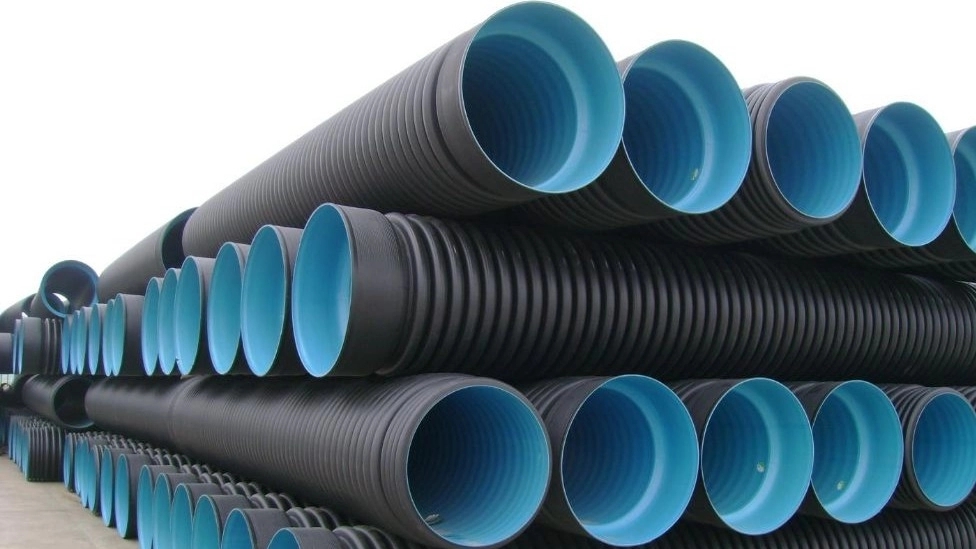
Polyethylene double-walled pipes are classified into two categories: spiral and normal Carrogate pipes. The difference between the two is related to the way they are produced.
Normal double-walled pipe: In order to make ordinary carrogate pipes, polymer raw materials are molded and then connected with the help of a press.
br>
Spiral Carrogate Pipe: Spiral Carrogate Pipe is made with the help of an extrusion machine. In this way, after quenching and cooling, it turns into a spiral. Finally, these rings stick together and form the outer wall. The last step is to add the inner wall. The inner wall of the spiral tube is made of HDPE polyethylene, which has high resistance to chemicals and corrosive substances.
Double -walled carogite tube structure
Given that the Carogate pipe is used as a fluid transfer pipe under the soil. Its external corrugated structure makes the soil completely surround the pipe and prevents pressure from entering the pipe. The soil around the pipe should be soft and free of stones and sand. The softness of the surrounding soil makes the polyethylene sewer pipe highly flexible and makes it resistant to external pressures. The lifespan of this type of pipe is between 50 and 75 years.
Technical specifications
A polyethylene pipe must pass 12 design and resistance test standards in order to be used as a product. These standards are:
The first test: density test: the raw material for the production of carrogate pipe must meet the ISIRI175-5 standard, and the manufactured product must follow the ISIRI9116 standard.
The second test: MFI melt flow index test: raw materials used in production as well as the production pipe must include ISIRI6980 and ISIRI9116 standards.
Third test: long-term cyclic resistance test: domestic and international standards ISIRI9110 and DIN1961 determine the long-term cyclic resistance of polyethylene double-walled pipe.
The fourth test: short-term cyclic resistance test: the manufactured carrugite pipes must benefit from the internal standard ISIRI9116 and ISO 9969. The fifth test: the flexibility of the pipe is confirmed by ISIRI9116 and EN1446. .
Sixth test: Soot amount: The percentage of spiral tube soot is determined by the domestic standard ISIRI7175-2 and ISIRI9116.
Seventh test: Soot dispersion, which must be in accordance with the standards set by ISIRI7175-6 and ISIRI9116.
Eighth test: Impact test: The standard set by Iran ISIRI9116 and EN744 standard, sufficient resistance of the level against They guarantee a hit. Ninth test: Thermal return test: Carogite pipes must work according to ISIRI9116 and ISIRI7175-3 standards in order to get the thermal return approval. 10th test: The linear tensile test of Carrogate pipe, which indicates its resistance to tensile forces, is confirmed by ISIRR9116 and EN1979 standards. 11th and 12th tests: The appearance of the polyethylene pipe and the marking of the pipe must be in accordance with the internal standards of ISIRI9116.