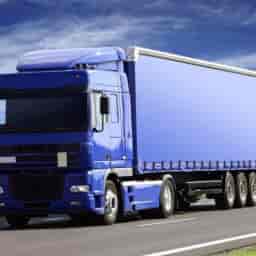


🔘 Floor trailer
The most common trailer is floor. Because this type of trailer is simple and can carry various goods. As its name suggests, it is a simple floor without walls that can carry heavy, bulky and non-standard height loads. The trailer floor is made of several layers of durable wood. Construction materials, large stones, iron beams, etc. are among the loads that can be moved with a flatbed trailer. It consists of a floor and 80 cm high walls are placed around it (in standard mode). These walls can be removed. By removing the wall, the load can be unloaded more easily with the help of a forklift. This type of trailer is also considered a simple type and is generally used for packed loads and the packages should not be placed on top of each other. Of course, edged trailers are also used to transport bulk goods such as mineral soil, beans, etc. The capacity of edged trailers is between 46 and 43 tons. A type of trailer is also sometimes seen that has short walls, and that is why it is called half-edge. Its loading space is insulated. This trailer also has a cooling system and works exactly like a refrigerator. Therefore, it is used to move perishable goods, food, frozen goods (such as ice cream), protein materials, medicine, chemicals, etc. The temperature of the refrigerated trailer is fully adjustable and varies from 25 to minus 40 degrees Celsius. Their capacity usually reaches 24 tons.
🔘 dump trailer
a dump trailer is a trailer with a metal body. The special feature of dumpers is the presence of a hydraulic jack that lifts the cargo space and unloads the cargo as quickly as possible. The dumpers are divided into heavy and ultra-light categories to be more efficient. Dumpers are used to carry loads such as soil, gravel, construction materials, cement, bitumen, coal, wheat, corn, food and agriculture and ... is used. Therefore, their most common use is in construction and agriculture.
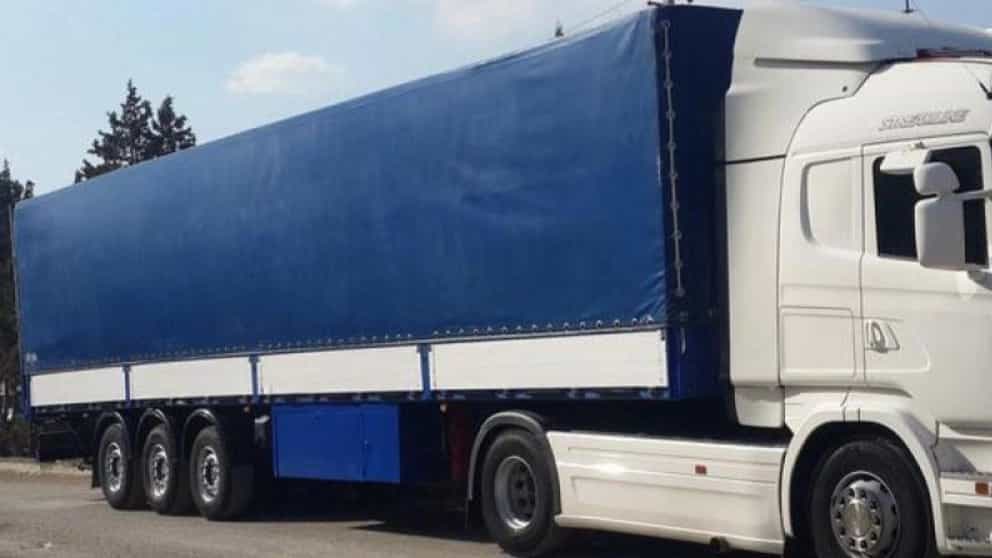
🔘 Tent trailer or transit
This type of trailer has a tent on the roof or wall and is used for transporting goods. Customs is used. The tent of these trailers is fixed or sliding. Tent trailers are divided into two-axle and three-axle roofed and sliding side tents, two-axle and three-axle roofed and fixed side tent trailers. br>The backbreaking appearance is similar to the floor trailer. But this type of trailer is designed for very heavy and bulky loads such as road construction vehicles and industrial equipment, and therefore has more width, less height and many axles. Their load carrying capacity is up to 60 tons.
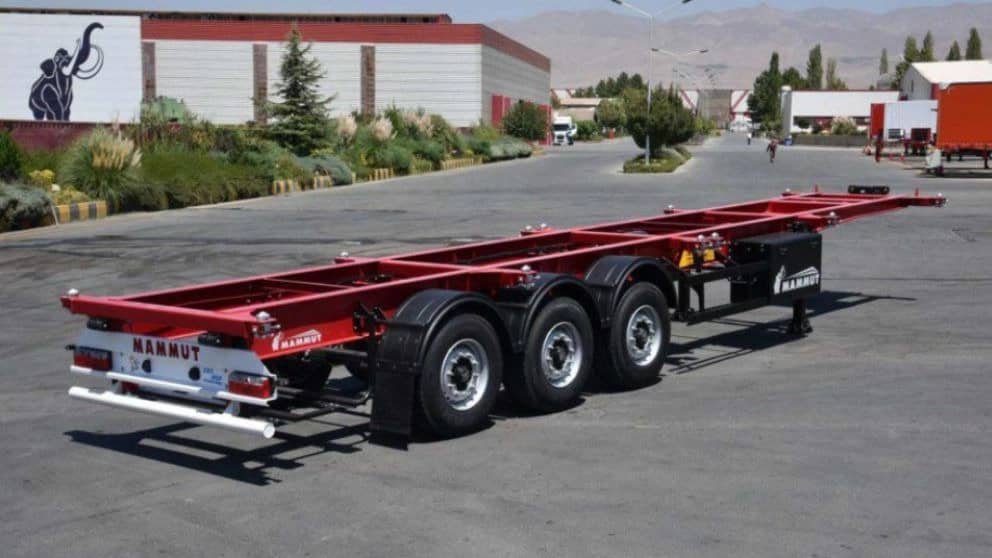
Back-breaking drivers must follow certain rules. For example, these types of vehicles move at certain hours and at a very low speed and are escorted by several passenger vehicles. A trailer is a container carrier. Because it has a simple design and is used to carry various types of containers and tanks (such as milk, ammonia, water, acid and other chemical products). This trailer has high strength while being light.
🔘 Bunker trailer
The bunker trailer does not have a chassis and consists of a metal cylindrical tank. Inside this cylinder, equipment such as valves and pipes are placed to discharge the load with a compressed air mechanism. Bunker is used to transport solid and malleable bulk goods such as flour and cement.
🔘 Tanker trailer
This trailer is actually a cylindrical tank and carries liquids. he does. Its body material also depends on the type of liquid. This trailer has equipment called shock absorbers to stop the pressure of moving the liquid and prevent the trailer from overturning. Tanker loads are discharged either by pumping or by gravity (weight of the liquid itself). For liquid pumping, a separate pump motor is installed on the trailer.