
Polyester fibers are obtained by melt spinning from polymer melt at a temperature of 265 degrees Celsius. In polyester threads, there are crystalline and amorphous regions. They are a thermoplastic material. The chains have a zigzag structure and are connected to each other by van der Waals bonds. During the cooling process, crystallization and orientation of the polymer chains occur. The strength depends on the degree of crystallization and the direction of the chains. Therefore, the orientation of the macromolecular chains after cooling with stretching improves. This results in higher values of strength and elastic modulus. If the fiber is cooled quickly, directly after stretching, the structure is frozen. This effect can be reversed by increasing the temperature. Fibers that can be used in textile architecture, for example, are high strength terryo. The polyester diagram has three characteristic regions: in the first part, the valence angles are opened, which means that the angle of the zigzag chain is widened. In the second region, the chains begin to extract themselves from the amorphous regions. In the third region, entanglement of the stretched chains begins and the growth of crystalline regions occurs, leading to a stiffening effect. High strength polyester has a tensile strength of at least 1,000 N/mm2 and an elastic modulus of up to 15,000 N/mm2. Polyester yarns used for membrane fabrics are not pigmented and are therefore sensitive to UV rays and light. In some cases where polyester fabrics are not well protected against water by the coating, wicking may occur. Moisture itself does not attack the yarn, but it transfers dangerous substances into the material. To protect the polyester from the wick, it may be furnished with a so-called low-wicking thread. Other coatings that can be combined with polyester fabrics are neoprene and silicone. Both are elastomers (rubber-like materials) that cannot be welded but can be vulcanized.
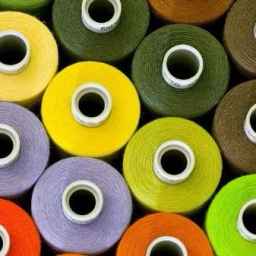
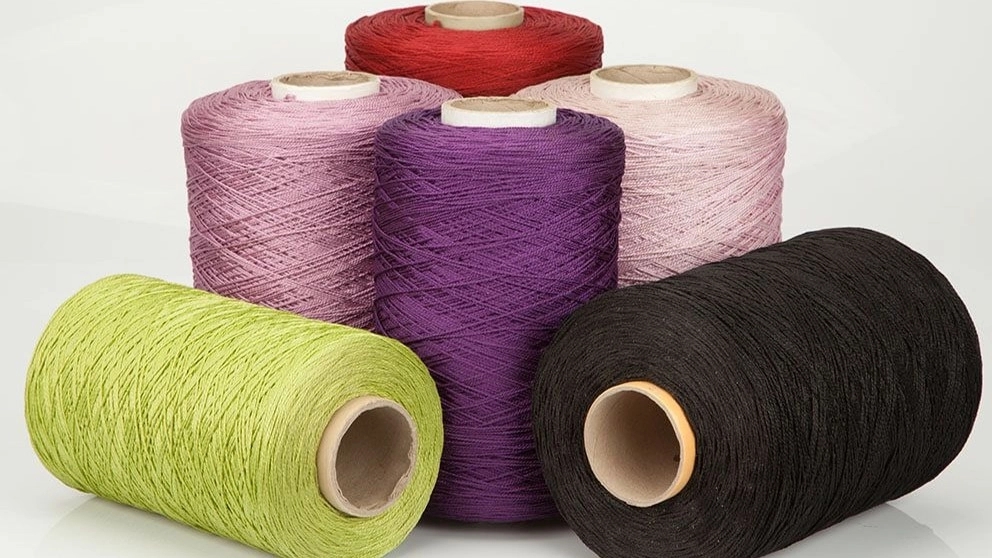
Polyester can be in the form of plastics and fibers. Polyester materials are the polymers that make up the unbreakable plastic bottles that hold bottled water and soft drinks. Then these short fibers are twisted together to produce yarn of the desired size. Spun polyester is economical to produce and is usually a low cost yarn.