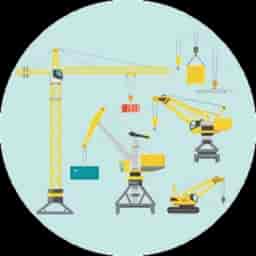

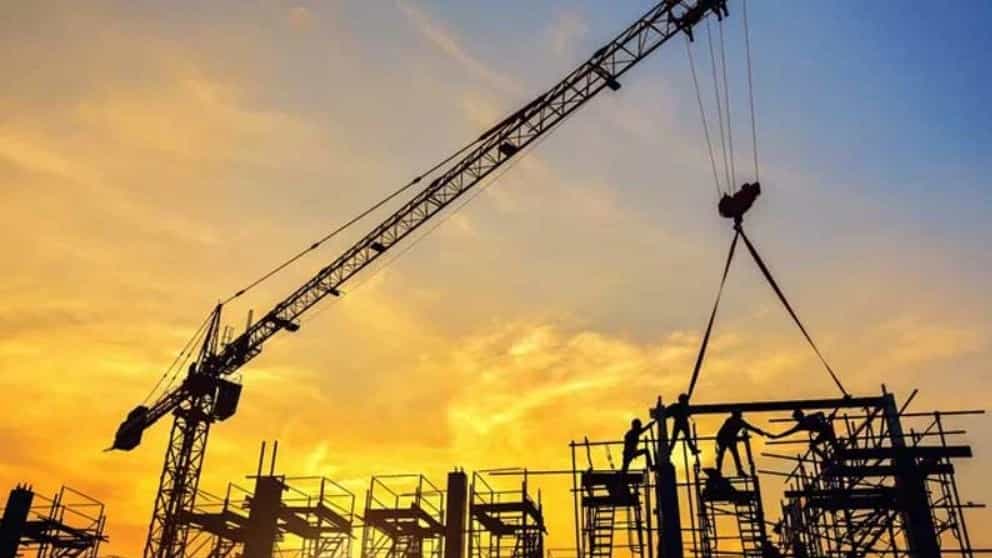

☑️ What is Crane Tower?
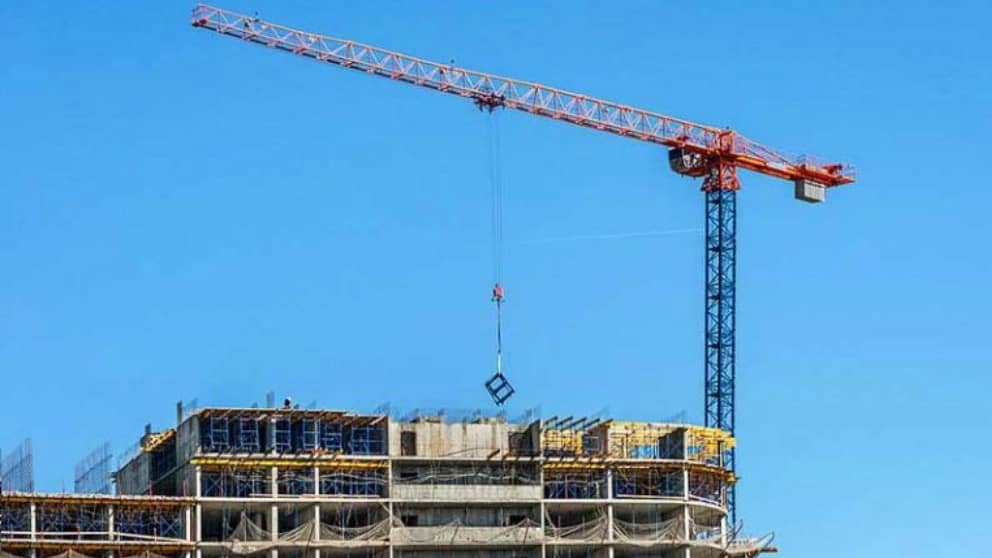
Tower crane is a vital component in the construction of tall buildings, huge structures and complex projects. This device is made to control and guide heavy equipment at heights. Tower cranes must be carefully designed so that they can show their best performance and be safe.
☑️ Definition of Crane Tower
Tower Crane supports the structure that is being built. This support means the movement of tools, equipment and construction materials from one part to another.
Usually, the crane is fixed in a place inside the construction site using the foundation. This device has a horizontal lever, arm, boom or jib supported by a vertical metal mast. The horizontal lever can rotate 360 degrees.
☑️ Tower Correcrene
⚫️ Dam construction
⚫️ Bridge building
⚫️ High-rise constructions
Residential, office and commercial constructions
⚫️Industries, power plants and factories
☑️ Crane Tower Components
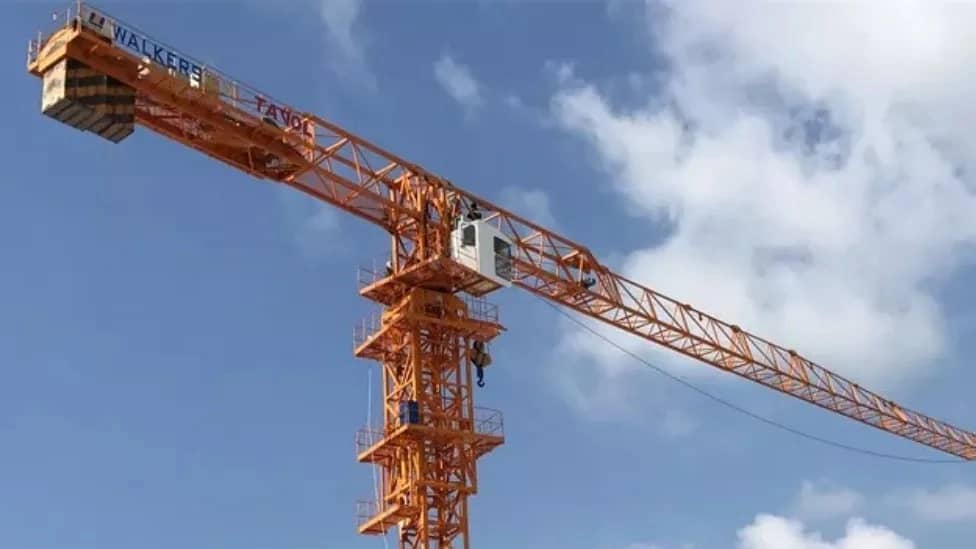
In general, tower cranes consist of three main parts as follows:
Base: The base or foundation is the support of the crane. The body of the tower is connected to a large concrete base that supports the entire weight of the structure.
Mast or Tower: Mast is the vertical member that gives height to the tower and is connected to the base. The mast has a triangular mesh structure (truss) that gives the tower strength to resist lateral forces (wind and earthquake).
Slewing Unit: The slewing unit consists of a gear and a motor that is connected to the upper part of the mast and allows the crane to rotate along its axis. This unit consists of the following three parts:
1. Working arm: It is a horizontal element that carries the load. This arm has a handwheel that moves along it to move the load in and out.
2. Machine arm: It is a shorter horizontal element that holds the engine. Also, this arm includes electronic controls, cable drum and concrete weights to maintain balance.
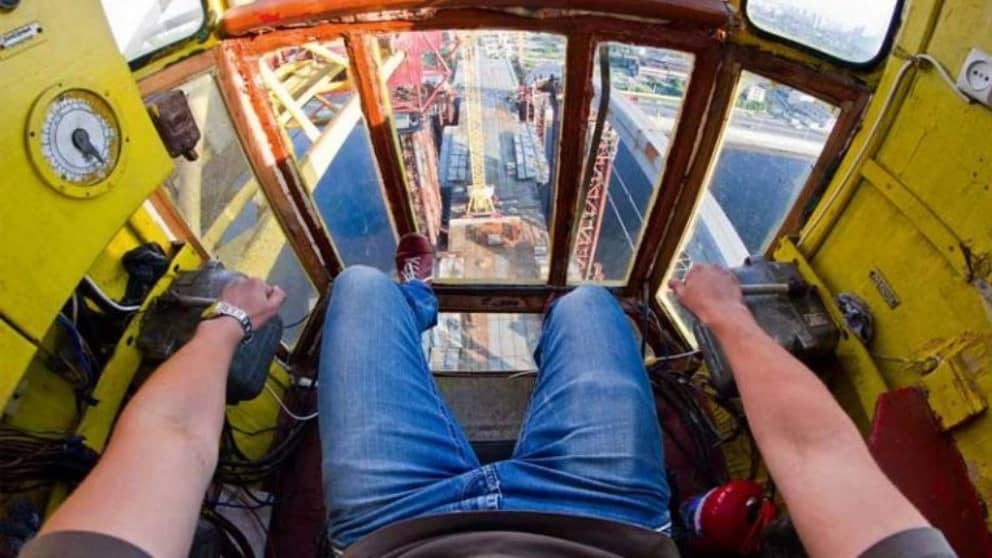
3. Operator's cabin: includes the space where the operator directs and controls the crane.
☑️ Crane Tower Profile
All tower cranes usually have similar specifications, but it should be noted that there may be slight differences depending on the model and construction. Anyway, the specifications of the tower crane are as follows: Maximum unsupported height: 265 feet or 80 meters (since the building rises around the crane, the tower crane can rise in height if it is attached to the building). ⚫️ Maximum access in height: 230 feet or 70 meters ⚫️ Maximum capacity of tower crane: 19.8 tons or 18 metric tons Concrete weights: 20 tons or 16.3 metric tons Note that the maximum load is 18 tons, but when the load is at the end of the edge, the crane cannot lift that much weight. The closer the load is to the mast, the more weight the crane can lift. Operators have two switches to prevent overload, the first is the maximum load switch to stay below 18 tons and the second is the maximum moment switch to protect the crane from the bending force of the load. Weather monitoring is important on construction sites, especially when tower cranes are used. A strong gust of wind can destabilize the tower structure and cause the load to fall down. Project managers should constantly check weather forecasts and avoid lifting operations in bad weather.
☑️ The Benefits of Crane Tower
Overhead cranes allow construction project managers to tackle the most difficult operational operations on the job site. They usually deal with things like lifting and placing steel beams in place, carrying building materials, moving heavy equipment, concreting part of the structure and many more.
Doing the above is extremely important for construction sites and the entire construction industry. Tower cranes allow builders to construct taller buildings with more sustainable methods in very tight urban spaces. It also allows them to carry out construction activities faster, more efficiently and at a lower cost.
Probably the most interesting advantage of using a tower crane is that it reduces labor costs. There is no need to hire more people to complete the projects faster because these types of advanced cranes simplify the work. In fact, cost savings and the ability to do things faster and more efficiently are the main features of using tower cranes.
☑️ Types of Crane Tower
☑️ Crane Sariation
In a hammerhead crane, a long horizontal pocket is connected to a vertical tower. One end of the pocket extends horizontally over the work area, while the other end has counterweights.
A trolley that holds the hoist cable moves along the pocket to help move the equipment. The operator rides in a cabin at the junction of the pocket and the tower. This type of tower crane usually needs a second crane for assembly and disassembly at the workplace.
☑️ Crane assembly
The self-erecting or self-assembling crane can be assembled on site by itself without the need for a second crane. This advantage will be very important at the time of launching and reducing project costs.
While some crane models have a pocket operator's cab, self-erecting cranes are often remotely controlled from the ground. These types of towers are usually independent and can be equipped to move around the workplace.
☑️ Crane with Local Arm
In tight urban spaces, there is usually not enough space to turn the pocket. An anchor arm crane is used for such spaces. While most tower cranes have a fixed horizontal jib, the operator can raise or lower a luffing jib to allow the crane to decrease in radius.
A luffing jib does not use a trolley but instead raises and lowers the jib as needed for lifts closer to the tower. Due to the complexity of these types of cranes, luffing cranes are expensive and are used only in case of extreme need.
☑️ What is the method of increasing the height of the crane tower?
One of the most common questions that are often asked is how to install tower cranes. The tower crane is built piece by piece like a puzzle. The various components are delivered to the project site by transport trucks and assembled using mobile cranes. First, the base is concreted, then the tower is built.
The method of increasing the height is that in the lower part of the chamber, a part of the main column consists of two layers. When there is a need to increase the height, one of the layers that is connected to the upper part is pulled up using the existing jacks to prepare an empty area between the chamber and the main column.
At this stage, experts install the additional part, the horizontal part will be connected to the new section and the lower layer to the mast structure, in this case we will see an increase of several meters. Then the rotary table and the cabin are put in place. Finally, the pocket and braces are placed in place along with the counterweights.