

What is a hydraulic jack?
Hydraulic jacks are mechanical devices used to lift heavy weights. They are commonly used in the automotive industry to lift vehicles off the ground and are therefore known as a type of hydraulic car jack. Typically, jacks are rated for maximum lifting capacity, for example, 1.5 tons or 3 tons. Industrial jacks can be rated for many loads.
The force of hydraulic jacks can be calculated by Pascal's law. Hydraulic jacks consist of two pistons inside the cylinder, which is responsible for lifting the heavy weight. The larger and smaller cylinders are connected. The small piston forces the fluid to lift the large piston. There are two ball valves that act as a check valve, allowing flow and stopping flow during pumping.
* Pressure = X force area< br>
A rod is inserted into the socket of the jack handle, when pumped, hydraulic fluid is forced by a piston and passes through a check valve. The fluid force acts on the bottom of the larger cylinder and allows the ram to move upwards. The other valve is blocked, so pressurized fluid cannot flow back until it is unscrewed. This is how a hydraulic jack works.
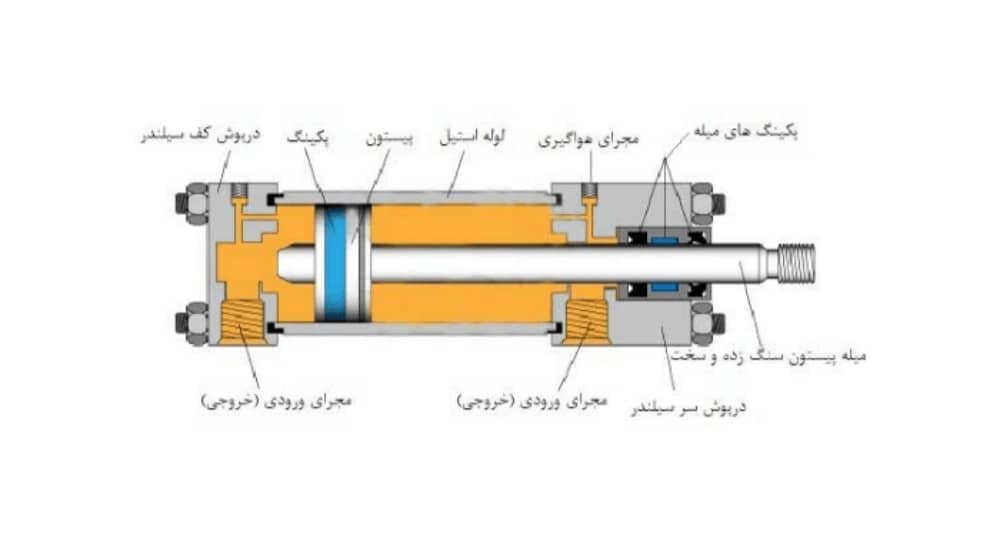
ان Hydraulic jack components
* Reservoir or buffer tank
* Piston or piston pump
* Pump lever or handle
* Check valve
* Master cylinder or ram
* Free valve
* Handling
Reservoir or buffer tank – is a tank that holds hydraulic fluid or pump oil that is used to transmit the pressure applied from the pump to the ram.
< br>Piston pump - it is a part that is mechanically activated by moving the lever or pump handle up and down. Transfers under pressure to the master cylinder through a check valve.
The master cylinder – also called the ram, is pushed out of the hydraulic jack body by hydraulic fluid pressure as it moves upward. and creates the required lifting force and lifts the load.
Release valve – is the part that helps to release the pressure so that the ram can collapse and reduce the load.