
What is Granule?
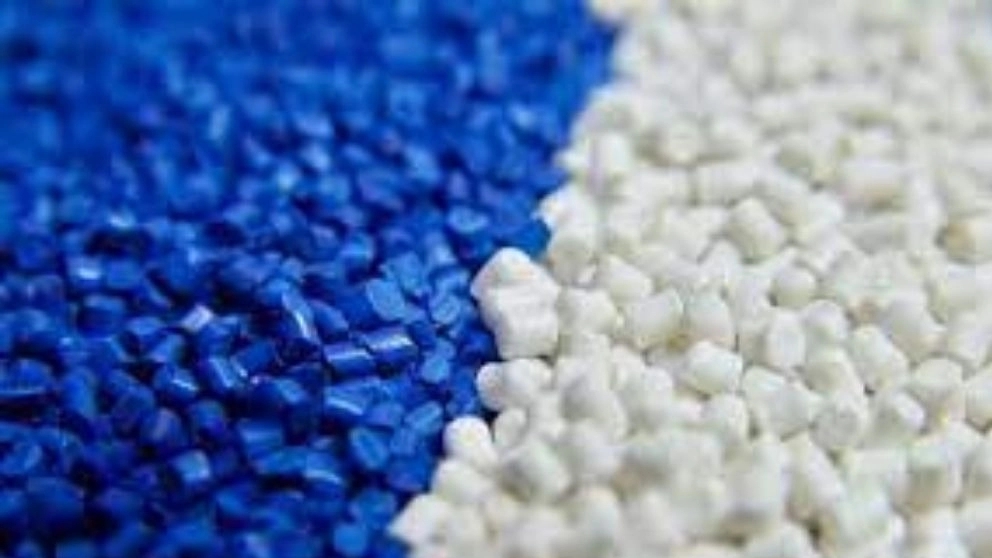
The wrong image of granule in the minds of some who have little knowledge of polymer and plastic is that granule is a type of polymer material. Whereas, in fact, granule is the appearance of polymer raw materials, which is in the form of grains and is melted in the early stages of plastic material production, and is transformed into the final product by various methods such as injection molding, air molding, rotational molding, etc.
If we want to check more closely, every polymer material can be checked from two dimensions, microscopic and macroscopic. A polymer material can have a specific microscopic structure that determines the type of material (for example, polyethylene, polypropylene, etc.). The macroscopic structure also indicates the appearance of the material, based on which, the raw material can be in the form of powder (with different grain sizes), flakes and granules. The picture below shows some examples of granules of different polymer materials.
The reason for the great popularity of granules among producers is the ease of use in production; The powders are dispersed in the air, and in addition to the pollution of the workshop environment and the breathing problems they cause, a large amount of material is also wasted, but the granule does not have these problems. In addition, the system of plastic forming machines is designed in such a way that its raw materials are better in the form of granules. Therefore, manufacturers prefer to use its granular form instead of powder form.
Although the advantages of granule are many and it is highly popular, this does not mean that other forms of polymer materials are useless. All polymer materials can be converted into granules depending on the application, viscosity, polymerization, etc. But if the conditions of polymerization and other factors are complex, the polymer is produced as powder or solution or....
☑️ Division of granules
As mentioned earlier, granules are a form of polymeric materials; Therefore, they can have different types and include a wide range of polymer materials.
The classification of granules can be examined from several dimensions.
The type of polymer material (chemical composition) is the first and most important basis for classifying granules. Based on the chemical composition (formula) of the polymer material, granules can be divided into categories such as polyethylene granules, polypropylene granules, ABS granules, PVC granules, etc.
Structure and molecular weight (density) is another important factor in determining the category of granules. Based on the molecular weight, the polymer material specified in the previous case (case no. 1) can be divided into smaller categories. For example, polyethylene can be divided into light polyethylene, medium density (molecular weight) polyethylene, heavy polyethylene and ultra heavy density polyethylene (UHMW). Also, based on the type of placement of the branches in the polyethylene structure, there is also linear light polyethylene granule (LLDPE).
The third thing is the production method of plastic products. Due to the fact that there are different methods of producing plastic products, suitable granules for each of these production methods are placed in a special category. For example, injection granules, pneumatic granules, etc., are products that are used in injection molding, pneumatic molding, etc.
The type of product produced can also be another criterion for the classification of granules. For example, the raw material used in film production (types of nylon) and pipe production are known as film grade granules and pipe grade.
The important point in the classification of granules is that usually one of the above criteria alone is not used to name the granules, but a combination of the above factors is used. For example, the material of a granule can be polyethylene, it is placed in the heavy category in terms of molecular weight and used in the injection molding method; In this case, it is known as injected heavy polyethylene granule.
In addition to the above, there may be other criteria for classifying granules, but the above are the most important and widely used factors that are used in the polymer and plastic industry and market.
☑️ Different granules in the production of films and nylon
☑️ Polyethylene granule
Polyethylene granule can be formed into light, medium weight, heavy and very high molecular weight grades due to the change in the placement of polymer branches. According to the production methods, polyethylenes can be divided into injection grade or air grade. By combining these two classification methods, the most important polyethylene grades include the following categories:
Injectable light granules
Injectable heavy granule
Air heavy granule
Linear light polyethylene granule
There are also other grades, only the more common ones are mentioned here. For example, what is meant by injected heavy polyethylene granule is, firstly, a granule whose structure and composition is light, and secondly, it is used in injection production methods.
☑️ Polypropylene granule
☑️ Granular production methods
Plastic forming machine systems (including various extrusion and injection lines, etc.) are made in such a way that it is better for their input raw materials to be in the form of small plastic pellets. Therefore, the producers of plastic materials prefer to use materials such as granules as the raw material of their products. Therefore, different types of granule production lines have been invented with the aim of converting powder, flakes and waste into granules, each of which has its own advantages and disadvantages. Among the most famous methods of granule production, the following can be mentioned:
Production of granules by the strand method (Strand Type)
Granule production by dry method (Hot die face cutting)
Granule production with water ring cutting system
Granule production with underwater cutting system
In Iran, most of the granule production machines are used in string method. The reason for the widespread use of this type of production line is that it is easier to build Strand Type machines than other methods. The biggest challenge in this method is the interruption of these threads during the production process, which requires the constant presence of an operator next to these devices to solve it.
Another method that is common in Iran is dry granule production. The construction of this type of machinery requires higher precision and the price of this production line is higher. But the granules produced in this method are very similar to the granules of the first-hand materials, and in terms of plastic characteristics, there is better stability in this type of material.