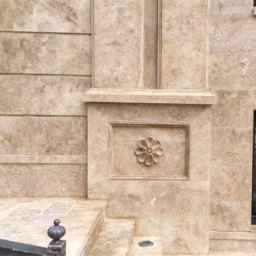

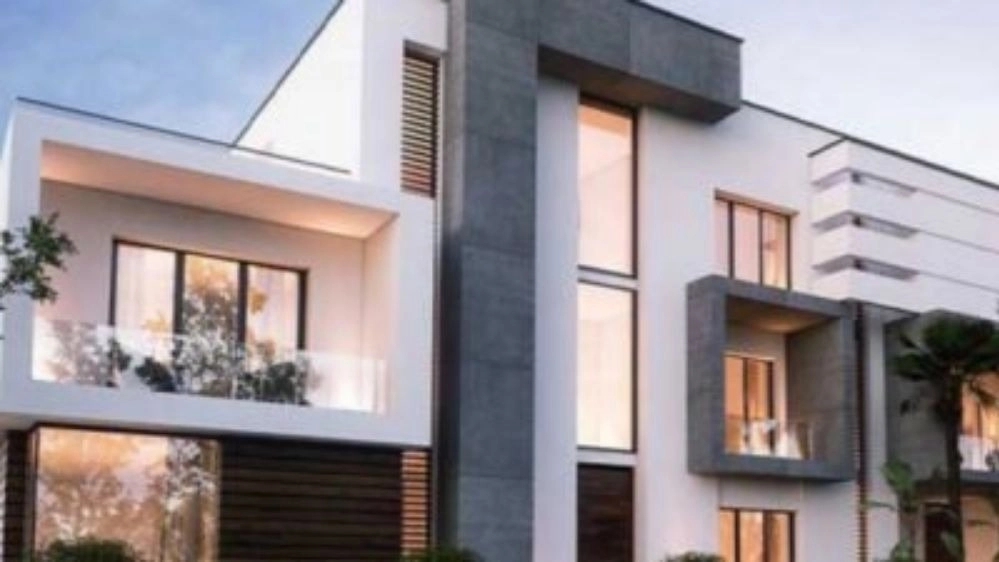


Mineral facade is a new style in beautifying the appearance of building walls with materials including mineral pebbles consisting of marble, granite, quartz, etc. In combination with these mineral and natural materials, chemical materials such as resin, lubricants, materials with anti-UV properties are also used. There are two methods for applying the mineral look: the trowel method and the spraying method. The trowel method is done using a trowel. The life of facades created by the trowel method is usually long. The spraying method is done using a gun and is mostly used for uneven surfaces. The ability to perform on different levels, high speed in the execution of work and resistance to the harmful waves of the sun are among the advantages of mineral facade.
What is Mineral View?
The advancement of technology has had a significant impact on the construction industry, and mineral facade is one of its important achievements. When examining any building, two important factors are considered, one is strength and the other is beauty. A structure that meets both of the above criteria will be accepted in general and engineering terms. Therefore, for beauty and attractiveness, as many structures use the facade. In the past, stone, brick and glass were mostly used for the facade of buildings, especially in the external part. But now, in addition to these things, mineral facade also plays an important role in creating the interior and exterior of buildings.
Mineral is a new type of facade based on the use of stones and minerals. The primary material used to create this facade is usually a mixture of mineral pebbles including marble, granite, quartz and other such things. Mineral coating is considered a modern facade in the construction industry, which has high beauty and resistance. On the other hand, using it on the internal or external surfaces of buildings acts like an insulator and has a significant effect on temperature control. It is possible to apply mineral facade on all kinds of surfaces, including cement, plaster, plastic, wood, stone, concrete, glass, metal, Iranite and even cardboard.
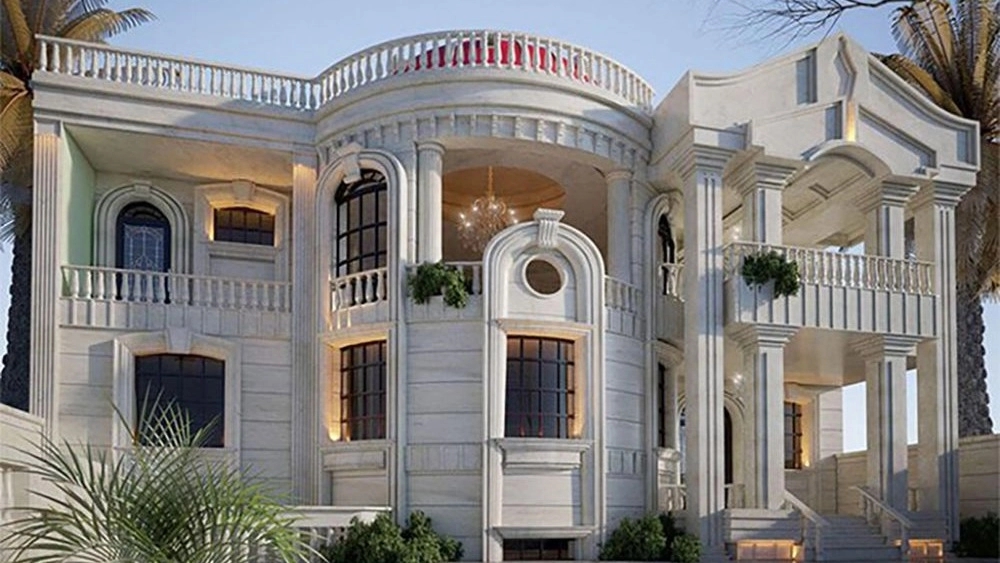
Minerals used and diversified materials
Bricks or finally glass will go. The advancement of technology has also affected the construction industry and the materials of this sector have faced changes. Mineral is one of the most important results of technological progress, which is used as a stylish, modern, beautiful and, of course, economic appearance to cover the internal and external surfaces of buildings. Particles of different natural stones such as marble, quartz and granite with various and beautiful colors are the most important materials used to make mineral compounds.
In order to improve the properties of these pebbles, some other materials are added to them. Industrial resins or acrylic polymers, lubricants, materials with anti-UV properties and natural colors are some of the most important additives to pebbles to produce mineral coating. This type of insulating and resistant facade has a variety of colors and depending on the space of the building, it is possible to use one or more colors. On the other hand, the basic materials of the mineral facade are divided into three categories, coarse, medium and fine, based on their structure and granularity. The efficiency and appearance of the facade will be different when using each of these materials.
The use of mineral facade in the building
One of the most important advantages of mineral coating is that it can be used both in the interior and exterior of the building. This is while competing facades such as stone and brick are only suitable for exterior surfaces and do not have a good effect inside the structure. On the other hand, it is not possible to use plaster as the most important internal coating outside the structure. In addition, it is possible to apply the mineral look on many surfaces. Of course, it should be noted that in order to implement this type of facade, there is a need for a smooth and dry surface. In this way, mineral can be used to cover various surfaces including plaster, plastic, glass, metal, cement, stone, concrete, etc.
Mineral coating can be applied to both the interior and exterior of buildings. However, this modern view is mostly used as an exterior view, especially in our country. Its affordable and economical price also makes it a great option for covering surfaces with a large area. Therefore, to cover the exterior surfaces of schools, hotels, restaurants, stadiums, towers, swimming pools and other such places, mineral facade is usually used.
Mineral facade components
The main part of the mineral face is the pebbles or particles of marble, granite, quartz and other mineral stones. But these stones alone do not have much adhesive power. For this reason, they are mixed with a series of other materials to increase both their adhesion and resistance. In general, the most important materials needed to make mineral compounds are:
Stone and sand particles with natural and diverse colors.
Antistatic powder that prevents the absorption of dust in the air.
Concentrating powders to increase the concentration and adhesion of aggregates.
Antibacterial pore to prevent the growth of fungi on the facade surface and external destruction.
Industrial resins and acrylic polymers to increase adhesion properties.
Types of lubricants for easier application of mineral coating.
Materials with anti-UV properties.
Benefits of Mineral View
High execution speed
Reasonable cost in implementation
Reasonable price of materials
Resistant to harmful rays of the sun
No dust absorption
Good resistance to moisture and fire
Environmentally friendly
Help to reduce the weight of the building
Variety of colors and shapes
Ability to perform at different levels
Good elasticity and stretchability
Function as insulation
How to prepare
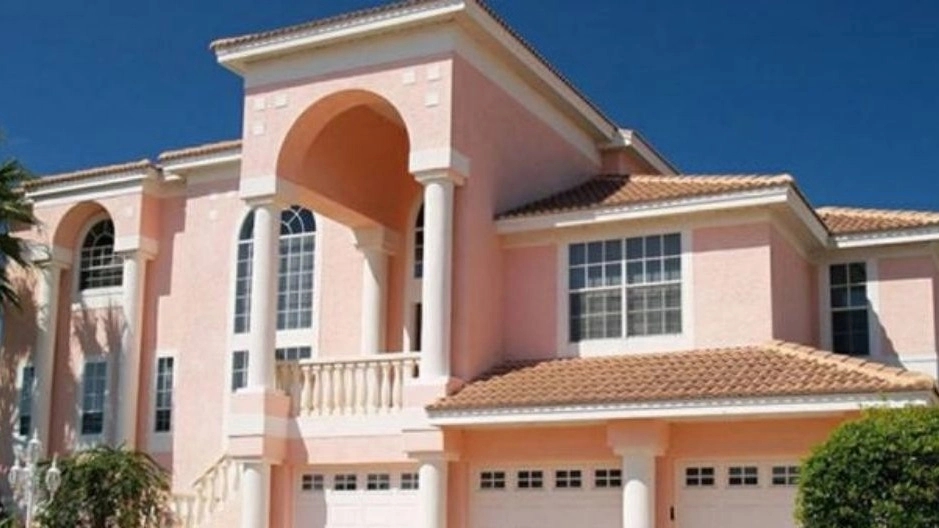
Preparation of the materials needed to create a mineral coating is largely similar to the preparation of plaster and cement. In this way, the required materials should be mixed first and the necessary composition to produce the mineral surface should be created. Then a certain amount of water is added to this mixture and mineral mortar will be produced. Next, this mortar is poured by the operator on the desired surface and facade construction is done. An important point regarding the use of mineral facades compared to other types of facades, including stone, brick or glass, is the possibility of its implementation on different surfaces such as wood, cement, plaster, concrete, Iranite, etc.
Of course, before implementing this type of facade, it is very important to pay attention to the substructure and the surface of the facade. Because any protrusions and defects in the work will show themselves after the execution of the facade. So, before you start the implementation of the mineral facade, you must make sure that the bottom surface is smooth. You should also make sure that this surface is dry. Because the presence of any kind of moisture on the surface of the facade can lead to damage and destruction of the facade. It is also necessary to mention that in order to insulate the mineral coating against humidity, dust and heat, it is necessary to add the required materials to its primary mortar.
Methods and methods of implementation
Mineral facade coating is widely used in different countries for the interior and exterior of buildings. At present, the implementation of mineral facade has expanded in Iran and it is used to cover the internal and external surfaces of many buildings. In general, there are two different methods to implement the facade and mineral coating. These two methods are different in terms of tools and equipment used. As a result of these differences, the quality and speed of work execution is also different with each of these methods. The methods of implementing mineral coating are:
Mineral trowel using a steel trowel
Mineral spraying using a gun with a special nozzle
1- Mineral facade
The trowel method is named according to the type of its working tool. In this method, a stainless steel trowel is used to place mineral materials on the surface. For this, you must first prepare the ingredients and make a standard mixture. To achieve a mortar with a standard composition, every 25 kg of mineral material should be mixed with about one to one and a half kg of water. Be careful that you must use completely clean water to create mortar. Because the presence of any pollution and impurity in the water will have a negative effect on the final shape of the facade.
After you have prepared the mortar, you can start working. Keep the following things in mind when running:
In the trowel method, to cover the internal and external surfaces of buildings, usually start the work from the highest point of the surface and continue downwards.
The thickness of the facade in the method of working with a steel trowel is between 3 and 4 mm, which is placed on the smooth surface of the work.
The smoothness of the work surface is very important. Because any protrusion can affect and ruin the final shape of the facade.
The advantage of the trowel method
It is very simple to apply the mineral look with a trowel and does not require much expertise.
The speed of spreading mineral materials on the surface using a steel trowel is almost high.
The facade created in this way does not need much time to dry and it will dry completely within one to two days.
Due to the appropriate thickness of mineral materials on the surface, the life of the facade executed by the trowel method is usually long.
No special equipment is needed and the work can be done with only a steel trowel.
Mineral splash view
Besides the trowel method, there is another way to implement the mineral facade, which is called mineral spraying. The reason for the name of this mineral coating implementation method is completely due to the tool used. Because in this method, a gun is used to spray mineral materials on the surface. In this way, first the standard mixture and composition of mineral materials is created and then this liquid mortar is poured into the gun. There are special nozzles on the output part of the gun that spray mineral materials on the surface. In general, this method requires more advanced tools and equipment than the trowel method.
Normally, the spraying method is mostly used for uneven and bumpy surfaces. Because the trowel method has an advantage over the spraying method in terms of speed and simplicity. Also, this method is more suitable for working in certain areas where it is not possible to trowel. Columns, sharp corners and hard-to-reach parts are some of the most important of these spaces. The operation of spraying mineral materials using a gun should be done at a distance of about 25 to 40 cm from the ceiling and without interruption. The best angle for spraying this material is 90 degrees or vertical. The mineral coating applied by spraying usually dries completely within a day.