
☑️ What is a fertilizer?
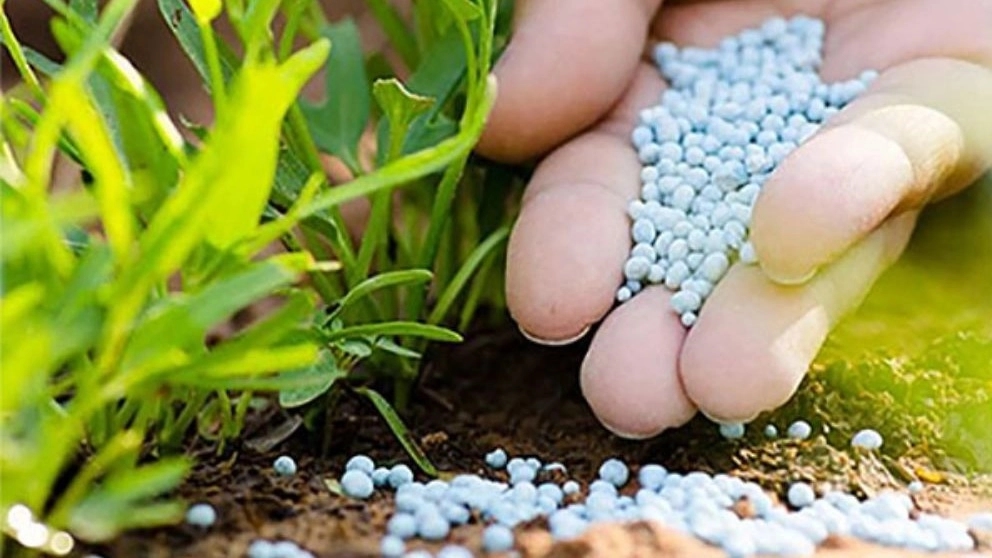
Chemical fertilizers are nutritional compounds needed by plants that are produced through chemical processes. Chemical fertilizers provide the plant with 13 nutrients that are the urgent needs of every plant to grow optimally. It is true that light and water are the main ingredients for the growth of plants, but chemical fertilizer as an auxiliary food improves the quality of the soil and leads to fertility and raising the efficiency of agricultural products. Chemical fertilizers are easily decomposed in the environment and quickly absorbed into the soil. These fertilizers exist in various solid, granular, liquid and water-soluble forms.
☑️ nitrogen fertilizer or white fertilizer
Urea
Ammonium sulfate
Calcium nitrate
☑️ Black Fertilizer or Phosphate Fertilizer
☑️ Potassium fertilizer k (potash fertilizer)
Potassium chloride
Potassium sulfate
Potassium nitrate
☑️ Sale of fertilizer
Chemical fertilizers are produced through chemical processes, so they must be used in the right amount and at the right time. Their indiscriminate use not only does not lead to an increase in the quality of the product, but will also cause damage to the soil texture and the produced product.
☑️ Types of fertilizer
In terms of the presence of high-use or low-use elements for plants, these fertilizers, in a general category, are divided into two categories of macroelement fertilizers (full consumption) and micro element fertilizers are divided. Macroelements or high-use elements include nitrogen, phosphorus, potassium, primarily, followed by magnesium, calcium, and sulfur. The most famous of these fertilizers is NPK fertilizer of 20-20-20 type, which contains 20% nitrogen, 20% phosphorus and 20% potassium. Microelements or low consumption elements include iron, zinc, copper, manganese and boron.
☑️ Types of White Fertilizer
Urea
Ammonium sulfate
Calcium nitrate
☑️ How White Fertilizer Production
Nitrogen fertilizer is produced from the reaction of nitrogen gas in the air with methane. This fertilizer is produced as a result of this reaction of ammonium nitrate and urea. Then, by adding other materials, all kinds of white fertilizers or nitrogen fertilizers are produced.
☑️ Urea fertilizer
One of the most important and widely used white fertilizers is urea fertilizer. Urea fertilizer has 46% nitrogen. Urea fertilizer is powdery and white in color and completely soluble in water, so it must be stored in a dry place before use. Urea fertilizer comes from the reaction of non-hydrated ammonia with carbon dioxide.
☑️ Black Fertilizer or Phosphate Fertilizer
☑️ How to Produce Black Fertilizer
Phosphate fertilizer or black fertilizer consists of phosphate rocks. This stone is one of the igneous rocks that are produced by the material left over from volcanoes.
☑️ Types of black fertilizer or phosphate fertilizer
diammonium phosphate
Mono ammonium phosphate
triple super phosphate
simple superphosphate
☑️ Potassium fertilizer k (potash fertilizer)
☑️ Types of Potassium Fertilizer
Potassium chloride
Potassium sulfate
Potassium nitrate
☑️ Chemical fertilizer use methods
Surface play
In this method, before planting the crop, fertilizer is spread on the ground by hand or with a fertilizer spreader.
Chalkod
In this method, by digging a hole next to the tree, the required fertilizer is given to it.
irrigation fertilizer
Water-soluble fertilizers are easily provided to the tree by this method.
Spraying
Liquid fertilizers are sprayed on plants or trees (according to the recommended dose) by a sprayer.
☑️ Best fertilizer
The best chemical fertilizer for plants and trees should have three main elements: nitrogen, phosphorus and potassium. It is obvious to all of us that the plant receives its main food from the soil. The soil should be a perfect substrate for the plant or tree we want. To estimate the best combination of chemical fertilizers, soil testing should be done in the first place to check the minerals in the soil. Then check the needs of the plant with the materials in the soil and take action to fix the deficiencies. The weather and geographical conditions of the region should also be considered. Note that if we give the best fertilizer to the plant at the wrong time and in the wrong amount, not only will it not have a good effect, but it will lead to many problems in the texture and structure of the soil and ultimately the quality of the final product.< /p>
☑️ Maintenance of fertilizers
Fertilizer should be stored in a place away from moisture.
Fertilizer should be kept away from explosives.
Avoid contact of corrosive substances such as acid or base with fertilizer.
Close the lid tightly after use so that it does not harden due to air intake.