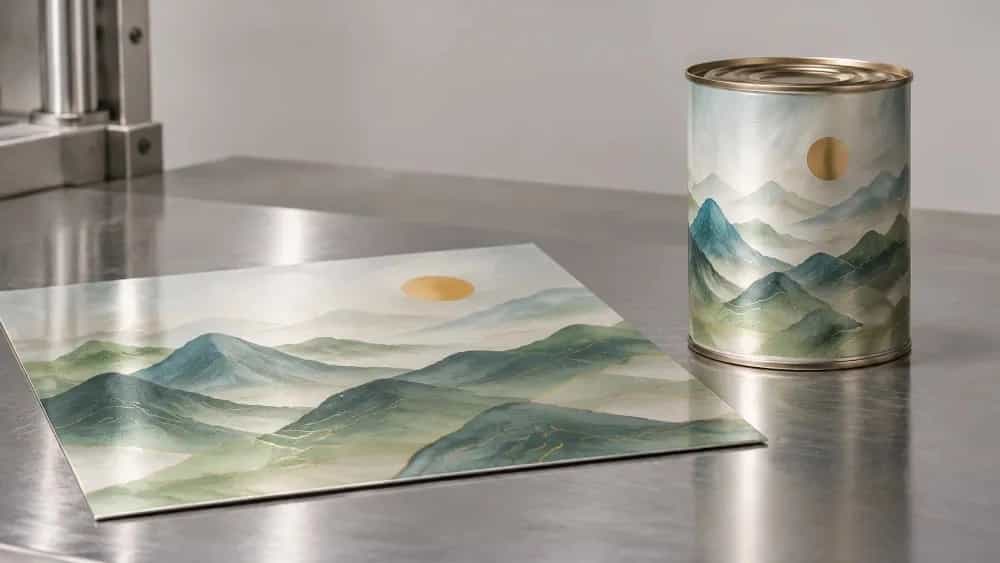

The design on the monitor is perfect, but when the finished can reaches the customer, the color is different from the sample or the seam pattern does not fit correctly. For a customer in Tehran, this discrepancy is not just an apparent problem; It may mean modifying the plan, reusing the sheet and delaying the delivery time.
The root of the problem is often not in the printer itself. can making and direct printing on metal sheet gives a reliable result when the material of the sheet, the printing design, the cutting place and the final shape of the can are checked together from the beginning. An image designed for a flat screen will not necessarily look the same on a can, regardless of bends and joints.
مشاوره و استعلام قیمت
برای سفارش قوطی فلزی و دریافت راهنمایی درباره چاپ روی ورق، با قوطی سازی پایتخت تماس بگیرید.
How is direct printing done on metal sheet in can making?
In this method, the design is printed on the surface of the prepared metal sheet, and the sheet is transformed into a can body or piece after the necessary steps. The final quality is not only dependent on the resolution of the print; The design must withstand the steps of cutting, bending, connecting and using cans.
For many sheet metal cans, the process begins with specifying the product: what shape does the can have, what material is inside it, and which parts of the body will be visible in the finished product? Then the type of sheet and surface coating, the opened map of the body, the print file and the sample control method are determined.
Printing directly on the sheet should not be confused with sticking the label on the can. Also, not all metal cans follow the same production path; In some methods, printing on the body is done after forming. Therefore, before choosing the printing method, the can structure should be clear, rather than assuming the same production order for all orders. Ball packaging manufacturer's documentation also shows an example of printing on the body after forming the can.
What factors determine the result of printing and canning?
Three decisions affect the result more than others: choosing the sheet, designing according to the shape of the can and determining the suitable coating for the conditions of use. If one of these decisions is postponed until after the approval of the print file, its correction can be costly.
What is the effect of sheet material and surface coating?
The sheet must be compatible with the application of the can and its shaping method; The glossy appearance or the possibility of printing are not the only selection criteria. The condition of the surface, the coating and the formability of the sheet affect the quality of the design and the durability of the product.
For example, tinplate and chrome-plated steel are materials used in metal packaging. The choice between them, the type of coating and the possibility of printing or varnishing should be checked with the product specifications; Packaging steel manufacturer thyssenkrupp also describes uncoated sheets ready for subsequent varnishing or printing.
If the can is intended for food, the outer print does not replace the inspection of the inner cover. The compatibility of the materials in contact with the content should be evaluated separately based on the product, the filling process and the requirements of the destination market.
How should the print file be prepared for the can?
The print file should be set based on the actual body map and location of the can components, not just its apparent size. Seams, edges, cutting area and parts that can be seen after bending play a role in the legibility of the design.
A small text may be legible on a flat sheet but close to the edge after formatting. The color should also be checked on a sample with the same type of sheet and cover; Confirming a color on screen or paper is not the same as confirming its appearance on metal. The ISO technical committee guide for printing production also emphasizes the coordination of pre-printing conditions, printing substrate and evaluation of the result with the approved sample.
Execution method | Plan implementation time | Main advantage | Points to check before ordering Be |
Direct printing on the metal sheet | Before making the part or the body, in appropriate production paths | Coordination of the printed design with the can production program | Design placement relative to cut, bend and seam |
Printing on the formed body | After shaping, in proportional lines | Suitable for some structures Can | Compatibility of design with line geometry and equipment |
Label on finished can | After making the can | possibility of changing the design without changing the print on the metal | adhesiveness and durability of the label in the conditions of use |
The basis of selection is not just the beauty or the price of printing. The shape of the can, circulation, storage conditions and the amount of possible design changes should also be included in the decision.
From my point of view, the most costly mistake in Capital Canning is to announce the graphic design before the "final" method of making the can is determined. In this case, both the designer and the production manager are faced with a file that may be correct on its own, but not applicable to the same can.
Roadmap for ordering cans and direct printing on metal sheet
Exact order starts with defining the can, not sending the logo image. The earlier the product application, technical specifications and sample acceptance criteria are defined, the clearer the decision about printing and production will be.
- Define the use of the can. Write down the type of content, form of packaging, storage conditions and appearance requirements. If the product is sensitive, bring up the requirements related to the internal surface separately.
- Specify the dimensions and structure. Cylindrical or square shape, door type, junction and approximate size of the body affect the placement of the print.
- Check the sheet and coating before finalizing the design. Ask the presenter to explain the applicable options based on the product application; An appearance selection should not become a final order without a technical review.
- Prepare the file on the opened body map. Determine the location of necessary writing, visual elements and areas close to the cut or seam.
- Approve the sample in two steps. First, see the appearance of the design on the selected surface; Then, check the manufactured can sample for design placement, readability, and the printing condition at the bend and connection points.
- Write down the production acceptance criteria. Clarify the approved sample, the acceptable range of color difference, the appearance condition of the coating, and the inspection method of the parts before final production.
In a conversation with Capital canning in Tehran or any other executive, this basic information will help you get a more specific answer about the possibility of implementation, prototyping and quality control methods. To complete the pre-order review, three related topics are also useful: "Choosing a can factory for a special order", "Guide to can making in Tehran" and "Preparing a design to print on a metal can"; These terms can be the anchor text of the related pages of the site.
Know the summation of the can first, then confirm the print
In my opinion, a good decision in can making and direct printing on sheet metal comes from coordinating three things: the application of the can, the production structure and the printing design. If these three are checked together before the sample production, the difference between the design file and the final product will be revealed sooner.
If you are looking for a printed can for your product in Tehran, prepare the packaging specifications and the initial design for a technical review. A conversation about the sheet, printing location and sample approval criteria is a more accurate starting point than asking the price of a can with no specs