

In the world of industry and production, protection of metals such as iron and steel against rust and corrosion is one of the vital things. Galvanizing, as an important and vital process, has a very important role in this field. This process, by coating metals including steel with a layer of zinc, protects them against corrosion, rust and environmental damage.
What is Galvanized?
Galvanizing is a process that covers iron or steel with a sheet of "zinc" metal to protect it from corrosion, rust and moisture. This protective coating is actually a protective layer that protects against various environmental damages such as air, water and chemicals. Galvanizing is a coating method that protects the base metal from environmental hazards and prevents iron from rusting. This process can give properties such as resistance to oxidation and scaling to steel and strengthen it.
Types of this method
There are several galvanizing methods for coating steel sheets with zinc metal. These methods are known as hot galvanization, cold galvanization, pre-galvanization and electrogalvanization. Hot-dip galvanizing uses a heat process, immersing the steel sheet in a pool of molten zinc. In pre-galvanization, the steel sheet is rolled through a process similar to hot-dip galvanizing and passed through a molten zinc solution, then cooled and dried. Electrogalvanization involves the electrolytic reduction of positively charged zinc ions to zinc metal. In cold galvanizing, high concentration zinc is used and it is coated on the metal surface using tools such as brushes or sprays.
The difference of galvanized methods
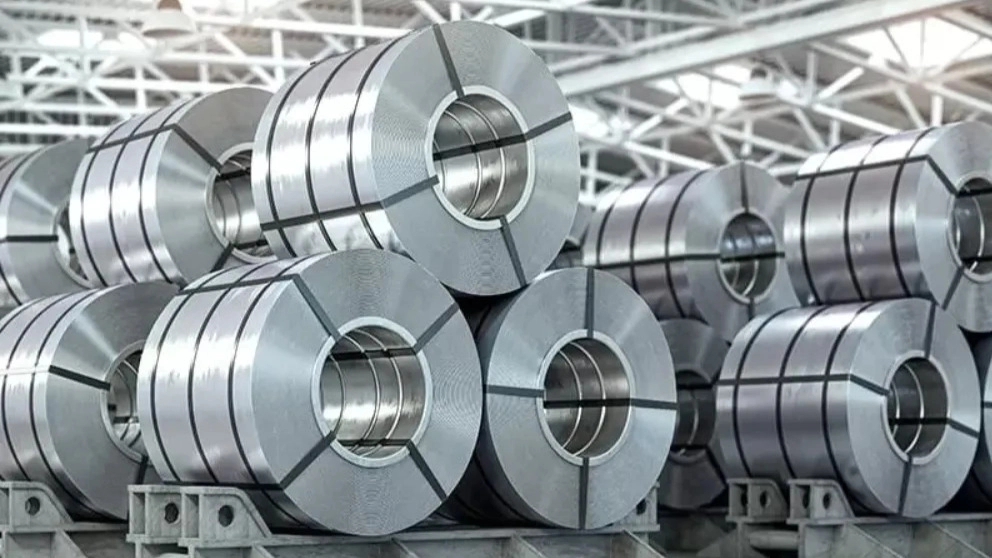
Hot galvanizing and cold galvanizing are two different methods of coating steel or iron with zinc metal. In hot galvanizing, the sheets are placed in a bath of molten zinc and a temperature above 400-500 degrees Celsius is used. Due to temperature tolerance, these sheets have a matte surface and dull and gray color and are usually used in parts where the appearance is not very important. Hot galvanized sheets with high thickness have better quality and this increases their price.
But cold galvanization uses different methods; Instead of using a molten bath, an enriched zinc spray is used to coat metals. This method has a smooth and shiny surface and is used in cases such as micro-making or piece-making where beauty is important.
Differences between these two methods are identified in several aspects. First, they differ in the method of implementation and preparation of consumables; Hot-dip galvanizing is produced at high temperatures, while cold-dip galvanizing uses an enriched zinc spray. Second, the strength of cold galvanizing is lower than that of hot galvanizing. Thirdly, in appearance, cold galvanizing sheets with a smooth and bright surface are more applicable in cases where beauty is important. Fourthly, hot galvanized sheets are thicker and fifthly, their surface is dull and dull while cold galvanized sheets have a smooth and shiny surface.
The benefits of these two methods
Galvanization generally increases the resistance of steel sheets against rust and corrosion. But its benefits are more focused on other things than this point. Among the advantages of galvanizing, we can mention cost reduction compared to other anti-rust methods, reduction of maintenance costs in the long term, high durability and protection of small steel areas exposed to damage. Also, the galvanizing performance is reliable and does not require much time to prepare.