



What is the ingredients of artificial grass?
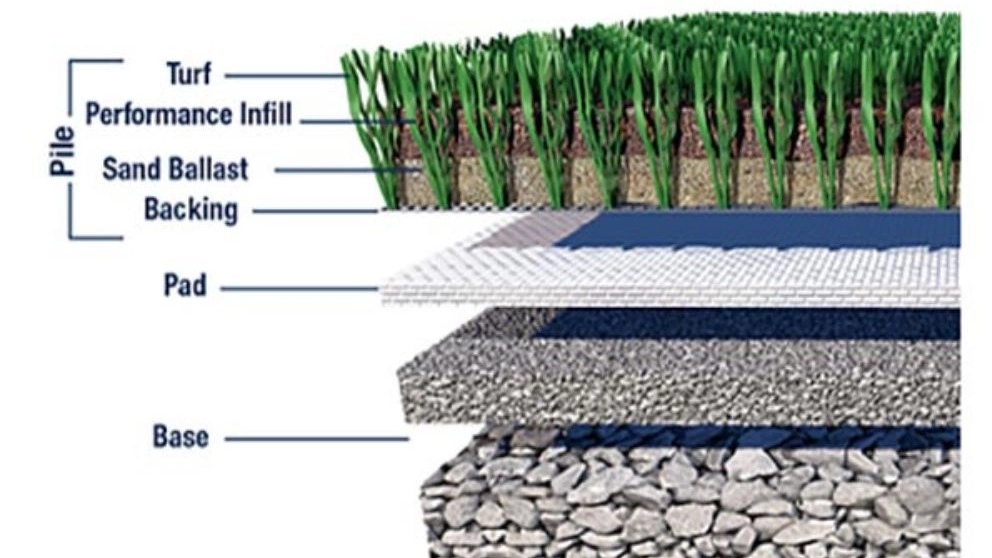
When talking about artificial grass and a sports artificial grass field, you may come across new words and terms that require more detailed information about these terms. The artificial grass system includes different components and each of these components is made of different materials.
ما
- Artificial grass fibers
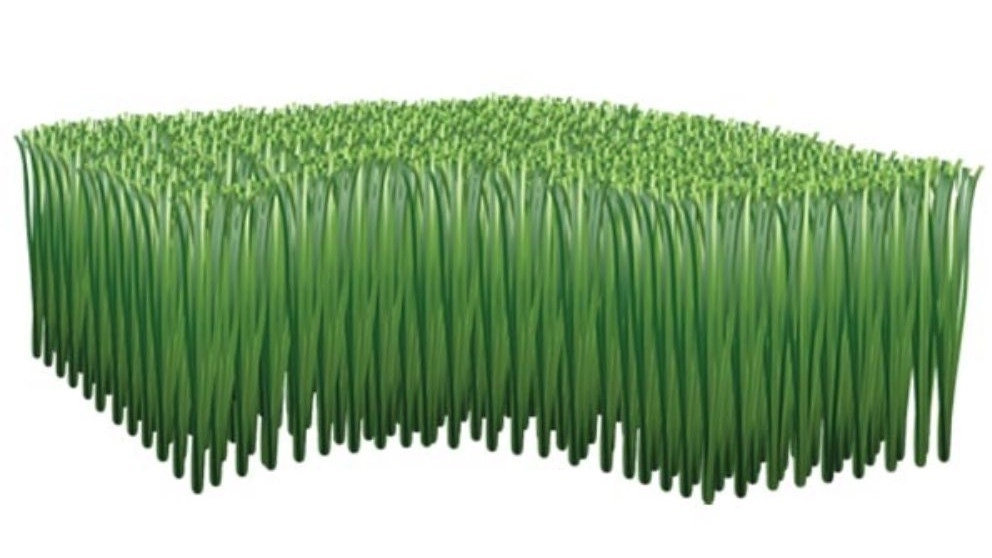
Artificial grass fibers form the highest and most visible layer of any grass system and have flexibility, softness and softness and are resistant to ultraviolet rays (sunlight). Due to the fact that sports artificial grass is exposed to direct sunlight, the resistance of artificial sports grass to sunlight is very important. Synthetic grass fibers come in three different types:
• Fibrillated fibers (Fibrillated or Slit-Film): fibers that are in the form of fibers with thin slices.
• Monofilament fibers: fibers that are straight and standing in different shapes.
• Curly fibers (Thatch or Curly Fiber): fibers that are curly and curled and are mostly used to increase the stability of fibers and filler in the artificial grass system.
• Combined fibers (Dual Fiber): fibers that are a combination of fibrillated, monofilament and curly fibers.
- Baking artificial grass
There is a layer of woven polypropylene on which artificial grass fibers are woven and then secured in place by a layer of latex or polyurethane adhesive. In most systems, holes are created in the artificial grass backing with standard distances for vertical drainage of water in the grass field.
- Height of the fibers
The length of the fibers from the backing of the artificial grass to the tip of the fibers is called the pile height. The pile height is different depending on the type of artificial grass application.
- The height of the free fibers
The length of the fibers from the filler of sports artificial grass or other types of artificial grass to the tip of the fibers.
- Artificial grass filling layer
The filling layer of artificial grass is dense and small grains that increase the stability of artificial grass fibers, flexibility, increase shock absorption on artificial grass and It provides quick drainage of water for your land. The use of high-quality fillers in artificial sports grass is very important because it affects its durability. Choosing the right filler is important to increase the endurance of the player's foot, which improves biomechanics and reduces injuries in the lower part of the foot, as well as increasing playability, and can even reduce the temperature of your court. Silica sand is often used for this purpose.
- Rubber granules
Rubber granule is the crushed rubber that is made from second-hand tires. While rubber granules are widely used in sports and decorative artificial turf, they are usually not ideal for reasons such as rubber components, rubber soot dust particles, and overheating in the sun.
- Shockpad
Shock pad is a layer of foam that is installed under the grass layer in an artificial grass field and is often a safety requirement in artificial grass sports fields because the shock pad reduces the depth of severe impacts and prevents serious injuries. It prevents the player and increases the safety level of the players. It also improves the drainage of the lawn and increases the lifespan of the artificial grass. The shock pad has different thicknesses and is available in different types of foam.
- The underlying layer of artificial grass
The bottom and initial layer serves as the basic foundation for any grass field, which provides the stability of the rest of the artificial grass system and is usually made of Gravel is made of granite and usually consists of two layers: coarse sand and fine sand. This layer has an independent drainage system and provides a high degree of water transfer and makes the water in the ground drain easily, the turf remains durable and has a longer lifespan.