


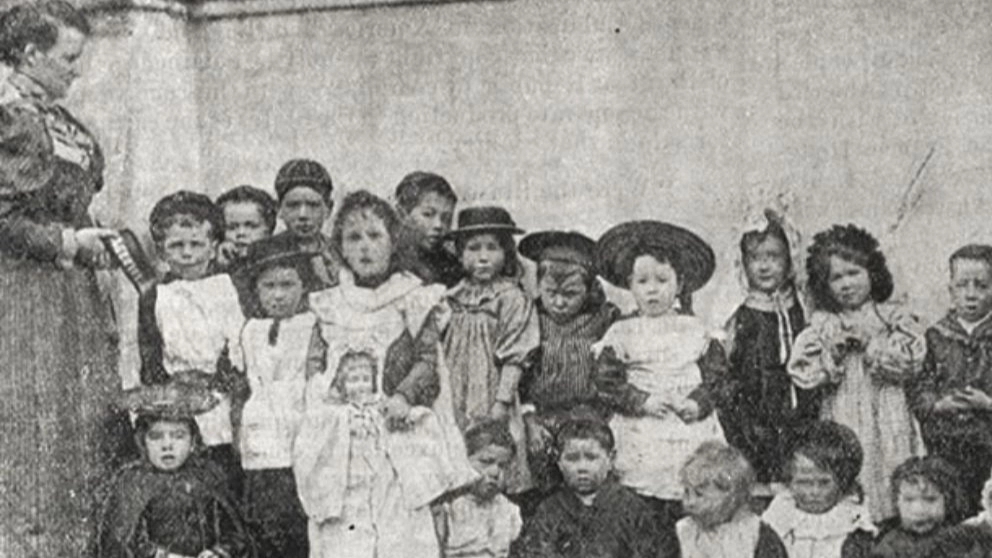


The history of kindergarten in the world goes back to the early 19th century. Friedrich Froebel was a German student who founded the world's first kindergarten in Blankenberge, Germany in 1837. During the ten years since the reopening of the world's first kindergarten, he tried to develop his views on the type of education based on the ideas of the French philosopher Jean-Jacques Rousseau and the Swiss student Johann Heinrich Pestalozzi. The result of this idea was that the child can become a mature and good person through interaction and learning, and can be useful to the society more than before and think about personal growth along with playing. Froebel believed that the child should grow in an environment where music, natural studies, storytelling and dramatic arts flow.
Friedrich's method in the establishment of kindergarten
One of Froebel's other ideas was for children to sit together in a circle and solve puzzles, and in this way learn teamwork from childhood. He also intended for children to develop their social and cognitive skills through the process of innate curiosity and desire to learn. He believed that women have the greatest potential in working with children. They can develop emotional skills in young children. For this reason, he opened a school exclusively for the education of women