

Traditional Broth Food History in Iran
Customs, Abgousht, Nomads of Iran
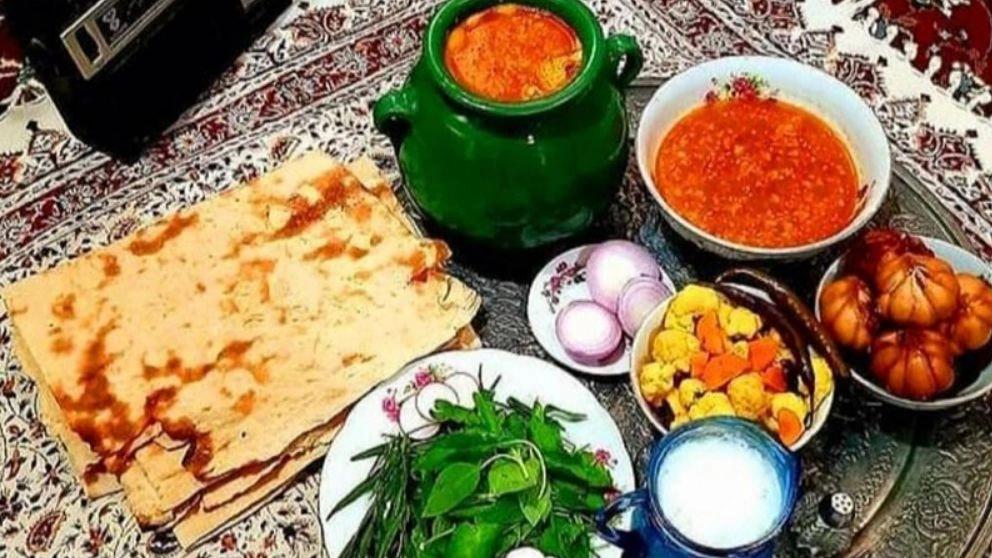
All encyclopedias written about Iran have the entry "Abgousht". You may not believe it, but Abgousht, along with all the famous names of Iranian culture, has become a detailed entry in specialized encyclopedias, but Abgousht is not on the menu of any restaurant in Tehran! To eat broth, you have to go to a house, a tea house, a coffee house or a daisy restaurant. Only at noon, not before or after. There are shops that do not cook more than one dish each time; Halimi, kebab, chalui, jaggeri, kohlpazi and biryani. But again, none of these authentic and popular Iranian dishes, except for chalukbabs, have a place in the menu of Iranian restaurants! And this is the reason why Iran travel guidebooks for foreigners only mention the difference between pilaf and challah and describe the types of kebabs. Anywhere else in the world, this variety of food was made a tourist attraction and at least they gave it a place in national menus. Abgousht is one of the ancient dishes of Iranians for a thousand and one reasons. One of these reasons is the nomadic and nomadic way of life of Iran's ancestors, based on the animal husbandry culture. Even when Iranians built ancient cities such as Hamedan, Shush, and Parse, they did not settle down in the real sense, and the kings and courtiers, like the people, used to camp on the way to these cities. This seasonal movement, even until a few decades ago, was common for some wealthy families between Qeshlaq in Tehran and Yilaq in Shemiran. So don't think that Kochi life has nothing to do with the capital of Iran for the last 200 years.
Abgousht is a product of sedentary life, and kebab is the food of nomadic life, and nomads find the opportunity and conditions to load Abgousht only when they reach their final destination. If you look at the documentaries of this half century that have been made about the life of the nomads of Iran, you will see herds of several thousand heads, each of the goats, sheep, cows and horses are important and respected for their owners, and the lives of the herdsmen are tied to the lives of their animals, and not long ago. It happens that they lead the livestock and they did not feed them except from their milk and milk products. But on the rough and dangerous way of Kuch every day, several heads of these healthy and fat cattle were wasted and wasted, and before the cattle died, the nomads would cut their heads and prepare the dinner. Koch had a schedule and they had to reach their destination on time, otherwise there would be a thousand and one natural dangers on the way. So, the opportunity to load the broth until reaching the destination was not lost during the journey. The broth for tomorrow's noon should be prepared the night before, and the preparations and side dishes should be prepared beforehand, which was not and is not possible except in a joint arrangement.
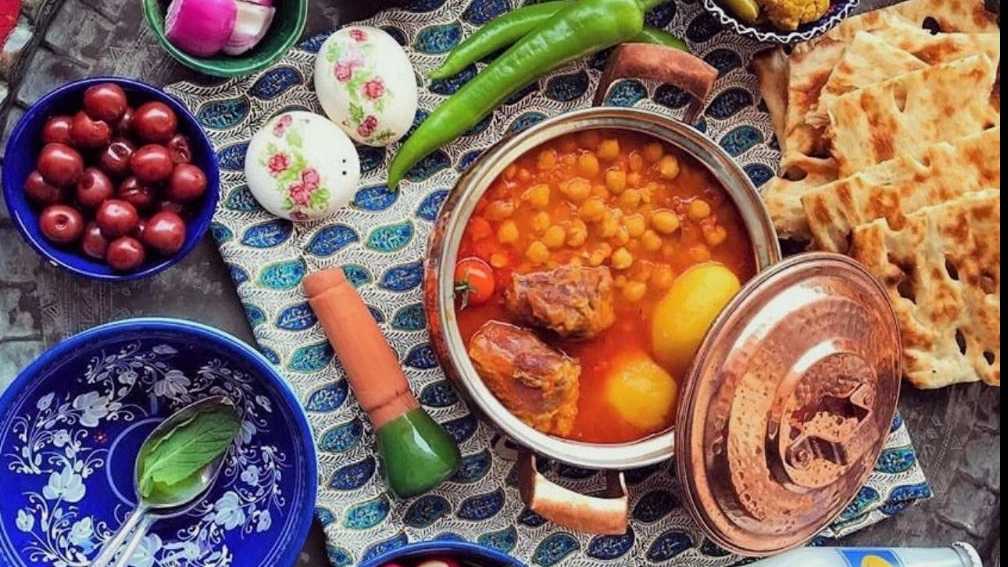
Another thing is that the barbecue can be made easily with a wooden skewer in the desert, but the broth is only cooked in a dish. The inhabitants of the Iranian plateau made the first tools and utensils from wood and stone thousands of years ago. But a wooden vessel was useless on fire and only stone vessels were used. It was after that that the ability to make pottery was achieved and all kinds of dishes were formed. Clay pots were used for thousands of years, until the Iranian man found out the secret of mineral stones and melting and casting of metals and made tools and containers from them. It is interesting that the broth is still cooked and eaten in three stone, clay and metal vessels. Different types of stone, clay, and surface daisies (rui means surface, i.e., made of zinc metal, which is also called roohi in the vernacular language) are still made and used in Iran in the way of distant millennia, and these three types of daisies are a relic of Three ages of stone, pottery and metal in archaeology.
In the olden days, rice or chelo was cooked in large gatherings, which were called "qap" or "qab" and several people ate from a common qap. It was possible that a few big and gluttonous people would share a table and eat together with an old man or a thin and undernourished child. It was that the distribution of food was not fair and one would steal another's loot and eat more food. This is where the idea of "personal food" came up, to make a small food for each person and put it in front of him. This is why this "peshqap" was called "pishqab". A big bag full of food was brought to the table and some small empty bags (bosh in Turkish: empty) were arranged around it and food was taken separately for each plate. But whether the broth is cooked for one ton or a thousand tons, the content of each dish is cooked separately, and the meat, peas, and water are poured in equal measure for each dish, and there is no discrimination. Like pilaf, they don't cook everything in one pot and after cooking, they don't kill the food, but first the raw portion of each dish is pulled and after dividing, cooking starts.
But cooking and eating broth is not an easy task. Maybe not everyone likes to cook it, but everyone enjoys eating it. But if a foreigner comes and you put a hot stone daisy with stone and basil in front of him, he might not enjoy its delicacy. Because eating broth requires training. With a spoon, not much will come out of the tight opening of the daisy, unless you tilt the daisy, and it will burn your hand to tilt it, unless you hold the corner of the dish with a piece of bread, and in this case, even a paper towel will not help the piece of bread. . Of course, some clay daisies have two small handles on both sides, which come to catch the eater at this time. The broth has two parts, the "wet" part, which we call "trid" and the "dry" part, which we call "beaten". The same water and meat that have created broth. They are almost cooked together but eaten separately. However, it is not the responsibility of the cook to perform these two parts, and perhaps it is the only food that the eater also participates in cooking. If you don't separate these two parts, it will turn into a not very hearty soup, and if you don't do each of these two parts well, that is, for example, take the pounded water, it won't taste good. In short, eating broth is not for everyone, and if someone sits at the broth table for the first time, the uninitiated will not easily understand the story.
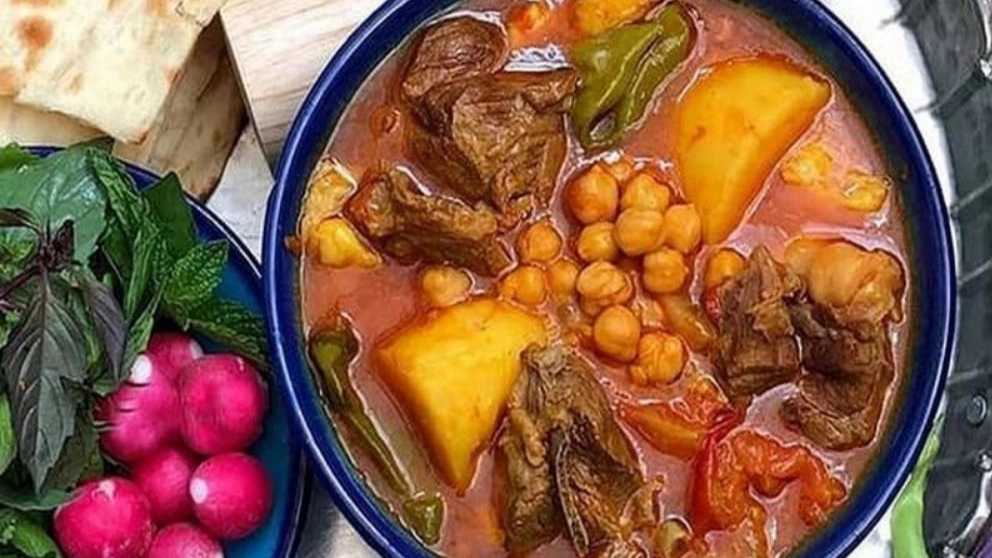
Tomatoes and potatoes are two integral components of today's soups, and for Iranians, it may not be possible to imagine a soup without potatoes and tomatoes. But you may not know that these two foreign products were unknown in Iran until a hundred years ago. But before the import of these two, Abgousht was also Abgousht with meat, water and peas. Iranians made these two foreign products into a daisy and gave them two Iranian colors, which turned the Greek successors of Alexander and the Mongols, the heirs of Genghis, into genuine and Iranian-friendly Iranians.