
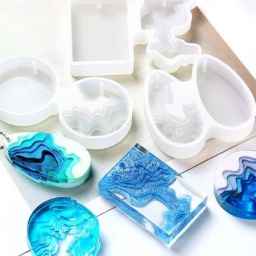


• Transparency: Epoxy resin should be transparent so that the beauty of objects or pigments embedded in it can shine.
• Low viscosity: Epoxy resin It should have a low viscosity (thickness) so that it can flow easily in molds and around embedded objects.
• Long working time: Epoxy resin should have a long working time. (the time it remains liquid before curing) to give the artist enough time to mix, pour and embed objects in the resin.
• UV resistance: < /b>Epoxy resin must be UV resistant to prevent yellowing and degradation over time, especially when exposed to sunlight.
• Non-toxic: Epoxy resin must be non-toxic and safe to make jewelry that is worn on the skin. Other desirable properties:
• Self-leveling: The epoxy resin should be self-leveling to ensure a smooth and uniform surface without the need for sanding or polishing. • Odorless: The epoxy resin should be odorless or have little odor to make it more pleasant to work with. • Heat resistance: Epoxy resin must be heat resistant to withstand the heat generated during curing and prevent deformation or damage to jewelry.
Recommended Types of Epoxy Resin for Resin Jewelery:
1- two-part epoxy resin: This type of epoxy resin consists of two parts that must be mixed together before use. Two-part epoxies usually have a longer working time and are more durable than one-part epoxies. • One-Part (Uv) Epoxy Resin:
This type of epoxy resin cures when exposed to UV light. UV curing epoxy resins have a shorter working time than two-component epoxy resins, but they are very convenient to use because they do not require heat to cure. When choosing an epoxy resin for making resin jewelry, it's important to read product descriptions and reviews to make sure it has the features you need.
The easiest way to remove bubbles from epoxy resin:
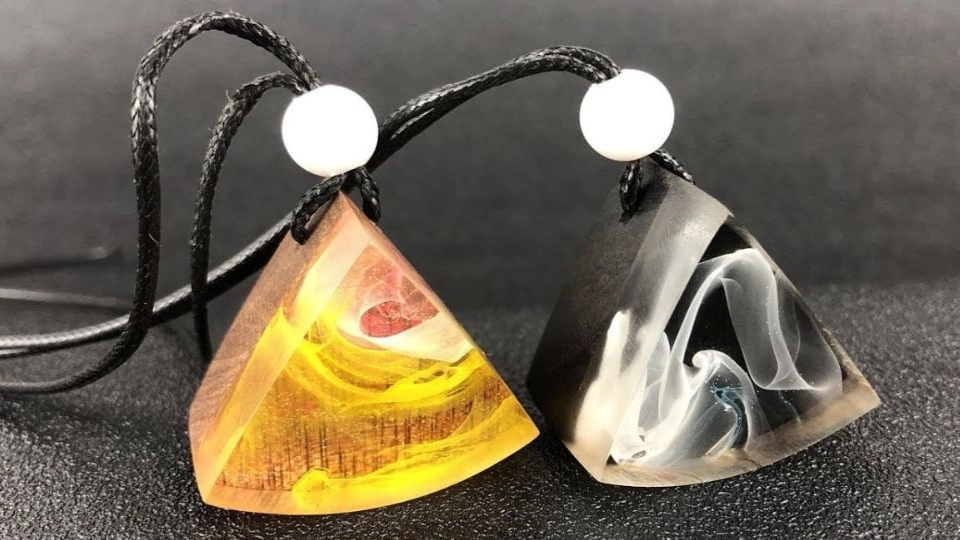
The easiest way to remove bubbles from epoxy resin:
1. Use a heat gun or torch: Gently heat the surface of the epoxy resin with a heat gun or torch. The heat causes the bubbles to rise to the surface, where they can be popped with a toothpick or needle. Be careful not to overheat the resin, as it may cause premature drying or yellowing.
2. Using a vacuum chamber: Place the epoxy resin in a vacuum chamber and draw a vacuum. . The vacuum pulls the bubbles out of the resin. This is the most effective way to remove bubbles, but requires specialized equipment. The most accurate way to remove bubbles from epoxy resin: 1. Use a pressure cooker: A pressure cooker is a closed container that is used to pressurize the epoxy resin. The pressure forces the bubbles out of the resin, resulting in a bubble-free coating. Pressure cookers are more expensive than heat guns or vacuum chambers, but they give the best results. 2. Use a centrifugal force machine: A centrifugal force machine spins the epoxy resin at high speed, which removes bubbles from the resin. Centrifugal force machines are also more expensive than heat guns or vacuum chambers, but they give great results.
Tips to prevent bubbling in epoxy resin: • Mix the epoxy resin slowly and carefully to avoid bubbling. • Use a degassing chamber to remove bubbles from the epoxy resin before pouring it into the mold. • Pour the epoxy resin slowly and steadily into the mold to avoid bubbles. • Tap the mold gently to release trapped bubbles. By following these tips, you can easily and carefully remove epoxy resin bubbles.
Incorporations of bubbles in the epoxy resin: bubble:
• Epoxy resin and hardener • Mixing cups and stirring rods
• Pump and vacuum chamber (optional but recommended) •
Objects for embedding (flowers (dry, sculptures, etc.) Steps: Prepare the resin and objects:
1. Make sure the objects are completely dry and clean. Any moisture can cause bubbles in the resin.
2. If desired, create a template or frame to hold the objects in place. This will prevent them from floating or moving while the resin cures.
3. Mix the epoxy resin and hardener according to the manufacturer's instructions. Work quickly to avoid bubbles. Vacuum degassing (optional but highly recommended): 1. Pour the mixed resin into a vacuum chamber. 2. Turn on the vacuum pump and create a vacuum of 25-30 inches Hg. 3. Leave the resin in vacuum for 10-15 minutes. This will remove most of the trapped air bubbles. Embedding objects: 1. If you are not using a vacuum chamber, pour the degassed resin into a container slightly larger than the objects. 2. Carefully place the objects into the resin, making sure they are completely immersed in the water. 3. Using a toothpick or skewer, remove the remaining air bubbles from around the objects. 4. If desired, add a second layer of resin to cover all objects. Curing the resin: 1. Work the epoxy resin according to the manufacturer's instructions. Most resins require a cure time of 24-48 hours at room temperature. 2. After baking, remove the finished piece from the mold or frame. Tips: • Use a slow setting epoxy resin to give the bubbles time to escape. Warm the resin slightly before mixing to reduce viscosity and facilitate bubble release. • Swirl the container while pouring the resin to help distribute the particles evenly. • Use a cloth or toothpick to absorb surface bubbles that form after pouring. • If bubbles form, you can use a heat gun or torch to gently remove them (be careful not to overheat the resin). • For delicate objects, use a UV-cured epoxy because it sets much faster and produces fewer bubbles.