

What is alfalfa silly?
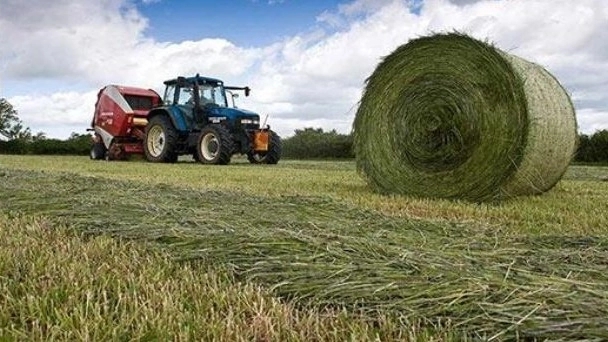
Alfalfa silage is a silage product of alfalfa that can be used for livestock and poultry. Silage hay is used for the reason that the loss of material quality is prevented in the long term and it is possible to use fresh and suitable fodder for livestock and poultry. In addition to the fact that silage does not lose its quality and freshness in the long term, silage also contains other minerals and nutrients that are useful for livestock and poultry and make them more productive. Silage and all types of fodder are made in three ways: horizontal, stacked and vertical, using plastic. Also, the necessary and appropriate humidity for silage, that is, ensiling all kinds of fodder and hay, is between 65 and 70 percent.
What are the characteristics of alfalfa silage?
Alfalfa and other perennial glomina plants are important forage crops because they are able to produce a large amount of good quality forage, and no family of other forage crops provides a better balance of energy, protein and nutrients. Minerals are not for high production animals.
In recent years, especially when high rainfall limits the opportunity to produce dry fodder, ensiling has become a common conservation method.
In some cattle farms that cultivate alfalfa, they usually use fresh alfalfa, which is done in the first layer of alfalfa. In terms of high humidity, alfalfa has more risks of blood magnesium reduction and the occurrence of grass tetani, as well as rapid changes in the microbial flora of the rumen. Especially in high-producing cows, it will cause metabolic problems. In addition, dry alfalfa has very low protein in terms of leaf shedding and significant shedding in the field and during transportation. Alfalfa silage is an exception to these cases. In addition, its quality will be much higher and better than fresh raw alfalfa in order to preserve nutrients and increase digestibility. Silage of alfalfa should be done by withering and reducing its moisture after harvesting and before ensiling. which is an easy method.
Hay silage can be stored in a polyethylene bag for up to 15 months without significant loss. It goes without saying that the life of silage depends on the technology and structure of the silage bagger and stretch film (plastic).
☑️ What are the benefits of alfalfa silage?
Energy saving.
The ability to irrigate the land the day after the hay is laid.
Preventing the loss of about 10% of hay that occurs in the hay drying method.
The higher percentage of protein in silage hay compared to dry hay.
Increasing the appetite of livestock and poultry.
Retention of carbohydrates and nutrients that are lost due to hay drying.
Reduction of waste compared to hay bale drying.
Increasing milk and protein production in livestock.
It is simpler and easier to transport and store it in the warehouse.
Higher durability and longer shelf life by preserving all the minerals and nutrients of alfalfa.
What are the benefits of alfalfa silage in polyethylene bags?
Long-term storage of green mass of alfalfa by maintaining its freshness
Prevent hay quality loss
Better balance of rations
Ease of transportation, storage and storage
The economics of hay silage production
Control the size of parts
Increase fiber digestibility
Recommendation: By adding fermentation accelerators such as lactobacilli and the like, the work of ensiling in polyethylene bags can be improved.
What can be done to prevent alfalfa drying?
Silage is one of the ways to prevent material loss. Storage and preservation in this way is done according to the creation of anaerobic conditions in pH, which is the result of biochemical, microbiological and anaerobic fermentation processes. The buffering capacity of fodder and the ability to consume fermentable substances determine the amount of fermentation.
What is alfalfa in the dairy cows?
Valadars et al. (2000) showed in their research on dairy cows that all fodder can be obtained from alfalfa silage. The combination ratio of 35% alfalfa silage and 65% concentrate showed the highest production of milk, lactose, protein and milk solids.
Also, Cross and Kamp (2003) in a study showed that the consumption of alfalfa silage in dairy cows has a positive effect on milk fat and protein.
The protein ratio of alfalfa silage and corn silage is 13 to 19.2 percent. Meanwhile, corn silage has 8.8% protein. Hay, both dry and silage, includes approximately 25% of the ration of dairy cows. Today in the United States, alfalfa is used in food rations in a mixed form and with a feeder, and its dry form is not used.
How is the savings of energy carriers by consuming alfalfa silica?
Several necessary operations are carried out in the dry hay harvesting stage, which are:
Picking and pouring the device on the ground, lining up the sorted hay, turning the lined hay upside down and finally pressing and packing them.
It is known that doing this operation requires a lot of energy and takes about 7 to 10 days. With a rough calculation, it is clear that in a crop year, the agricultural land remains without irrigation for about 30 to 40 days, and this itself causes a decrease in yield.
The discussion of energy carriers in Iran is quite visible in the production of dry fodder and has affected the price of dry hay and raised it a lot.
In the operation of picking hay for the purpose of producing silage, we do not see the mentioned cases, and like the production of corn silage, the hay is transported by truck or trailer after being crushed, and the land can be irrigated from the next day.
In this method, less energy is needed for harvesting, and this will reduce costs and increase the number of bales of hay.
Another advantage of harvesting alfalfa for silage is to prevent alfalfa leaves from falling, which is lost in the drying process by about 2 to 10%.
How much is the protein in alfalfa silage?
Silage increases hay protein compared to its dry weight. This causes the cost price of hay silage to decrease compared to other protein sources.
Among the advantages of hay silage is its positive effect on increasing the animal's appetite, which is evident especially in dairy cows from the very first days of use.
What is the proportion of alfalfa and corn silage protein?
Crude protein in alfalfa silage and dry alfalfa fodder is 13-19.2%, while corn fodder silage has 8.8% protein. Hay, either dry or silage, comprises approximately 25% of the ration of dairy cows. The United States uses alfalfa in food rations in a mixed form and with the Feeder machine in its programs and does not use its dry form.
What are the benefits of corn silage?
The type of harvest and the way of storing fodder affects the nutritional value of wood materials. The forages that are laid for drying become white due to indifference to the sunlight, and dew and rain cause the loss of some of the soluble carbohydrates and nitrogen. Also, most of the leaves are lost in transportation.
In general, the waste of dry matter in the artificial drying method is about 6% and in the field drying and packing method is about 33%, while in the silage method, the waste is reduced.
Silage products are very palatable and are consumed very well and have a great positive effect, especially in productive animals.