
What is a livestock feed?
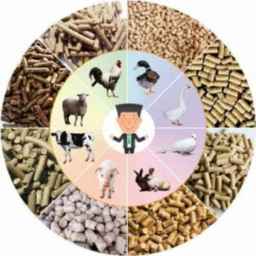
Livestock feed is food grown or developed for cattle, sheep, poultry and aquatic animals. Modern feeds are produced by careful selection and combination of different ingredients to provide highly nutritious diets that both maintain animal health and increase the quality of final products such as meat, milk or eggs. Continuous improvements in animal diets have resulted from research, experiments, and chemical analysis by agricultural scientists.
☑️ Buying a trap
Fodder and animal food is the main issue that should be considered in raising domestic animals. Livestock farming can be an income-generating job and it can equally pose a problem to your economic security. The most important issue facing the rancher in order to increase productivity is to buy animal feed, the types of feed available in the market, the way of industrial or traditional production and It is the most economical feed for livestock to achieve maximum weight gain. Livestock or domesticated animals also have requirements. If they are well taken care of, it will lead to the health and vitality of our livestock, including our cows and sheep.
Animal feed is very important for foreign sheep imported to Iran, such as Roman sheep. These sheep need golden feed due to their high productivity.
What resources are supplied by domestic animal food?
Animals generally need nutrients like humans.
Some feeds, such as pasture grasses, hay and silage crops, and certain grains, are grown specifically for animals.
Other feeds, such as sugar beet pomace,
Beer grains and pineapple bran
are by-products that remain after the processing of the food product for human consumption
Surplus food products such as wheat,
other cereals,
Fruits,
Vegetables and roots may also be fed to animals.
☑️ Basic nutrients and additives
Basic nutrients that animals need for maintenance, growth, reproduction and health include:
carbohydrates,
protein,
fat,
minerals,
vitamins
And it is water.
☑️ Minerals
☑️ Proteins
For immature animals, protein is also needed for the growth of muscles and other body parts. Since milk, eggs and wool contain a lot of protein, higher amounts are needed in the feed of animals that produce this protein. All animals need a small amount of protein for maintenance, i.e. the daily repair of muscles, internal organs and other body tissues. Proteins are made up of more than 20 different amino acids that are released during digestion.
High-quality protein, such as that provided by eggs, milk, fish meal, meat by-products, and soybean meal, contains a high concentration of essential amino acids in the proper balance for their full utilization. Poor-quality protein, such as that found in most grains, including corn, barley, and sorghum, contains very little of one or more essential amino acids. Feeds that contain poor quality proteins are useful when combined with other feeds that restore the balance of essential amino acids.
Vitamins
1 - fat-soluble vitamins A, D, E and K
2- The water-soluble group B includes thiamin, riboflavin, niacin, pantothenic acid, choline, biotin, folic acid, vitamins B6 and B12, and vitamin C.
Vitamin A, which is the most deficient in animal feed, is required for growth, reproduction, milk production and maintaining natural resistance to respiratory infections. All crops that turn green are rich in carotene, which animals can convert into vitamin A. Vitamin A supplementation is added to the animal diet until the animals are fed green forage and not on suitable pastures.
Vitamin D enables animals to use calcium and phosphorus. Deficiency causes rickets in young growing animals.
Ultraviolet rays from sunlight produce vitamin D from provitamins in the skin. Field processing of alfalfa produces vitamin D through the effect of sunlight on ergosterol in alfalfa crops. Some fish oils are very rich in vitamin D. Livestock that are outdoors and exposed to sunlight, most of the time have a lot of vitamin D. In winter conditions in cold regions, cattle, sheep and horses usually receive large amounts of hay. fed, poultry and laboratory animals raised indoors will be deficient unless supplemented.
B vitamins are not important in the nutrition of cattle, sheep and other ruminants, because the bacteria in their rumen synthesize these vitamins.
However, very young calves and poultry need B vitamins in their diet. Of these, riboflavin, niacin, pantothenic acid and vitamin B12 are likely to be deficient in normal diets. Poultry and laboratory animals need special supplements. There may also be a choline deficiency in poultry feed.
Vitamin E is essential for normal egg hatching. Together with selenium, it plays a role in preventing muscle stiffness and paralysis (dystrophy) in lambs, calves and chickens under certain conditions.
Vitamin C can be synthesized in the body of most other animals and does not need to be supplied in their food.
Vitamin K is synthesized by bacteria in the intestinal tract and can be absorbed, and if the animal can eat the feces, the food source is usually not important. Today, many animals are raised without contact with feces, so vitamin K is often added to their diet as an immune factor.