
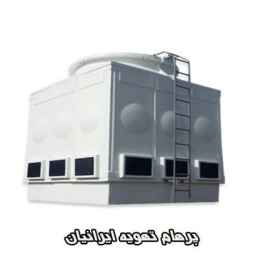

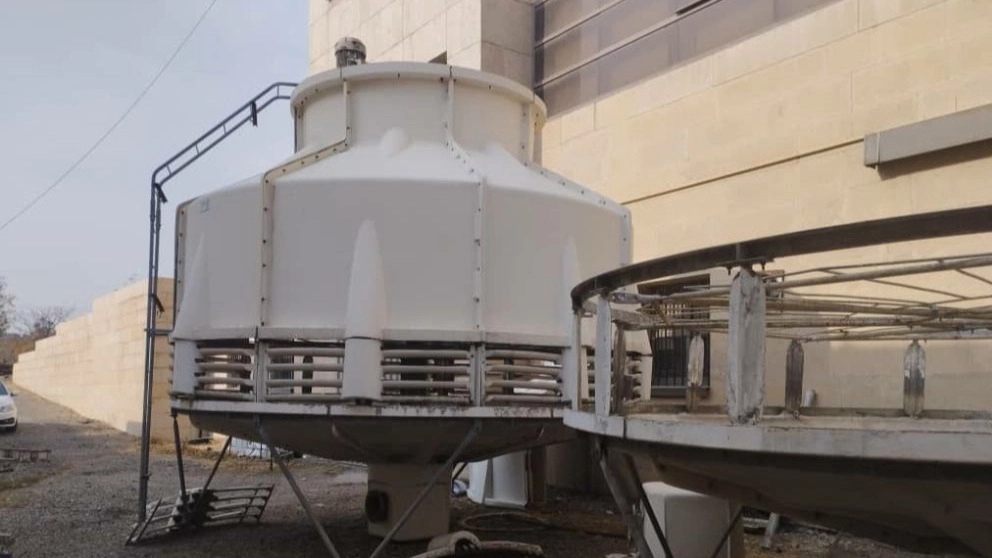
♻️ Cooling Towers are a type of heat exchangers that use water and air contact to cool the water needed in the condenser of air conditioning systems, power plants, refineries, industrial processes and various industries (industries food, etc.).
These equipments have different types in terms of function, type of water distribution system, shape and material of the body, the way the water and air flows meet, the type of suction of the air flow, etc., each of which They have features and limitations and have various uses.
The cooling towers are divided into two categories in terms of cooling function:
- Open Circuit Cooling Tower
- Closed Circuit Cooling Tower
- Open Circuit and Closed Circuit Cooling Towers if properly Designed for the intended application, they can provide acceptable thermal efficiency with long life. Determining which of the cooling towers - open circuit or closed circuit - is more suitable for the desired application, requires knowing how to function, features and applications of each of them, and it is the responsibility of engineers and expert and experienced people. It is in this matter.
In this regard, the introduction of open circuit and closed circuit cooling towers will be discussed and the characteristics and limitations of each of the different points of view will be examined and compared. is placed.
What is the performance of open circuit cooling towers?
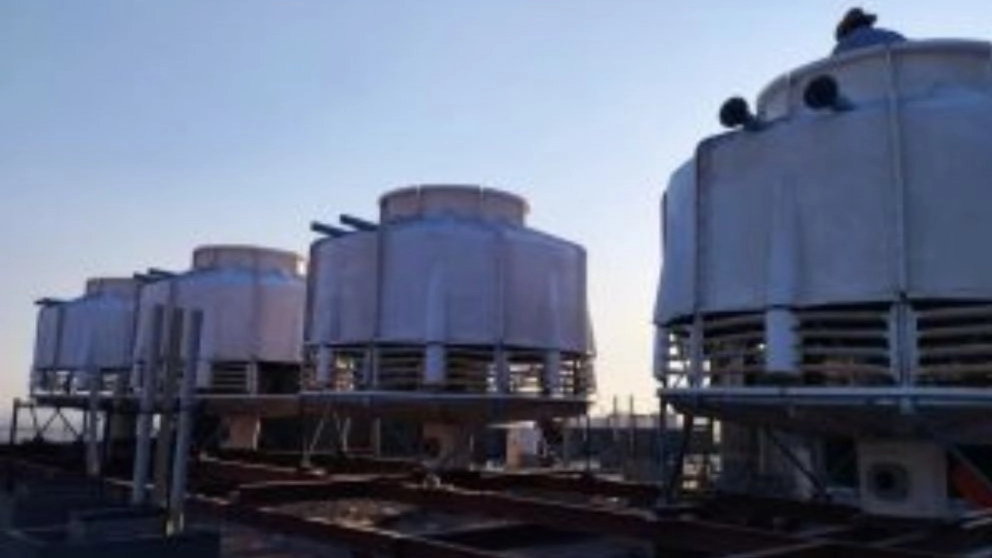
Open Circuit Cooling Tower is a heat exchanger that uses direct contact between air and water to cool water. In the open circuit cooling tower, the incoming water (requiring cooling) is pumped to the upper part of the cooling tower and enters the tower from there. The nozzles distribute this water on the packings of the cooling tower, and the water flows as a thin and uniform layer on the packings, and this increases its contact surface (heat exchange) with the air.
The fan also circulates atmospheric air on the packings. The incoming air cools the water in two different ways; Part of the heat is removed as a result of air convection (contact between hot water and colder air), but the majority of cooling occurs due to the evaporation of part of the water entering the system. In this way, water can be cooled down to a lower temperature than the ambient temperature. After the water falls from the packings, the cooled water accumulates in the tower pan and finally returns to the system cycle. The air, which is saturated with moisture, leaves the upper part of the cooling tower. The drip catcher installed on top of the nozzles also prevents water drops from leaving the cooling tower.
What is the performance of CCTV cooling towers?
Closed Circuit Cooling Tower is a heat exchanger that uses indirect contact between air and water to cool water. In the closed circuit cooling tower, in order to prevent direct contact of air with water and related problems, the water that needs cooling in the coils of the cooling tower is circulated and the water in the tower pan is also pumped to the top of the tower. , is sprayed by nozzles on the coils containing water.
In the closed circuit cooling tower, part of the desired cooling is due to indirect contact and heat exchange between the air entering the tower and the water in the coils. Takes. Also, as a result of spraying water on the coils and water particles hitting the hot surface of the coil and accompanied by the circulating air flow inside the tower, a small part of the sprayed water evaporates and then the water inside the coil is cooled. The continuation of the cooling process is similar to the steps in the open circuit cooling tower.